

This is sponsored by the GTM AI Academy and AI Business Network.
We aim to bring you some killer podcast interviews like the one today with Matt Paige of Hatchworks and also deep dive into trends happening in the marketplace.
Give me feedback on how you like todays new version, with a deep dive into some advice that Matt gave, the report with 5 trends, and access to the Career and Business Protection Guide for AI.
Lets get into the Podcast!
You can go to Youtube, Apple, Spotify as well as a whole other host of locations to hear the podcast or see the video interview.
Matt Paige - AI Battleground between Incumbents and Startups
I discovered Matt Paige when he had just 200-300 TikTok followers, and I've been following his AI journey ever since. Now he's VP of Strategy & Marketing at HatchWorks AI, and honestly, this conversation blew my mind with how practical and real his approach is to AI implementation.
This isn't another "AI will change everything" conversation. Matt gets into the nitty-gritty of what's actually working for businesses right now.
Key Highlights & Quotes:
On the reality of AI adoption:
"AI is easy to do. But it's hard to do well, right? It's easy for anybody to go talk to ChatGPT, write an email, do this, do that. But to actually build a system within your business, integrate with your business, start leveraging agents, automating things, entire job functions - that's not as easy to do."
On the brutal truth about jobs:
"Sometimes we tell ourselves AI won't take jobs because it sounds safe and nice. I think it is gonna take jobs. But I think it will open and create new things we never thought of before."
On the democratization of building:
"You could build for an audience of one being yourself. And it's okay, because it takes you an hour. This changes this whole shift in how we think about SaaS builders."
What You'll Learn:
The Tools Matt Actually Uses:
His complete AI development stack (Lovable, Bolt, Cursor)
Voice agents that handle "bland tasks" with decision trees, not rigid scripts
Browser automation tools that can literally buy toilet paper on Amazon
Open source alternatives to expensive AI platforms
Real Implementation Stories:
How he built a closet-sharing tracker for his wife in 2 days
Custom ChatGPT doing K-means clustering on Airbnb data for market segmentation
Why the old data request process (submit ticket, wait a week, get partial answer) is dead
The Battle Between Incumbents and Startups: Matt breaks down why companies like Salesforce are struggling with their AI pivot while new entrants are building AI-native from day one. But here's the kicker - incumbents have massive proprietary data that startups can't touch.
His Final Advice:
"Go start playing with stuff on a daily basis. Habits build over time. Put yourself on the front end of that transformation so you have choices."
Why This Episode Hits Different:
Matt isn't selling you on AI dreams - he's showing you the actual tools, the real costs, and the honest challenges. He's in the trenches building this stuff for 200+ person organizations, and he shares what works and what doesn't.
Plus, you'll hear about the Google Agent White Paper breakdown that explains exactly how to build effective AI agents (LLM + Orchestration + Tools), and why most people are thinking about this wrong.
If you're tired of AI hype and want practical, implementable strategies, this conversation delivers.
Listen now and let me know what resonates with you most.
Matt Paige's AI Implementation Playbook
VP Strategy at HatchWorks AI - Tools, Insights & Practical Strategies
Based on exclusive interview insights from the GTM AI Podcast
About Matt Paige
Background: VP of Strategy & Marketing at HatchWorks AI (200+ person AI-focused organization) Journey: Started on data science side → Product development → Strategy → Marketing Expertise: Making AI practical for businesses, translating complex AI into executable strategies Philosophy: "AI is easy to do, but hard to do well"
Core Philosophy: The Reality of AI Implementation
The Hard Truth About AI Transformation
Most companies struggle: Easy to use ChatGPT for emails, hard to build integrated business systems
The Real Challenge: Building AI that integrates with your business, leverages agents, and automates entire job functions
Success Factor: Meeting clients where they are - from 80 use cases down to the first few that matter
The Incumbents vs. New Entrants Battle
Incumbents' Challenge: Innovator's dilemma like never before
Legacy systems and workflows to overcome
Existing organizational structure resistance
Example: Salesforce's difficult pivot to AgentForce
New Entrants' Advantage:
Natural constraints push them to use AI from day one
No legacy systems to work around
AI-native from the beginning
Incumbents' Ace Card: Massive proprietary data sets that new entrants can't access
Matt's AI Tool Stack & Recommendations
🛠️ AI Development Tools (Matt's Current Stack)
Beginner Level - Start Here:
Lovable: Very user-friendly, prompt-based building
Bolt: Easy UI-focused development
Cost: Typically $20-50/month per tool
Intermediate Level:
Replit: More integrated, fully functional IDE
Cost: $20-100/month depending on usage
Advanced Level:
Cursor: Fork of VS Code for software engineers
Best for: Developers who want full control
Cost: $20-40/month
🤖 Automation & Agent Tools
Voice Agents:
Bland AI (BLAND): Voice agents for "bland tasks"
Unique Approach: Decision trees with AI guidance vs. rigid scripts
Philosophy: Give rough guardrails, let LLM handle variations
Use Case: Customer service, appointment booking, follow-ups
Browser Automation:
Browser Use (Open Source): Alternative to OpenAI's $200/month Operator
Cost: Free (open source)
Capability: Can perform web tasks like buying items on Amazon
Matt's Test: Successfully bought toilet paper automatically
Do Browser:
Cost: $25/month
Features: Customizable agents for web automation
🧠 Specialized AI Tools
Emotion & Interaction:
Hume: Reads facial expressions and emotional states
Use Case: Customer service optimization, user experience research
AI Tool Discovery:
Hugging Face Studio: "App store for AI"
Purpose: Find specialized AI tools for specific use cases
Matt's Recommendation: Best resource for discovering new AI capabilities
📊 Data Analysis Revolution
The Old Way:
Submit ticket for data request
Wait a week for response
Get answer that triggers more questions
Submit another ticket, wait another week
The AI Way:
Conversational data interaction
Instant insights and follow-up questions
Example: Matt's custom GPT for K-means clustering on Airbnb data
Result: Automated market segmentation with marketing strategies
If you want to deep dive into Matts implementation playbook, I have it in here:
Matt's Proven Implementation Framework1. The Workshop Approach: AI Roadmap & ROI Assessment
Problem: Companies come with either too many ideas (80 use cases) or no direction Solution: Structured workshop to prioritize and focus
Evaluation Matrix:
Value vs. Effort: Standard prioritization
Risk Assessment: Life-threatening (medical) vs. low-risk (ad copy)
Business Impact: Revenue generation vs. cost reduction
2. Common Implementation Patterns
Most Requested: Repetitive, mundane task automation
Why It Works: Lower risk entry point
Business Impact: Cost reduction focus
Examples: Document processing, data entry, routine customer inquiries
Advanced Applications:
Workflow automation with AI decision-making
Custom business intelligence with conversational interfaces
Industry-specific solutions leveraging proprietary data
3. The Three Components of Effective AI Agents
Based on Google's Agent White Paper (Matt's recommendation)
1. The LLM (Brain)
The core reasoning capability
Choose based on task complexity and cost requirements
2. Orchestration Layer (Logic)
Provides context for reasoning
Determines next steps and workflow logic
Critical for multi-step processes
3. Tool Access (Hands)
Ability to actually perform actions
Integration with existing systems
API connections and data sources
Real-World Examples from Matt's Experience
1. The Closet Sharing Tracker
Problem: Wife and friend exchanging clothes, losing track of ownership Solution: AI-powered app with photo capture and borrower tracking Build Time: 1-2 days Key Insight: You can now build for an audience of one economically
2. Airbnb Market Segmentation
Tool: Custom ChatGPT with K-means clustering Process: Upload dataset → AI defines logical groups → Creates marketing strategies Output: 4 customer segments with targeted approaches for pricing, bookings, ratings Value: Discovered hidden patterns in data without manual analysis
3. Enterprise Data Democratization
Problem: Data science bottlenecks limiting business insights Solution: Conversational data interfaces using platforms like Databricks Impact: Anyone can ask data questions without technical expertise Result: Faster decision-making, reduced dependency on data teams
Matt's Strategic Predictions
The Job Displacement Reality
Matt's Take: "Sometimes we tell ourselves AI won't take jobs because it sounds safe and nice" Reality: AI will eliminate some jobs AND create new opportunities we haven't imagined Strategy: Stay on the front edge by building daily AI habits
The Platform Wars
Current State: New AI-native companies vs. incumbents adapting existing systems Key Battleground: Proprietary data access Winner's Profile: Companies that combine AI capabilities with unique data assets
The Democratization Effect
Impact: Building software no longer requires massive teams or budgets Example: Solo developers creating functional applications in hours Business Model Shift: Can build for niche markets that were previously uneconomical
Matt's Daily AI Practice Recommendations
Start Small, Build Habits
Use AI tools daily - make it a habit, not a special occasion
Have conversations with AI - treat it as a thought partner for problem-solving
Experiment with building - try the beginner tools even if you're not technical
Join communities - engage with AI builders and practitioners
Progression Path
Beginner: Daily use of ChatGPT, Claude, or Gemini for work tasks Intermediate: Start building simple tools with Lovable or Bolt Advanced: Custom agents and workflow automation Expert: Contributing to open source projects and building commercial solutions
Learning Resources
GitHub: Explore open source AI projects
AI Communities: Join Slack and Discord groups for your industry
Documentation: Read white papers (especially Google's Agent guide)
Experimentation: Build something every week, even if small
Implementation Checklist: The Matt Paige Method
Week 1-2: Foundation
Set up accounts: ChatGPT Plus, Claude Pro, one beginner builder tool
Join relevant AI communities for your industry
Identify 3 repetitive tasks in your workflow for potential automation
Week 3-4: Experimentation
Build your first simple tool using Lovable or Bolt
Try voice agent tools like Bland AI for a specific use case
Set up conversational data analysis for a key business metric
Month 2: Integration
Implement one AI workflow that saves your team 2+ hours per week
Document and share results with leadership
Begin exploring agent-to-agent workflows
Month 3+: Scaling
Develop custom agents for your specific business needs
Create internal AI literacy programs
Build competitive advantage through proprietary AI applications
Key Takeaways: Matt's Core Insights
Start with mundane, repetitive tasks - lower risk, easier to measure ROI
Think agents, not just chatbots - combine LLM + orchestration + tools
Democratization is real - anyone can build functional AI solutions now
Data is the moat - proprietary data creates sustainable competitive advantage
Jobs will change - embrace the shift and position yourself on the leading edge
Build for one - economic constraints of software development have disappeared
Daily practice matters - consistency in experimentation beats sporadic intensive efforts
Matt's Final Advice: "Go start playing with stuff on a daily basis. Habits build over time. Put yourself on the front end of that transformation so you have choices."
Connect with Matt Paige on LinkedIn or check out HatchWorks AI to see their approach to AI transformation. And if you found value in this episode, please share it with someone who needs to hear Matt's insights on getting AI implementation right.
Top 5 Trends Mid 2025 and Career and Protection Proof Guide
Overview
The landscape of artificial intelligence (AI) implementation in business has evolved dramatically by July 2025. This comprehensive analysis examines the current state of AI adoption across industries, identifying statistically significant patterns and providing actionable insights for Go-To-Market (GTM) professionals and leaders. Drawing from extensive research across consulting firms, industry reports, and academic sources, this report reveals that while AI investment continues to accelerate, most organizations remain in early implementation stages with significant untapped potential.

The analysis identifies five key patterns that define the current AI business landscape: (1) a substantial implementation gap between investment and value realization
(2) the critical importance of human-centered change management
(3) the emergence of industry-specific AI applications
(4) the transformation of GTM strategies through AI-powered personalization and analytics
(5) the evolution of competitive advantage in the AI era. For each pattern, we provide statistical evidence, business implications, sector-specific variations, and strategic recommendations.
As of mid-2025, organizations face a pivotal moment in AI adoption. While 92% of companies plan to increase AI investments over the next three years, only 1% consider themselves AI-mature, and just 25% report creating significant value from their AI initiatives. [1] [8] The most successful organizations are following a 70-20-10 principle: dedicating 70% of efforts to people, processes, and cultural transformation; 20% to data and technology; and only 10% to algorithms and models. [8] [9] This report provides GTM professionals with a strategic framework to navigate this complex landscape and leverage AI for sustainable competitive advantage.
Methodology

This analysis employs a systematic approach to identify statistically significant patterns in AI implementation across business environments as of July 2025. The methodology consists of four key components:
Data Collection and Source Evaluation
The research draws from 36 high-quality sources spanning consulting firm research reports, technology company insights, academic publications, industry blogs, specialized publications, and government research organizations. Sources were evaluated based on credibility, recency (primarily 2024-2025 data), methodological rigor, and relevance to GTM professionals. Priority was given to sources containing statistically significant findings from large-scale studies.
Pattern Identification Process
The pattern identification process followed these steps:
Compilation of statistical data in a structured format by category
Cross-referencing findings across multiple sources to identify consistency
Evaluation of statistical significance and sample size
Mapping correlations between implementation approaches and outcomes
Segmentation of findings by industry sector where relevant
Analysis of temporal trends (2023-2025) to identify emerging patterns
Validation Criteria
Each identified pattern was validated against the following criteria:
Statistical significance of reported findings
Consistency across multiple credible sources
Methodological rigor of original research
Sample size and diversity in studies
Recency of data (prioritizing 2024-2025 findings)
Relevance to GTM professionals specifically
Analytical Framework
The analysis employs a multi-dimensional framework examining:
Adoption rates and implementation approaches
Organizational change management
Business impact and ROI metrics
Industry-specific applications
Go-to-market implications
Future trajectory and strategic considerations
This methodology ensures a comprehensive, data-driven analysis that identifies the most significant patterns in AI implementation while providing actionable insights for GTM professionals.
Pattern 1: The AI Implementation Gap - Investment vs. Value Realization
Despite massive investment in AI technologies, most organizations struggle to realize significant value from their implementations. This gap stems from fragmented approaches, lack of strategic focus, and insufficient attention to organizational transformation. Companies that successfully bridge this gap focus on fewer, high-impact use cases and invest heavily in people and processes alongside technology.
The Scale of the Gap
The disconnect between AI investment and value realization represents one of the most significant challenges facing organizations in 2025. Despite unprecedented levels of investment, most companies remain in early implementation stages with limited measurable returns.
According to McKinsey's 2025 research, 92% of companies plan to increase AI investments over the next three years. However, only 1% of leaders consider their companies "mature" on the deployment spectrum, defined as having AI fully integrated into workflows and driving substantial business outcomes. [1] This stark contrast highlights the implementation gap that persists across industries.
The Boston Consulting Group (BCG) confirms this pattern, reporting that only 25% of executives have created significant value from their AI initiatives as of early 2025. [8] This finding is particularly striking given that three-quarters of executives name AI as a top-three strategic priority for their organizations. [8]
The financial implications of this gap are substantial. While 87% of executives expect revenue growth from generative AI within the next three years, only 19% currently report revenue increases exceeding 5% from their AI investments. [1] Similarly, BCG found that leading companies anticipate 2.1x greater ROI from their AI initiatives compared to other companies, suggesting that implementation approach significantly impacts outcomes. [8]
Root Causes of the Implementation Gap
Several factors contribute to the persistent gap between AI investment and value realization:
1. Lack of Strategic Focus: Leading companies focus on a narrow set of 3.5 AI use cases, compared to 6.1 use cases for other companies. [8] This finding suggests that strategic focus, rather than breadth of implementation, drives success.
2. Insufficient Attention to People and Processes: Organizations often underinvest in the human elements of AI transformation. According to BCG, top-performing organizations follow a 10-20-70 principle: 10% of efforts on algorithms, 20% on data/technology, and 70% on people, processes, and cultural transformation. [8] This distribution highlights the critical importance of organizational change management in AI implementation.
3. Fragmented Pilots and Unclear ROI: By the end of 2024, over 70% of large enterprises had at least one GenAI initiative in production, but many struggled with disconnected pilots and unclear ROI. [3] This pattern of fragmentation limits the potential for enterprise-wide impact.
4. Measurement Challenges: Most companies do not track financial KPIs for their AI initiatives, limiting their ability to measure true impact. [8] Without clear metrics, organizations struggle to demonstrate value and optimize their implementations.
Industry Variations
The implementation gap varies significantly across industries:
Technology and Financial Services: These sectors lead in AI maturity, with technology, media, and telecommunications reporting the highest expertise levels. [18]
Energy, Resources, and Industrial Sectors: These industries have scaled AI programs the least, with 70% of respondents saying fewer than a third of their projects have moved to production. [18]
Life Sciences and Healthcare: These sectors are more likely to have robust measurement strategies for their AI initiatives, focusing on specialized applications in research and development. [18]
Success Factors for Bridging the Gap
Companies haven't connected their Gen AI use cases closely enough to their overarching business strategy, focusing instead on adopting Gen AI as quickly as possible rather than tying it to areas where they are trying to drive specific outcomes.
Organizations that successfully bridge the implementation gap share several common characteristics:
1. Strategic Alignment: Successful companies connect their AI use cases to overarching business strategy rather than adopting AI for its own sake. As Deloitte notes, "companies haven't connected their Gen AI use cases closely enough to their overarching business strategy, focusing instead on adopting Gen AI as quickly as possible rather than tying it to areas where they are trying to drive specific outcomes." [18]
2. Focus on High-Impact Use Cases: Leading organizations identify and prioritize use cases with clear business value. According to BCG, "The one-quarter of executives who say their companies have created significant value from their AI initiatives have done so by focusing on a small set of AI initiatives. They scale these initiatives swiftly, changing core processes, upskilling their teams, and systematically measuring operational and financial returns." [8]
3. Investment in Change Management: Organizations that invest in change management are 1.5 times more likely to meet their AI goals. [13] This finding underscores the importance of addressing the human elements of AI transformation.
4. Measurement Discipline: Companies that implement robust measurement frameworks can better demonstrate value and optimize their AI initiatives. As MIT Sloan Management Review reports, "Companies that revise their KPIs with AI are three times more likely to see greater financial benefit than those that do not. Smarter KPIs lead to better outcomes."
Pattern 2: The Human Element - AI Adoption as Organizational Transformation
Successful AI implementation is fundamentally an organizational transformation challenge rather than a purely technological one. Organizations that prioritize change management, address human factors, and invest in upskilling their workforce achieve significantly better outcomes from their AI initiatives. This pattern highlights the critical importance of a people-centered approach to AI adoption.
The 70% Rule: People Over Technology
A consistent finding across multiple sources is that successful AI implementation depends far more on organizational transformation than on technological sophistication. This pattern is captured in what multiple sources refer to as the "70-20-10 rule" or principle:
70% of efforts should focus on people, processes, and cultural transformation
20% on data and technology infrastructure
This distribution highlights the disproportionate importance of human factors in AI adoption. As BCG states, "Winning with AI is a sociological challenge as much as a technological one. The soft stuff—reimagining workflows, upskilling talent, and driving organizational change—turns out to be the hard stuff." [8]
The statistical evidence for this pattern is compelling. Organizations that invest in change management are 1.5 times more likely to meet their AI goals. [13] Similarly, companies with formal AI strategies achieve an 80% success rate and 2x expected ROI compared to those without a systematic approach. [9]
Human Barriers to AI Adoption

Research consistently identifies human factors, rather than technical limitations, as the primary obstacles to AI adoption:
1. Emotional and Psychological Barriers: BCG research found that emotional and psychological barriers, not technical limitations, are the primary obstacles to AI adoption. [12] This finding highlights the importance of addressing fears, uncertainties, and resistance to change.
2. Skill Gaps: 46% of leaders identify skill gaps as a significant barrier to AI adoption. [1] This challenge is compounded by the fact that less than one-third of companies have upskilled a quarter of their workforce to use AI effectively. [8]
3. Leadership Alignment: McKinsey identifies leadership alignment as one of five key operational headwinds facing AI implementation. [1] Without clear direction and support from leadership, AI initiatives often stall or remain fragmented.
4. Cultural Resistance: Prosci research found that 56% of organizations struggle with human factors during AI integration. [11] This statistic underscores that "technology is only as effective as the people who use it." [11]
The Readiness Paradox

An interesting paradox emerges from the research: employees are often more ready for AI adoption than their leaders realize or enable. McKinsey found that employees are three times more likely to be using generative AI for 30% of their daily work than leaders realize. [1] This finding suggests that organizations may be underestimating employee readiness and enthusiasm for AI adoption.
Furthermore, the majority of employees describe themselves as "AI optimists," with millennials (aged 35-44) being the most active and enthusiastic AI users. [1] This demographic often occupies middle management positions, making them natural champions for AI transformation.
However, less than half of C-suite leaders (48%) would involve non-technical employees in early AI development stages. [1] This disconnect between employee readiness and leadership approach represents a missed opportunity for many organizations.
Industry and Functional Variations

Success Factors for Human-Centered AI Adoption
Organizations that successfully navigate the human elements of AI adoption share several common approaches:
1. Executive Sponsorship and Clear Objectives: Organizations that thrived "treated AI adoption as a strategic change initiative — with executive sponsorship, clear objectives, and robust risk controls. They educated employees on the 'why' behind the AI and doubled down on model governance." [10]
2. Formal Training and Upskilling: Nearly half of employees say they want more formal training and believe it is the best way to boost AI adoption. [1] This finding highlights the importance of structured learning opportunities.
3. Middle Manager Engagement: BCG identifies middle managers as playing "a critical role in personalizing AI adoption and addressing different employee mindsets." [12] These leaders can translate executive vision into practical implementation.
4. Focus on Employee Experience: Employees are more likely to adopt AI when it enhances their work experience. In one BCG pilot, participants saved up to two hours a week by using AI-driven calendar tools, with 79% reporting that it made scheduling more enjoyable, 86% reporting higher effectiveness, and 92% saying they would continue using the tool. [12]
Pattern 3: Industry-Specific AI Applications - From Generic to Tailored Solutions
AI implementation is increasingly moving from general-purpose applications to industry-specific solutions tailored to sector needs. This shift is driving higher ROI and faster adoption as organizations leverage AI to address their unique challenges and opportunities. The most successful implementations combine industry expertise with AI capabilities to create differentiated value propositions.
The Evolution Toward Industry Specialization
A clear pattern emerging in 2025 is the shift from generic AI applications to industry-specific solutions. This evolution represents a natural maturation of the AI market as organizations move beyond basic productivity enhancements to more specialized use cases.
Deloitte's research confirms this trend, noting that "the level of Gen AI adoption across business functions appears to align with industry-specific value drivers. Consumer industry respondents are more likely to cite progress in marketing, sales, and customer service; financial services institutions are more likely to claim progress in finance and legal, risk, and compliance; life sciences and health care organizations are more likely to focus on product development and research and development." [18]
This specialization is driving higher ROI and faster adoption as organizations leverage AI to address their unique challenges and opportunities. According to SuperAnnotate, "AI use cases are increasingly sector-specific, with tailored applications in industries like finance, retail, manufacturing, and healthcare." [7]
Industry-Specific Adoption Patterns

The research reveals distinct adoption patterns across different industries:
1. Financial Services: Financial institutions are prioritizing AI for fraud detection (76%) and compliance/risk management (68%). [26] These applications leverage AI's ability to process massive datasets and identify anomalies in real-time.
2. Retail: 71% of retail companies are using or planning to use AI predictive analytics to improve customer engagement. [23] Retail applications focus on personalization, inventory optimization, and demand forecasting.
3. Healthcare: 62% of healthcare organizations are using or planning to use predictive analytics to improve patient outcomes. [23] Healthcare applications include diagnostic assistance, treatment optimization, and operational efficiency.
4. Manufacturing: Manufacturing applications focus on quality control, predictive maintenance, and supply chain optimization. These use cases leverage AI's ability to process sensor data and identify patterns that indicate potential issues. [7]
5. Professional Services: Professional services are experiencing "unprecedented disruption as AI democratizes access to specialized knowledge." [13] Law firms, consulting companies, and accounting practices are using AI to automate routine tasks and enhance professional judgment.
Value Drivers by Industry

The research identifies different value drivers for AI adoption across industries:
1. Consumer Industries: These companies focus on marketing, sales, and customer service applications that enhance customer experience and drive revenue growth. [18]
2. Financial Services: These institutions prioritize risk management, compliance, and operational efficiency, reflecting their regulatory environment and cost pressures. [18]
3. Life Sciences and Healthcare: These organizations emphasize research and development applications that accelerate innovation and improve outcomes. [18]
4. Technology and Media: These companies leverage AI for product development, content creation, and operational efficiency, reflecting their digital-native business models. [18]
Success Factors for Industry-Specific AI

Organizations successfully implementing industry-specific AI solutions share several common approaches:
1. Domain Expertise Integration: Successful implementations combine deep industry knowledge with AI capabilities. As California Management Review notes, "Companies that gain a competitive edge will not only address these horizontal commodity capabilities, but build two to three industry-specific, company-defining capabilities that enable them to establish a new performance frontier for their sector." [17]
2. Proprietary Data Leverage: Companies with access to proprietary industry data can create superior AI solutions. According to California Management Review, "With generative AI foundation models trained on publicly available data, companies with access to proprietary data can create superior products and services to differentiate themselves in the market. No organization can have an effective business strategy without having a data strategy that supports it." [17]
3. Ecosystem Partnerships: Organizations are forming industry-specific ecosystems to accelerate AI adoption. Deloitte reports that "the majority of industry leaders report investing in two primary ecosystem capabilities: productivity applications with integrated gen AI and publicly available large language models (LLMs)." [18]
4. Regulatory Navigation: Industry-specific AI solutions must address sector-specific regulatory requirements. NIST has developed a "collaborative, consensus-driven framework for managing AI risks across private and public sectors" that provides guidance for different industries. [25]
Pattern 4: AI-Powered GTM Transformation - Personalization, Prediction, and Performance
Artificial intelligence is fundamentally transforming go-to-market strategies through enhanced personalization, predictive capabilities, and performance optimization. Companies leveraging AI in their GTM approaches are seeing significant improvements in revenue, customer acquisition, and retention metrics. This pattern represents both an opportunity and imperative for GTM professionals to reimagine their strategies in the AI era.
The Scale and Impact of GTM Transformation
The research reveals a profound transformation in go-to-market strategies driven by AI capabilities. This transformation is yielding measurable business results across industries:
Companies leveraging AI are seeing revenue uplifts between 3-15% and sales ROI improvements of 10-20%. [4]
Organizations using AI in sales workflows are experiencing up to 70% improvements in productivity and 60% cost reductions. [6]
AI can reduce sales forecasting errors by 20-30% and improve lead scoring accuracy, leading to higher conversion rates. [6]
Companies using AI-powered CLV analytics can see a 10-15% increase in customer retention and 10-20% increase in revenue. [33]
These statistics highlight the significant business impact of AI-powered GTM strategies. As Forbes notes, "AI is revolutionizing traditional GTM approaches by introducing real-time, data-driven and highly personalized strategies across all key GTM areas." [4]
Key Dimensions of AI-Powered GTM Transformation
The research identifies several key dimensions of AI-powered GTM transformation:
1. Hyper-Personalization at Scale
AI enables unprecedented levels of personalization in customer interactions:
AI enables dynamic micro-segmentation of customers through continuous reconfiguration of customer profiles using behavioral data. [4]
By 2026, AI will enable hyper-personalization of sales content, generating customized proposals and presentations dynamically based on real-time data. [16]
89% of leading businesses are investing in AI to drive revenue growth through personalization in 2025. [29]
73% of B2B buyers now want a personalized, B2C-like experience, driving adoption of AI-powered personalization tools. [29]
This capability allows organizations to move beyond traditional segmentation to create truly individualized experiences. As Huble notes, "Imagine going to a pitch meeting and as soon as you walk through the door, your AI assistant has already created a customized presentation. It's more than just your company's standard presentation - it includes specific case studies of companies in the same industry, customised ROI projections and even a dynamic pricing model that adjusts in real time to the client's latest financial data." [16]
2. Predictive Analytics and Forecasting
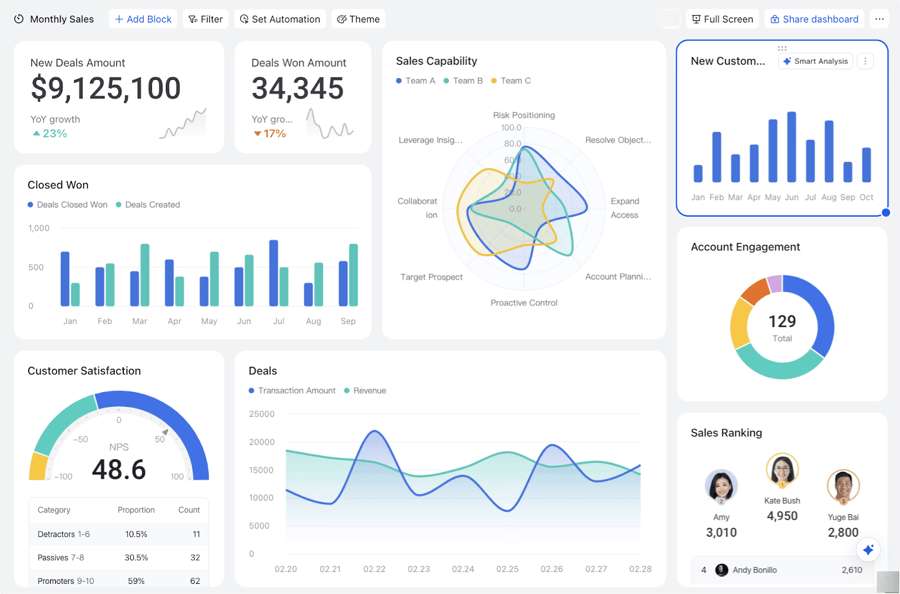
AI is transforming how organizations predict customer behavior and market trends:
AI can forecast customer behavior with up to 30% more accuracy compared to traditional models. [33]
Predictive analytics is revolutionizing sales forecasting by providing sales leaders with data-driven insights into future sales outcomes, reducing forecasting errors by 20-30%. [6]
By 2026, AI-driven forecasting will incorporate external factors like market trends and economic changes, making predictions more accurate and actionable. [16]
AI-powered churn prediction models can reduce customer churn rates by 10-15%. [33]
These capabilities enable more proactive and strategic GTM approaches. As SuperAGI notes, "By analyzing historical data, market trends, and customer behavior, AI can predict sales outcomes with greater accuracy, reducing forecasting errors by 20-30%." [6]
3. Dynamic Pricing and Offer Optimization
AI is revolutionizing pricing strategies through real-time optimization:
AI pricing models can optimize not just product prices, but entire strategies like bundling, promotions, and customer lifetime value calculations. [31]
Personalized pricing uses AI to tailor prices to individual customers or customer segments based on their purchasing behavior and preferences. [31]
The proposed AI-driven personalized pricing model can potentially increase telecom company profitability by up to 36% by preventing customer churn. [32]
Companies can implement effective pricing strategies in three ways: price optimization, dynamic deal scoring, and price performance management. [5]
These capabilities allow organizations to maximize revenue and customer value simultaneously. As McKinsey notes, "With rising competition and costs squeezing margins, businesses may be increasingly considering disciplined and agile pricing." [5]
4. Sales Process Automation and Augmentation

AI is transforming sales roles from transaction-focused to strategic relationship-building:
By 2025, 80% of B2B sales interactions are expected to occur in digital channels, signaling a massive shift in sales engagement strategies. [6]
Sales professionals will increasingly rely on AI assistants that handle mundane tasks, provide real-time coaching, and offer predictive analytics. [16]
Natural language processing will automate data capture and analysis, eliminating manual logging and providing deeper customer interaction insights. [16]
AI automation delivers an average 240% ROI across industries, with most organizations recouping investments in 6-9 months. [9]
These capabilities are fundamentally changing the nature of sales roles. As Huble predicts, "In 2026, sales professionals are strategists, relationship builders and storytellers working hand in hand with AI systems that do the heavy lifting." [16]
Success Factors for AI-Powered GTM Transformation
Successful organizations will be those that strike a harmonious balance between technology and human skills, leveraging AI to automate repetitive, data-intensive tasks and freeing up their sales teams to focus on high-value, relationship-driven activities.
Organizations successfully implementing AI-powered GTM strategies share several common approaches:
1. Data Integration and Quality: Successful implementations depend on integrated, high-quality data. Gartner found that 30% of GenAI projects fail due to poor data quality. [3]
2. Balanced Human-AI Collaboration: The most effective approaches combine AI capabilities with human expertise. As SuperAGI notes, "Successful organizations will be those that strike a harmonious balance between technology and human skills, leveraging AI to automate repetitive, data-intensive tasks and freeing up their sales teams to focus on high-value, relationship-driven activities." [6]
3. Continuous Learning and Optimization: AI-powered GTM strategies improve over time through continuous learning and optimization. Organizations that build advantages in learning rate saw a 10.7 percentage point total shareholder return premium in 2023. [17]
4. Cross-Functional Collaboration: Successful implementations involve collaboration across marketing, sales, customer success, and data science teams. High-performing organizations are 3.5 times more likely to use data-driven insights for strategic decision-making. [4]
Pattern 5: Competitive Advantage in the AI Era - From Adoption to Differentiation
KEY POINTS
As AI technologies become more widely available, competitive advantage is shifting from mere adoption to strategic differentiation. Organizations that build advantages in key areas such as proprietary data, digital core capabilities, learning rate, and trust are creating sustainable competitive advantage. This pattern highlights the need for a strategic approach to AI that goes beyond technology implementation to create unique value propositions.
The Commoditization Challenge
As AI technologies become more accessible and widely adopted, organizations face a fundamental challenge: how to create sustainable competitive advantage in an era of potential technological commoditization. The research reveals that generative AI is challenging traditional sources of competitive advantage by making past advantages more easily accessible and commoditized. [17]
This challenge is particularly acute given the widespread adoption of AI across industries. Microsoft reports that over 85% of Fortune 500 companies are using AI solutions to shape their future. [2] Similarly, current data shows that 78% of global companies now use AI in their business operations, with 92% planning to increase their AI investment over the next three years. [13]
In this context, simply adopting AI is no longer sufficient to create competitive advantage. As BCG notes, "Leaders stand out in three key ways: They are more ambitious, they focus on fewer efforts for greater ROI, and they focus on the core business operations where real advantage can be found." [19]
Six Sources of Competitive Advantage in the AI Era

The research identifies six key areas where organizations can build sustainable competitive advantage in the AI era:
1. Proprietary Data and Data Strategy
Organizations with access to unique, high-quality data can create superior AI solutions:
Companies with access to proprietary data can create superior products and services to differentiate themselves in the market. [17]
No organization can have an effective business strategy without having a data strategy that supports it. [17]
AI implementations that leverage proprietary data create barriers to entry and differentiated customer experiences.
2. Digital Core Capabilities
Organizations need robust digital infrastructure to effectively leverage AI:
Only 13% of executives are fully confident their organization has the right digital core capabilities to leverage generative AI effectively. [17]
Companies that outperform on growth invest more aggressively in digital-led transformations and AI, seeing an additional four-percentage-points-higher cumulative TSR growth. [5]
The computational and strategic foundations for AI advantage rest on four key elements: data, power (energy), compute, and capital. [13]
3. Learning Rate and Continuous Improvement
Organizations that learn and adapt faster create sustainable advantage:
Companies that build advantages in learning rate saw a 10.7 percentage point total shareholder return premium in 2023. [17]
The cost of AI experimentation has dramatically dropped, enabling rapid prototyping that used to take months to now be completed in days or weeks. [13]
Organizations with higher learning rates can identify and scale successful AI use cases more quickly than competitors.
4. Capability Reinvention
Organizations must reinvent core capabilities to leverage AI effectively:
Just 26% of executives have a complete picture of workforce skills needed in three years, creating a significant strategic gap. [17]
Skills in AI-exposed jobs are changing 66% faster than other jobs, representing a 2.5x acceleration from the previous year. [14]
Companies must move beyond being AI 'buyers' to becoming 'boosters' and ultimately 'builders' of their own AI models to gain competitive advantage. [17]
5. External Partnerships and Ecosystem
Organizations are creating advantage through strategic partnerships:
The AI agents market is projected to grow from $5.40 billion in 2024 to $7.60 billion in 2025, representing a 45.8% CAGR. [21]
Most organizations are primarily investing in productivity applications with integrated generative AI and publicly available large language models. [18]
Strategic partnerships can provide access to specialized capabilities, data, and talent that would be difficult to develop internally.
6. Trust and Responsible AI
Organizations that develop trust-based approaches create sustainable advantage:
Only 14% of executives have fully operationalized responsible AI practices across their organization. [17]
Employees trust their own employers most to develop AI responsibly, with 71% expressing high trust in their organization. [1]
Adoption will ultimately hinge on trust, and companies that develop robust ethical frameworks, governance models, and responsible AI practices will gain a competitive advantage. [17]
Industry Variations in Competitive Advantage
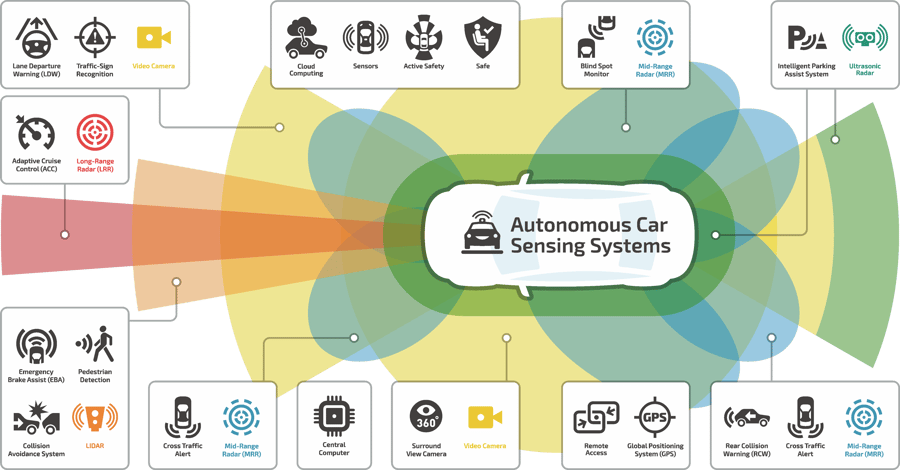
The research reveals variations in competitive advantage strategies across industries:
Technology Sector: Technology companies are more likely to focus on building proprietary AI models and capabilities, with technology, media, and telecommunications reporting the highest expertise levels. [18]
Financial Services: Financial services organizations emphasize trust, governance, and regulatory compliance as sources of competitive advantage. [18]
Consumer Industries: Consumer companies focus on personalization and customer experience as key differentiators. [18]
Success Factors for Building Competitive Advantage
Organizations successfully building competitive advantage in the AI era share several common approaches:
1. Strategic Clarity: Successful organizations have a clear vision of how AI creates unique value for their business. As BCG notes, "CEOs that succeed treat AI as more than a tool to cut costs or improve efficiency. They see it is a chance to rethink how work happens—how employees thrive, how companies operate, and how industries evolve." [12]
2. Focus on Core Operations: Leaders focus on transforming core business operations rather than peripheral activities. According to BCG, "Leaders differentiate themselves by being more ambitious, focusing on fewer high-priority efforts, and transforming core business operations." [19]
3. Continuous Innovation: Successful organizations continuously experiment and innovate with AI capabilities. The most successful AI implementations combine efficiency gains with growth opportunities while building foundational capabilities. [13]
4. Talent Strategy: Organizations with clear talent strategies create sustainable advantage. Workers with AI skills command a 56% wage premium, up from 25% the previous year. [14]
Strategic Application Framework for GTM Professionals

This framework provides GTM professionals with actionable strategies to leverage the five key patterns identified in this report. By implementing these strategies, GTM professionals can navigate the complex AI landscape, create compelling value propositions, and drive successful customer outcomes.
1. Value Realization Strategy
To address the AI implementation gap (Pattern 1), GTM professionals should:
Develop ROI-Focused Value Propositions
Create industry-specific ROI models that demonstrate clear business value
Develop case studies highlighting successful implementations with measurable outcomes
Articulate value in terms of business metrics rather than technical capabilities
Implement Value Realization Methodologies
Develop structured methodologies to help customers bridge the implementation gap
Create assessment tools to identify and prioritize high-impact use cases
Establish clear KPIs and measurement frameworks to track and demonstrate value
Focus on Quick Wins and Scalable Success
Identify opportunities for rapid time-to-value to build momentum
Develop phased implementation approaches that balance quick wins with strategic transformation
Create playbooks for scaling successful pilots across the organization
2. Human-Centered Implementation Approach

To leverage the human element of AI adoption (Pattern 2), GTM professionals should:
Develop Change Management Capabilities
Incorporate change management methodologies into implementation approaches
Create communication templates and strategies to address common concerns
Develop stakeholder mapping tools to identify and engage key influencers
Focus on Upskilling and Enablement
Create role-specific training programs to build AI literacy and capability
Develop communities of practice to foster peer learning and support
Implement certification programs to recognize and reward AI proficiency
Address Organizational Readiness
Develop assessment tools to evaluate organizational readiness for AI adoption
Create maturity models to guide progressive implementation
Implement governance frameworks to ensure responsible AI use
3. Industry Specialization Strategy

To capitalize on industry-specific AI applications (Pattern 3), GTM professionals should:
Develop Vertical Expertise
Build deep industry knowledge and domain expertise
Create industry-specific solution packages and reference architectures
Develop relationships with industry thought leaders and influencers
Address Industry-Specific Challenges
Create solutions for industry-specific pain points and use cases
Develop compliance frameworks for industry-specific regulatory requirements
Build industry benchmarks and best practices repositories
Leverage Industry Ecosystems
Develop partnerships with industry-specific technology providers
Participate in industry consortia and standards bodies
Create industry-specific communities and knowledge-sharing platforms
4. AI-Powered GTM Transformation

To implement AI-powered GTM strategies (Pattern 4), GTM professionals should:
Implement Personalization at Scale
Develop capabilities for dynamic content personalization
Create customer journey mapping tools that leverage AI insights
Implement systems for real-time personalization of customer interactions
Leverage Predictive Analytics
Develop predictive models for lead scoring and opportunity qualification
Implement forecasting tools that incorporate external market data
Create early warning systems for customer churn and expansion opportunities
Optimize Pricing and Offers
Implement dynamic pricing strategies based on customer value and market conditions
Develop bundling and offer optimization capabilities
Create customer lifetime value models to guide investment decisions
Automate Routine Tasks
Implement AI assistants for routine sales and marketing tasks
Develop automated content generation capabilities
Create systems for intelligent meeting preparation and follow-up
5. Competitive Differentiation Strategy

To create sustainable competitive advantage (Pattern 5), GTM professionals should:
Develop Unique Value Propositions
Identify and articulate unique capabilities and advantages
Create messaging that emphasizes differentiated value
Develop competitive positioning strategies that highlight unique strengths
Build Trust-Based Relationships
Implement transparent and ethical AI practices
Develop governance frameworks for responsible AI use
Create educational resources to build customer confidence in AI solutions
Focus on Strategic Outcomes
Align AI initiatives with customer strategic priorities
Develop executive-level engagement strategies
Create long-term roadmaps that deliver progressive value
Leverage Ecosystem Partnerships
Develop strategic partnerships that enhance value proposition
Create integrated solutions that address end-to-end customer needs
Participate in innovation ecosystems to access emerging capabilities
Implementation Roadmap
To implement this strategic framework, GTM professionals should follow a phased approach:
Phase 1: Assessment and Strategy Development (1-2 Months)
Evaluate current GTM approach against the five key patterns
Identify gaps and opportunities for improvement
Develop a prioritized roadmap for implementation
Phase 2: Capability Building (2-4 Months)
Develop new capabilities and methodologies
Train teams on new approaches and tools
Implement pilot programs to test and refine strategies
Phase 3: Market Execution (4-6 Months)
Launch new value propositions and messaging
Implement new sales and marketing processes
Engage customers with new approaches and solutions
Phase 4: Continuous Optimization (Ongoing)
Monitor results and gather feedback
Refine approaches based on market response
Continuously evolve strategies to maintain competitive advantage
By implementing this strategic framework, GTM professionals can navigate the complex AI landscape, create compelling value propositions, and drive successful customer outcomes in the rapidly evolving AI business environment of 2025.
Conclusion

The analysis of AI implementation in business environments as of July 2025 reveals a landscape of immense potential, significant challenges, and evolving competitive dynamics. The five key patterns identified in this report—the implementation gap, the human element, industry-specific applications, GTM transformation, and competitive advantage—provide a comprehensive framework for understanding the current state and future trajectory of AI in business.
Key Insights
Several critical insights emerge from this analysis:
1. Implementation Maturity Remains Low: Despite massive investment and widespread adoption, AI implementation maturity remains surprisingly low. With only 1% of companies considering themselves AI-mature and only 25% reporting significant value creation, there is substantial untapped potential across industries. [1] [8]
2. Human Factors Dominate Success: The most successful organizations recognize that AI implementation is fundamentally an organizational transformation challenge rather than a purely technological one. The 70-20-10 principle—70% focus on people and processes, 20% on data and technology, 10% on algorithms—has emerged as a consistent success factor across industries. [8] [9] [12]
3. Industry Specialization is Accelerating: AI applications are rapidly evolving from generic productivity tools to industry-specific solutions that address unique sector challenges and opportunities. This specialization is driving higher ROI and faster adoption as organizations leverage AI to address their specific needs. [7] [18]
4. GTM Strategies are Being Transformed: AI is fundamentally transforming go-to-market strategies through enhanced personalization, predictive capabilities, and performance optimization. Companies leveraging AI in their GTM approaches are seeing significant improvements in revenue, customer acquisition, and retention metrics. [4] [6] [33]
5. Competitive Advantage is Evolving: As AI technologies become more widely available, competitive advantage is shifting from mere adoption to strategic differentiation. Organizations that build advantages in key areas such as proprietary data, digital core capabilities, learning rate, and trust are creating sustainable competitive advantage. [17]
Future Outlook
Looking ahead, several trends are likely to shape the evolution of AI in business:
1. Autonomous AI Agents: By 2027, analysts expect 50% of companies using GenAI to pilot autonomous AI agents that can independently initiate, plan, and execute multi-step tasks with minimal human oversight. [3] [7]
2. Industry Consolidation: As the market matures, we can expect consolidation around industry-specific AI platforms and solutions. Organizations that establish leadership in their sectors will have significant advantages in talent acquisition, data access, and customer relationships.
3. Ethical and Regulatory Focus: Ethical considerations and regulatory compliance will become increasingly important as AI becomes more pervasive. Organizations that develop robust governance frameworks and responsible AI practices will gain competitive advantage. [17] [25]
4. Workforce Transformation: The nature of work will continue to evolve as AI becomes more integrated into business processes. Rather than widespread job displacement, we are seeing evidence that AI is making workers more valuable, with wages rising twice as quickly in AI-exposed industries. [14]
Strategic Imperatives for GTM Professionals
For GTM professionals navigating this complex landscape, several strategic imperatives emerge:
1. Focus on Value Realization: Develop structured methodologies and tools to help customers bridge the implementation gap and realize value from their AI investments.
2. Adopt a Human-Centered Approach: Incorporate change management, upskilling, and organizational transformation into implementation strategies to address the human elements of AI adoption.
3. Develop Industry Expertise: Build deep industry knowledge and domain expertise to create more relevant and valuable AI solutions for specific sectors.
4. Transform Your Own GTM Approach: Leverage AI capabilities to enhance your own go-to-market strategies through personalization, prediction, and performance optimization.
5. Create Sustainable Differentiation: Develop unique value propositions that go beyond basic AI capabilities to create sustainable competitive advantage.
The organizations that successfully navigate these imperatives will be well-positioned to thrive in the rapidly evolving AI business landscape of 2025 and beyond. By understanding the patterns identified in this report and implementing the strategic framework provided, GTM professionals can help their organizations and customers realize the full potential of AI as a transformative business technology.