

Hello all! Today we dig in!
As a reminder, we have 2 versions weekly:
In our free tier, you’ll still get:
1. Podcast In-Depth Notes: Key takeaways and actionable insights from each episode.
2. GTM AI Tool of the Week: In-depth reviews and practical applications.
3. Weekly Research Update: Expert analysis of the latest trends in GTM and AI.
Introducing the Paid Tier
For those looking to dive even deeper, we’re launching a premium tier packed with exclusive resources like:
• Advanced AI Prompts and Templates
• In-depth Case Studies and Success Stories
• Video Breakdowns and Exclusive Events
This new structure allows you to choose the level of insights you need to elevate your GTM strategy.
Thank you for being a part of this journey! Let’s continue pushing the boundaries of what AI can do for GTM.
If you want to listen to the audio summary of Todays newsletter and podcast, here you go:
Events coming up! Dec 11th!
In the morning of Dec 11th, I am hosting a Linkedin Live with Ashley Gross where we dive into Reindeers and Revenue, how to use AI with agents and create more customers: https://www.linkedin.com/events/7267554296466939904/comments/
There is the AI Advantage Webinar with Toby Carrington that I am hosting for Momentum.io where we talk about Growth with AI in 2025, you can register here: https://streamyard.com/watch/xdeusijsgjEj
GTM AI PODCAST AND NEWSLETTER
The newsletter and GTM AI Podcast & Newsletter are sponsored by GTM AI Academy with additions article submissions, and my cohost of Jonathan Moss of AI Powered GTM.
Business Impact> Learning Tools
We have the SLACK COMMUNITY around AI , come hang with your fellow GTM professionals, get insights, and content free to help in your teams and roles.
Now with all that being said, lets move forward with todays newsletter which is:
We have #43 with Tahnee Perry How to Combine AI Tools with Human Expertise for 10X Marketing Results. For more from her her newsletter: https://zerotounicorn.beehiiv.com/subscribe
To access the rest of the articles and reviews, subscribe for free to the newsletter
ElevenLabs releases their Notebook LLM podcast creator product
Menlo Ventures releases their 2024 State of Enterprise AI
Harvard Business Review on AI outperforms (mostly) Human CEO's
GTM AI Tool of the week: Poggio
Some AI posts from this last week in case you missed it:
Prompt to help write, anything
AI Native platform vs AI bolton to SaaS
Now to the podcast:
You can go to Youtube, Apple, Spotify as well as a whole other host of locations to hear the podcast or see the video interview.
AI Marketing Revolution: Key Takeaways from My Conversation with Tahnee Perry
I recently had an eye-opening conversation with Tahnee Perry about transforming marketing with AI, and I want to share not just what we discussed, but how you can actually implement these strategies in your business. Let's dive deep into the practical insights and actionable steps.
Background & The AI Journey
Tahnee shared her fascinating transition into AI marketing, starting in February 2023 when ChatGPT was gaining momentum. With her extensive background in SaaS marketing and travel industry experience, she spotted an opportunity to help businesses navigate this new terrain. Now at A25 consultancy, she helps companies scale from zero to $25 million using AI-powered strategies.
Practical Implementation Guide
Getting Started with AI (For Beginners)
Start with ChatGPT's free version
Begin with simple tasks you already do daily
Focus on one use case at a time to avoid overwhelm
Document your results to build confidence
Here's a concrete first-week plan:
Set up a ChatGPT account
Spend 30 minutes experimenting with basic prompts
Choose one repetitive task to automate
Test and refine your approach
Advanced Workflow Integration
Tahnee's personal tech stack provides a great blueprint for scaling your AI usage:
Essential Tools:
ChatGPT for core content and strategy
Reclaim AI for calendar management
Read.ai for meeting analysis and speaking coaching
Grammarly Pro for writing enhancement
Answer the Public and SEMrush for SEO research
Game-Changing Use Cases
The ICP (Ideal Customer Profile) development story really showcases AI's potential. What once took my MBA team a month can now be done in 30 minutes. Here's how to replicate this:
Gather your basic company information
Use ChatGPT to:
Define your target market
Create customer personas
Map pain points
Develop messaging frameworks
Video Content Creation Framework
Tahnee shared a brilliant process for streamlining video production:
Get stakeholders in one room
Use Midjourney for rapid storyboard creation
Iterate in real-time based on feedback
Finalize concepts in a single 30-minute session
The Future of Marketing Search
A critical insight from our conversation is the changing landscape of search. Here's how to prepare:
Two-Track Content Strategy
For AI Bots:
Structure content in Q&A format
Provide clear, direct answers
Use FAQ-style formatting
Focus on factual, structured data
For Human Engagement:
Include interactive elements
Add multimedia components
Incorporate personal stories
Create shareable elements
Want to Go Deeper?
How to Start Using AI in Your Marketing (Practical Guide)
Step 1: Basic Setup (Day 1)
1. Create a ChatGPT free account
2. Test basic prompts like "Help me write an email about [topic]"
3. Start with one simple task you do daily
Step 2: First Week Tasks
Day 1: Email writing
- Use ChatGPT to draft and improve emails
- Try: "Write a professional email to [person] about [topic]"
Day 2: Content brainstorming
- List your topics
- Ask ChatGPT: "Give me 10 content ideas about [your topic]"
Day 3: Social media
- Draft a week's worth of posts
- Try: "Create 5 LinkedIn posts about [topic] in a conversational tone"
Day 4: Research
- Use ChatGPT to analyze competitors
- Try: "What are the main selling points of [competitor] and how can I differentiate?"
Day 5: Customer profiles
- Develop basic customer personas
- Try: "Create a detailed buyer persona for [your product/service]"
Essential Tools to Start:
1. ChatGPT (free) - content, ideas, analysis
2. Grammarly (free version) - writing improvement
3. Answer the Public (free) - topic research
Quick Wins Framework:
1. Pick ONE repetitive task
2. Write down your usual process
3. Ask ChatGPT: "How can I automate [task] using AI?"
4. Test the solution for 15 minutes
5. Adjust and document what works
Content Creation Process:
1. Research topic (Answer the Public)
2. Ask ChatGPT for outline
3. Generate first draft
4. Add your expertise and examples
5. Edit with Grammarly
6. Add visuals or interactive elements
Remember:
- Start small, one task at a time
- Always review AI output
- Keep track of successful prompts
- Mix AI efficiency with human expertise
For more detailed frameworks and weekly AI marketing tactics, subscribe to my newsletter. I'll send you tested prompts, real examples, and step-by-step guides you can use immediately.
Additional Resources
Follow Tahnee on LinkedIn for daily AI insights
Check out her work at goa25.com
Visit her newsletter at zerotounicorn.beehive.com
Key Takeaway
The most crucial lesson from my conversation with Tahnee is this: AI isn't about replacing human expertise - it's about amplifying it. Start small, focus on quality, and always maintain that human touch in your AI-powered marketing efforts.
Remember, the key to success isn't just having the tools - it's knowing how to use them strategically. That's exactly what I cover in my newsletter, where I take these high-level insights and turn them into actionable strategies you can implement right away.
Deep Dive Review of ElevenLabs’ GenFM: A NotebookLM Competitor for GenAI Podcasts
Our audio sample above uses Elevenlabs so you can hear it first hand.
Voice AI startup ElevenLabs has introduced GenFM, a groundbreaking feature designed to create multispeaker, generative AI podcasts. Available through the ElevenLabs Reader iOS app, GenFM supports 32 languages and allows users to upload content such as YouTube videos, text, or documents to transform them into podcasts. What sets GenFM apart is its unique focus on enhancing AI-generated audio with human-like conversational elements—such as pauses, laughter, and even “umms”—to create a more natural listening experience.
Unlike many AI tools that aim to sanitize conversations by removing filler words, GenFM leans into these human quirks to deliver a relatable, engaging narrative style. This innovation positions ElevenLabs as a direct competitor to Google’s NotebookLM, which recently expanded its AI-generated podcast capabilities. By blending utility with personality, ElevenLabs is carving out a niche in the generative AI podcasting space.
Why GTM Professionals Should Pay Attention
Generative AI tools like ElevenLabs’ GenFM present new opportunities for GTM professionals, particularly in the domains of content repurposing, thought leadership, and global audience reach. Podcasts are a powerful medium for establishing authority, connecting with customers, and building brand loyalty. GenFM simplifies and accelerates podcast creation, enabling GTM teams to consistently deliver high-quality content without the resource-intensive process of traditional podcast production.
Moreover, its ability to translate and create podcasts in 32 languages makes it a game-changer for companies looking to expand their reach into new markets. By leveraging this tool, GTM professionals can create content tailored to regional audiences, breaking down language barriers while maintaining a human-like conversational tone.
Practical Applications of GenFM for GTM Professionals
1. Content Repurposing:
• Upload webinars, blog posts, or whitepapers to GenFM to quickly transform them into engaging podcasts. For example, a 45-minute webinar can be repackaged into a 20-minute audio narrative highlighting key takeaways.
• Use existing video content, such as product demos or customer testimonials, to create audio formats that cater to on-the-go listeners.
2. Localized Marketing Campaigns:
• Create region-specific podcasts by utilizing GenFM’s multilingual capabilities. Translate thought leadership content into multiple languages to engage diverse audiences while maintaining cultural nuances.
3. Customer Education:
• Use GenFM to produce explainer podcasts for onboarding customers, diving deep into use cases, or walking them through product features.
• Generate FAQ-style podcasts to address common customer questions and create evergreen audio resources.
4. Internal Enablement:
• Turn internal training materials into podcasts for teams to consume during commutes or downtime. Sales playbooks, product updates, and team-building materials can become accessible, engaging audio content.
5. Thought Leadership Series:
• Quickly produce conversational-style podcasts featuring AI-generated voices that mimic dialogue between experts, delivering high-value insights without the need for live recording sessions.
• Use GenFM to host “virtual panels” by inputting thought leadership pieces from various contributors and creating multispeaker podcasts.
Specific Examples of What GTM Teams Could Create Using GenFM
1. Weekly Industry Updates: Repurpose your team’s blog content or curated industry news into a weekly podcast to keep your audience informed and engaged.
2. Global Product Launches: Create multilingual podcasts announcing product launches, with localized messages tailored to target markets.
3. Customer Success Stories: Turn written case studies into narrative podcasts featuring customer voices and testimonials for a more engaging storytelling experience.
4. Investor Updates: Generate professional, polished audio briefings for investors using company updates and market trends as source material.
5. Event Recaps: Summarize key points from conferences, webinars, or workshops into concise podcasts, extending the value of your event content.
Conclusion
ElevenLabs’ GenFM represents a significant step forward in generative AI for audio content. Its focus on human-like conversational elements, coupled with support for multiple languages, makes it a valuable tool for GTM professionals looking to elevate their content strategy. Whether you’re repurposing existing assets, breaking into new markets, or creating engaging customer education materials, GenFM offers a scalable, efficient solution. Integrating tools like this into your GTM strategy can help you stand out, save time, and foster deeper connections with your audience across channels and geographies.
Deep Dive Review: The 2024 State of Generative AI in the Enterprise
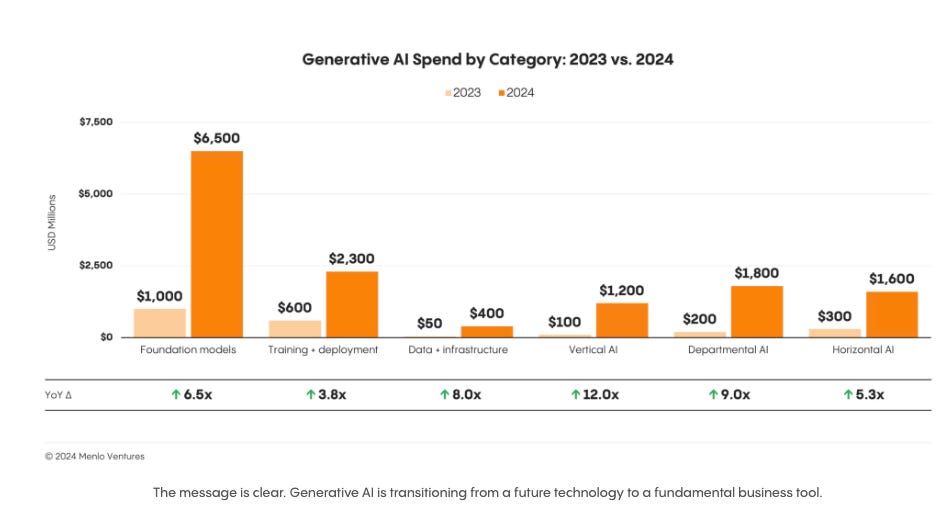
Menlo Ventures dives into why 2024 marks a pivotal year for generative AI, transitioning from experimental pilots to mission-critical implementations within enterprises. With AI spending skyrocketing to $13.8 billion—six times the $2.3 billion invested in 2023—the message is clear: enterprises are no longer just exploring AI; they are embedding it as a cornerstone of their strategic initiatives. This transformation underscores a shift from optimism to action, with generative AI becoming an operational reality across industries.
Despite the significant increase in adoption, challenges remain. Many organizations lack a clear roadmap for AI integration, reflecting the nascent nature of this transformation. Menlo Ventures’ report captures this dynamic shift, offering a detailed analysis of how enterprises are evolving their AI strategies, investments, and use cases.
Why GTM Professionals Should Care
For GTM professionals, this transformation presents both opportunities and challenges. Generative AI isn’t just a back-office tool—it’s actively reshaping how businesses engage with customers, develop products, and drive revenue. Understanding how generative AI is transforming workflows, industries, and customer expectations is critical for staying ahead of the curve.
Here’s why GTM professionals need to pay attention:
1. Strategic Influence: As enterprises prioritize AI investments, GTM leaders must align their strategies to integrate AI-driven tools that enhance productivity and efficiency.
2. Competitive Edge: Early adoption of generative AI in sales, marketing, and customer success can position teams as innovators, differentiating their approach from competitors.
3. Cross-Functional Transformation: Generative AI is breaking down silos, creating opportunities for collaboration across departments. GTM teams can spearhead these initiatives by leveraging AI to align sales, marketing, and customer success efforts.
Practical Applications for GTM Teams
1. AI-Powered Sales Enablement: Tools like meeting summarization apps (e.g., Fireflies.ai, Otter.ai) can help sales teams capture actionable insights from customer calls, freeing up time for selling rather than administrative tasks.
2. Enhanced Customer Support: Generative AI chatbots and agents (e.g., Aisera, Observe.ai) provide 24/7 support, improving response times and delivering personalized customer experiences.
3. Targeted Marketing Campaigns: Use generative AI to create hyper-personalized marketing assets, from email content to video scripts, ensuring relevance and engagement across customer segments.
4. Enterprise Search and Data Extraction: Solutions like Glean and Sana enable GTM teams to unlock insights from scattered data sources, empowering informed decision-making and streamlined workflows.
5. Strategic Account Planning: Generative AI applications in data transformation can help sales teams uncover trends, forecast opportunities, and craft data-driven pitches tailored to key accounts.
Examples of Generative AI Use Cases That Impact GTM
1. Personalized Outreach: Sales teams can leverage generative AI to craft tailored email campaigns based on customer behavior and intent signals, enhancing engagement and conversions.
2. Pipeline Management: AI-powered tools like predictive analytics can help GTM teams prioritize high-probability leads, improving forecast accuracy and focusing resources on the most promising opportunities.
3. Customer Training: Repurpose existing content into multilingual, AI-generated training materials for customer onboarding, reducing time-to-value and increasing product adoption.
4. Content Localization: Translate and adapt marketing content across 32+ languages using AI, expanding global reach without sacrificing brand consistency.
5. Meeting Productivity: Summarize and analyze key customer meetings automatically, ensuring follow-up actions are clear and aligned with customer goals.
Key Trends Shaping Generative AI Adoption
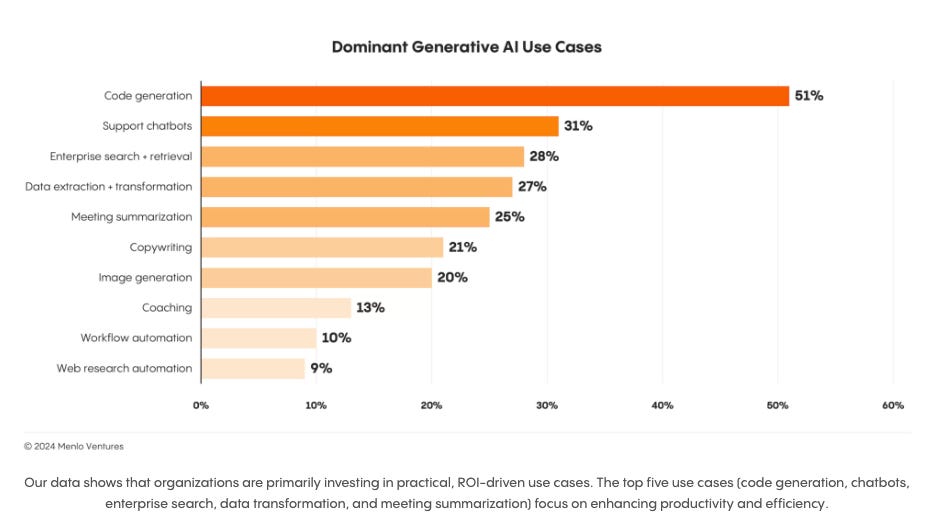
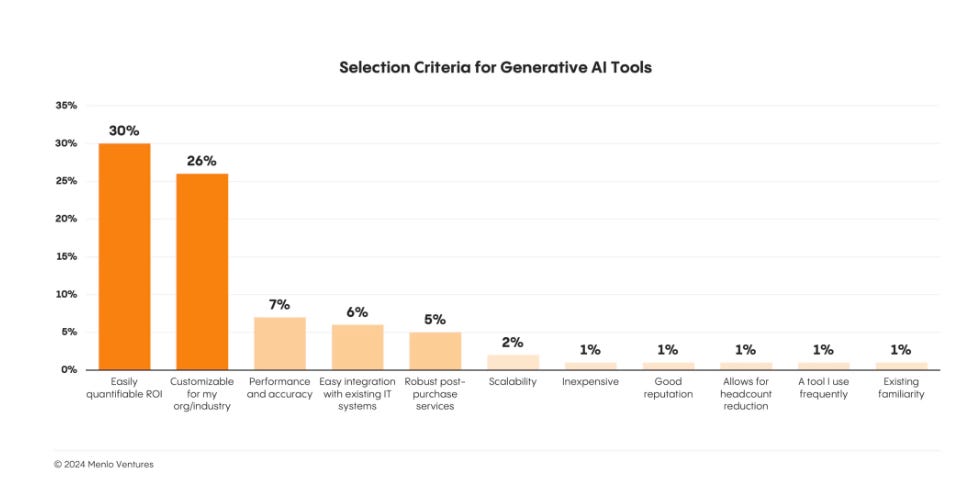
1. Focus on ROI: Enterprises prioritize applications that deliver measurable results, such as code copilots and automated support, which directly impact productivity and cost savings.
2. Emergence of AI Agents: Autonomous AI agents are starting to manage complex processes, signaling a shift from augmentation to full automation in certain workflows.
3. Departmental Integration: Generative AI is now being adopted across functions, including sales, marketing, HR, and finance, reflecting its versatility in driving value enterprise-wide.
4. Vertical-Specific Solutions: Industries like healthcare, legal, and financial services are adopting generative AI to address niche challenges, paving the way for customized applications.
Conclusion
Generative AI’s transition from pilots to production is a transformative moment for enterprises, with far-reaching implications for GTM teams. By understanding and leveraging the emerging use cases, GTM professionals can position themselves as leaders in this AI-driven evolution. From enhancing customer experiences to streamlining internal workflows, generative AI is reshaping how businesses operate—and GTM professionals who embrace it will be at the forefront of this change.
As enterprises continue to invest in AI, the opportunity for GTM teams to innovate and create value is immense. The question isn’t whether to adopt AI but how to strategically implement it to drive measurable impact. With the right approach, generative AI can become a cornerstone of GTM success in 2024 and beyond.
Deep Dive Review: Can Generative AI Outperform Human CEOs?
The provocative question posed by the Harvard Business Review—whether generative AI could replace CEOs—challenges conventional thinking about leadership, strategy, and human ingenuity. While AI systems like GPT-4o demonstrated impressive strategic capabilities in simulated corporate environments, this experiment revealed both the potential and limitations of generative AI in the C-suite. The findings suggest that AI is not ready to replace human leaders but can become a powerful tool for augmenting decision-making processes.
Why GTM Professionals Should Care
The implications of this research stretch beyond hypothetical boardroom replacements. For GTM professionals, understanding AI’s strategic potential is crucial to staying competitive. Generative AI’s ability to rapidly process data, optimize strategies, and adapt to dynamic conditions could redefine how GTM teams approach challenges such as market expansion, product launches, and customer engagement.
Key takeaways for GTM professionals:
1. Operational Efficiency: Generative AI can streamline decision-making by automating data-heavy analyses, freeing up GTM leaders to focus on creativity and innovation.
2. Strategic Adaptability: Leveraging AI for scenario modeling and stress-testing strategies can provide a competitive edge, particularly in high-stakes markets.
3. Leadership Collaboration: Mastering the balance between human judgment and AI-driven insights could position GTM professionals as forward-thinking leaders in their organizations.
Practical Applications for GTM Teams
1. Market Expansion: Use generative AI to analyze global market conditions, forecast demand, and optimize go-to-market strategies for new regions or verticals.
2. Competitive Analysis: Deploy AI models to monitor competitor activity, predict trends, and generate strategic recommendations for positioning and differentiation.
3. Customer Segmentation: Leverage AI to create more precise customer segments by analyzing behavioral data, enabling highly targeted campaigns and personalized experiences.
4. Scenario Planning: Develop multiple strategic pathways using AI simulations to anticipate challenges, such as sudden market shifts or customer demand fluctuations.
5. Sales Forecasting: Use AI to refine pipeline predictions, identify risks, and adjust sales targets based on real-time data analysis.
Examples of AI in CEO-Level Decision-Making for GTM Teams
1. Strategic Pricing Models: AI could simulate pricing elasticity across multiple markets, helping GTM teams maximize revenue while staying competitive.
2. Resource Allocation: Generative AI can recommend optimal resource distribution for sales and marketing based on past performance and current market conditions.
3. Crisis Response: Use AI to model responses to unexpected events (e.g., supply chain disruptions), ensuring flexibility in GTM operations.
4. Product Development Guidance: AI could analyze customer feedback and competitor offerings to suggest features that align with market demands, giving GTM teams a roadmap for innovation.
The Limitations of AI in Leadership
The experiment highlighted a critical gap in AI’s capabilities: its inability to navigate black swan events or account for intangible human factors like intuition, empathy, and ethical considerations. While GPT-4o excelled at short-term optimization, it struggled with long-term strategic resilience, underscoring the irreplaceable value of human foresight.
GTM professionals should take note of these limitations:
1. Ethical Judgment: AI lacks the moral framework to make decisions that align with company values or societal expectations.
2. Adaptability: While AI can process vast amounts of data, it often fails to pivot effectively in unpredictable scenarios.
3. Team Dynamics: Leadership is as much about inspiring people as it is about making decisions—an area where AI currently falls short.
A Hybrid Model for Leadership
Generative AI’s greatest potential lies not in replacing human CEOs but in augmenting their capabilities. The study suggests a hybrid leadership model where AI handles data-heavy analyses and simulations, enabling human leaders to focus on strategy, vision, and values. For GTM teams, this hybrid approach could translate into:
• Smarter Decision-Making: Combining AI insights with human creativity to tackle complex challenges.
• Improved Execution: Automating routine tasks so leaders can dedicate more time to strategic initiatives.
• Enhanced Team Collaboration: Using AI to provide real-time insights that align cross-functional teams around shared goals.
Conclusion
Generative AI offers transformative possibilities for decision-making at the highest levels of business. While it is unlikely to replace CEOs outright, its ability to process data, model scenarios, and optimize strategies makes it an invaluable tool for GTM professionals and organizational leaders. The key to thriving in this AI-powered era is mastering the balance between human ingenuity and AI-driven precision.
The future of leadership—and GTM strategy—is hybrid. By embracing AI as a partner rather than a competitor, leaders can unlock unprecedented efficiencies and make better decisions that drive long-term success. GTM professionals who leverage this synergy will position themselves as indispensable architects of their organizations’ growth and innovation.
GTM AI Tool of the week: Poggio
https://www.poggio.io/
I am not paid by nor employed by Poggio, I just pick tools to help feature and introduce you to.
Deep Dive Review: Poggio.io – Revolutionizing Enterprise Sales Workspaces
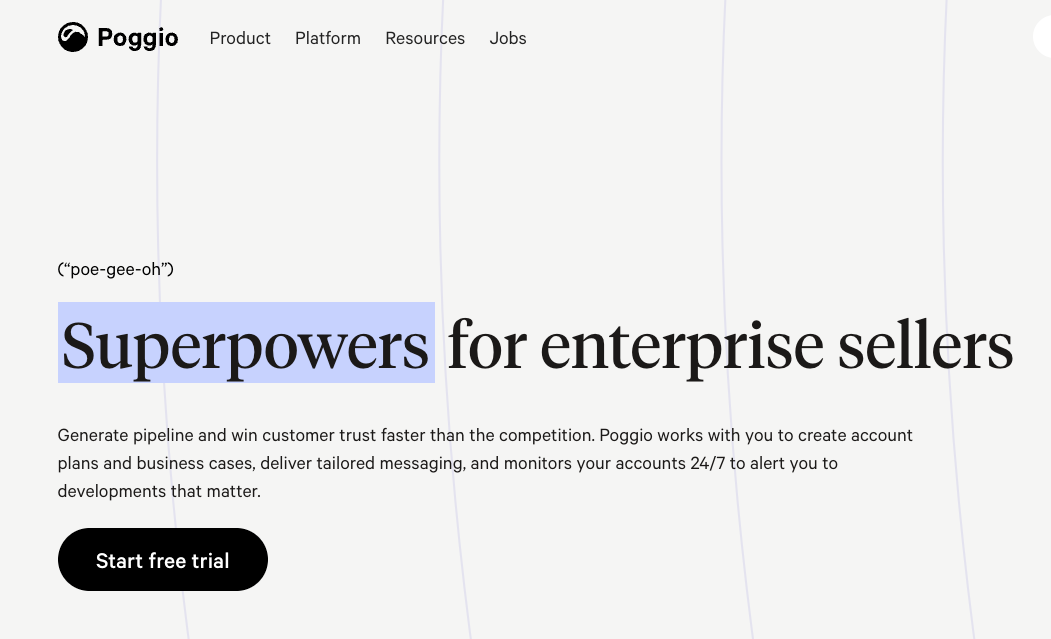
I’ve been diving into Poggio.io, and I’ll admit, this platform is impressive. Poggio uses AI to tackle one of the biggest challenges in enterprise sales: time-consuming, inefficient account planning and research. Its goal is to streamline these processes so sales teams can focus on building relationships and closing deals. While it has a lot going for it, there are a few areas where it could still improve. Let’s break it down.
The Goods
1. Automated Account Research and Planning
Poggio’s ability to aggregate data from various sources and present it in a clear, actionable way is a game-changer. Sales reps spend hours researching accounts, and this tool reduces that process to minutes. The automation provides not just surface-level insights but deep intelligence like key contacts, account-specific drivers, and competitive differentiators. This is a huge productivity booster for teams who want to hit the ground running.
2. AI-Generated Account Plans
The platform creates detailed account plans tailored to your solutions, which is gold for any sales team. These plans include points of view, value drivers, and stakeholder insights, helping reps walk into meetings fully prepared. The ability to align plans with specific methodologies ensures seamless integration into existing workflows.
3. Real-Time Monitoring and Alerts
The alerts feature is brilliant. Whether it’s a personnel change or financial update, staying updated on what’s happening in your accounts ensures you’re always one step ahead. It’s like having an AI-powered assistant watching your accounts 24/7.
4. Collaboration Tools
The collaborative workspace is particularly useful for sales teams spread across regions. Shared workspaces, page templates, and AI-driven tasks ensure everyone is on the same page and aligned on strategy.
5. Enterprise-Level Controls
For large organizations, the enterprise-level security features like Single Sign-On (SSO) and admin controls are essential. They make sure that access is both secure and manageable across teams.
The Bads
1. Dependence on External Data
While Poggio aggregates data well, its effectiveness depends on the quality and availability of external data sources. If your CRM is messy or your data pipelines aren’t robust, you might find some gaps in insights. This could lead to frustration for teams expecting seamless account intelligence.
2. Lack of Customization for Niche Workflows
Although Poggio offers flexibility, companies with unique or niche workflows may find the templates and AI outputs a little too generic. Greater customization options would make this platform even more valuable.
3. Learning Curve
As with any AI-powered platform, there’s a learning curve. While Poggio is intuitive for tech-savvy users, less tech-oriented teams might need significant onboarding and training to realize its full potential.
4. AI Copilot Limitations
The AI copilot is great for compiling information quickly, but its messaging and strategic suggestions can sometimes feel too generic. It’s a strong starting point, but human oversight is still necessary to tailor the messaging for high-value accounts.
Revenue Impact
1. Accelerated Sales Cycles
Poggio can dramatically reduce the time it takes to create account plans. Tasks that would normally take hours can be done in seconds. This efficiency allows sales reps to spend more time engaging with prospects and closing deals, which directly impacts revenue. If a team of 10 reps saves 5 hours a week, that’s 50 additional hours of selling time every week.
2. Improved Win Rates
With detailed, AI-driven account insights, sales teams can craft more compelling pitches and address customer pain points more effectively. This level of preparation improves win rates, especially for large, complex deals where understanding stakeholder needs is critical.
3. Higher Customer Retention
Real-time alerts ensure that sales teams are always in the loop about key changes in their accounts. By responding quickly to these developments, companies can build stronger relationships and reduce churn.
4. Reduced Operational Costs
By automating labor-intensive tasks like research and planning, Poggio reduces the need for additional administrative or sales support roles. This streamlining of resources can significantly lower operational costs while maintaining or even improving productivity.
5. Cross-Sell and Upsell Opportunities
With Poggio’s AI providing a holistic view of accounts, sales teams are better positioned to identify opportunities for cross-selling and upselling. This is particularly important in industries where growing existing accounts is as valuable as acquiring new ones.
Conclusion
Poggio.io is a powerful tool for enterprise sales teams looking to optimize their processes and focus on revenue-generating activities. The goods far outweigh the bads, making it a worthwhile investment for organizations committed to AI-driven transformation.
However, like any AI platform, Poggio isn’t a magic bullet. Teams need clean data, solid processes, and some training to make the most of it. The potential revenue impact—from accelerated sales cycles to improved win rates—is massive, but only if implemented thoughtfully. For GTM professionals, Poggio represents an opportunity to leverage AI not just for efficiency but for strategic advantage in a competitive market. It’s a tool that could genuinely change the game.