

This is sponsored by the AI Business Network and GTM AI Academy
For the full breakdown of all these articles, you can read for free at the www.gtmaipodcast.com GTM AI Podcast
Welcome my friends! Last week, I changed up how we are going to do the newsletter. In the past, I would go into a deep dive of the podcast and then feature 4-5 articles, research, news, and updates. The challenge is, it becomes very long and I want to help keep updated with AI without feeling overwhelmed.
So after today, here is what I will do on Linkedin:
In Depth Podcast Review
GTM AI Tech of the Week: MindStudio
Featured Linkedin posts
In the Free Newsletter I will cover trending articles and give my thoughts on overall trends as well as links to things you should know about.
This week we have:
Claude Code
Upgraded GTM Playbook from NFX
Google Releases prompt engineering guide
OpenAI releases a guide on AI Agents
Gemini now the market leader for Enterprise AI
And if you want to read the full newsletter where I go over more of the overall view this week and updates, you can go to the www.gtmaipodcast.com
Lets dig in to the podcast!
You can go to Youtube, Apple, Spotify as well as a whole other host of locations to hear the podcast or see the video interview.
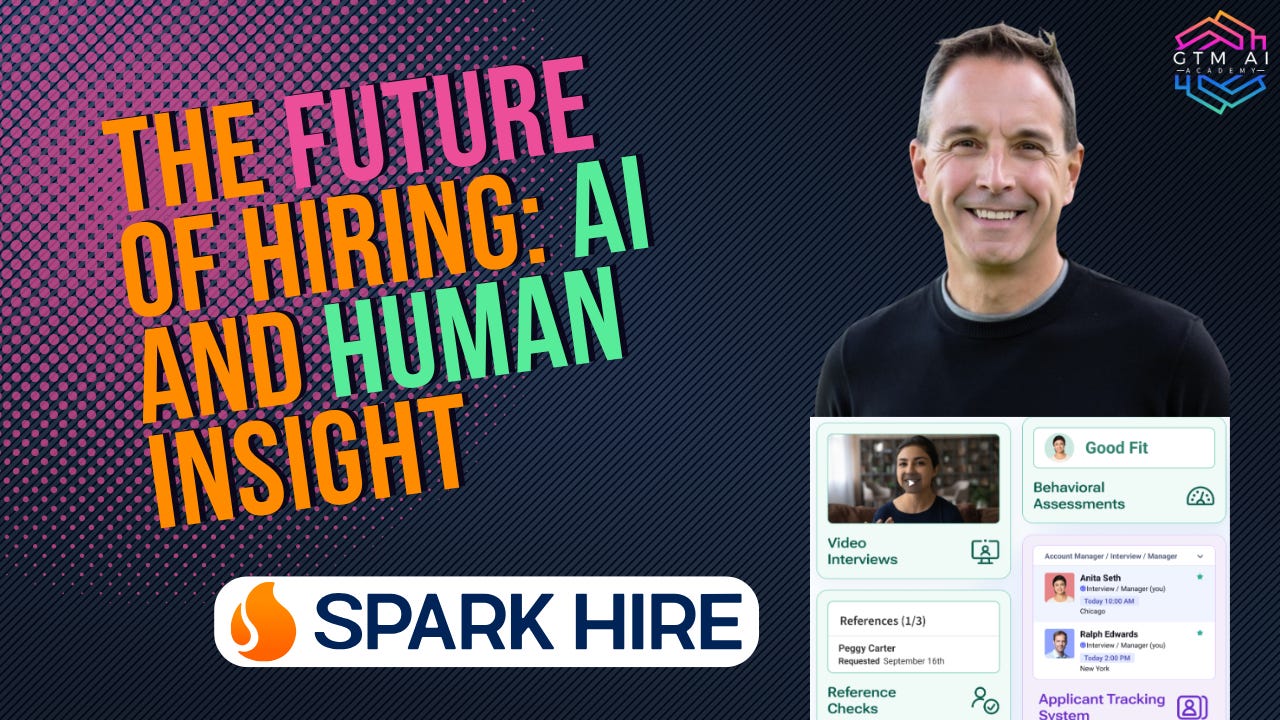
THE FUTURE OF HIRING: AI AND HUMAN INSIGHT WITH Gary Schwake
In the latest episode of the GTM AI Podcast, I got into an amazing discussion with Gary Schwake from Spark Hire, Inc. , a leading provider of hiring solutions for people-powered organizations. Their conversation explores the intersection of AI within the go-to-market (GTM) strategy and the hiring process, examining how AI can serve as a transformative tool rather than a mere technological novelty.
The Spark Hire Story
When asked about Spark Hire, Gary enthusiastically explains the unique proposition of the company. Spark Hire, initially a one-way video interview solution, has expanded to include an amalgamation of offerings by acquiring Co Meet and Cha, thereby providing holistic hiring solutions. These solutions are specifically tailored for people-powered organizations in sectors such as healthcare, education, and professional services. This approach allows Spark Hire to address the nuanced needs of these industries by leveraging advanced technologies.
AI in Go-To-Market and Hiring
A key part of the discussion revolves around AI’s role in both the GTM strategy and the hiring process. Gary emphasizes the imperative of utilizing AI to enhance human capabilities rather than replace them. He highlights the challenges of relying on probabilistic AI outcomes in hiring, pointing out the need for deterministic results to avoid unintended biases.
In contrast, Jonathan reflects on the opportunities AI presents for refining interview processes and enhancing decision-making in hiring, balancing the need for data-driven insights with the irreplaceable value of human judgment.
Strategizing with AI in a Changing Landscape
Both speakers delve into how AI influences strategic decisions in contemporary business environments. Gary discusses how AI facilitates defining ideal customer profiles (ICPs) with unprecedented precision, extracting insights from unstructured data to improve targeting and engagement strategies. Jonathan, on the other hand, likens the application of AI to a strategic advantage, especially for experienced leaders who understand the framework of effective GTM strategies.
The Collaborative Future
The exchange of ideas also touches on the evolving relationship between roles within organizations, such as the CIO and CRO, as AI becomes more embedded in operations and strategy. Gary notes the necessity of a cross-functional approach in AI implementation, often orchestrated by CEOs to ensure seamless integration across departments and improve overall customer experience.
Concluding Thoughts
In concluding the episode, Gary gave insights on what businesses should prioritize and avoid as they approach the upcoming year. He stresses the importance of aligning AI initiatives with core business objectives, advising companies to begin simply and scale thoughtfully. By focusing on fundamental questions and challenges, organizations can effectively employ AI to bolster their operations and drive meaningful outcomes.
Stay tuned for more insightful conversations on the GTM AI Podcast, where technology meets strategy in the fast-evolving business landscape. For direct engagement, connect with Gary Schwake through his LinkedIn profile or explore Spark Hire solutions at sparkhire.com.
GTM AI TECH OF THE WEEK: MindStudio
GTM AI Tool of the Week: MindStudio — The No-Code Platform That’s Quietly Becoming a GTM Powerhouse
As more go-to-market teams scramble to figure out how to operationalize AI beyond surface-level pilots or gimmicky automation, a quiet wave of no-code AI platforms is emerging. Few stand out quite like MindStudio, a tool purpose-built for business users who need to ship AI agents, workflows, or embedded logic — fast.
I’ve been testing it out firsthand, and while I’m not affiliated with the team behind it, I can say this: MindStudio might be one of the most underrated accelerants for marketing, sales, enablement, and RevOps teams looking to build without engineering lift.
What It Actually Is
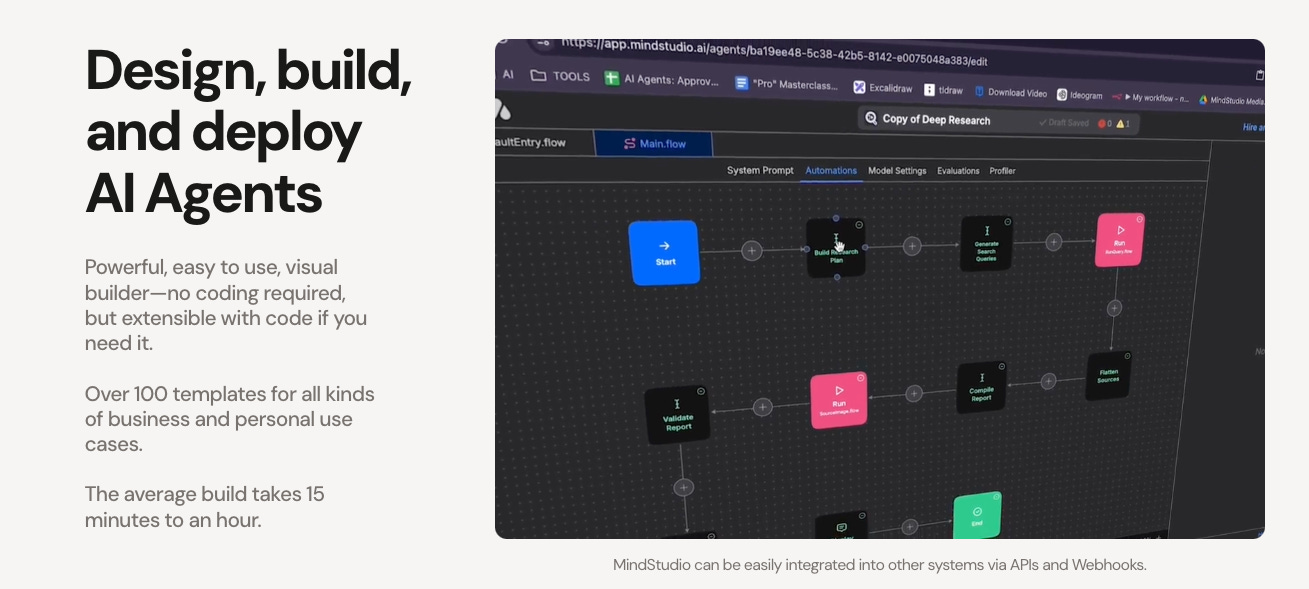
MindStudio is a no-code AI development environment where you can build, chain, and deploy agentic logic using a drag-and-drop interface. Think of it like the Zapier of intelligent workflows — but with the ability to use Claude, GPT-4o, Gemini, Mistral, and Llama behind the scenes.
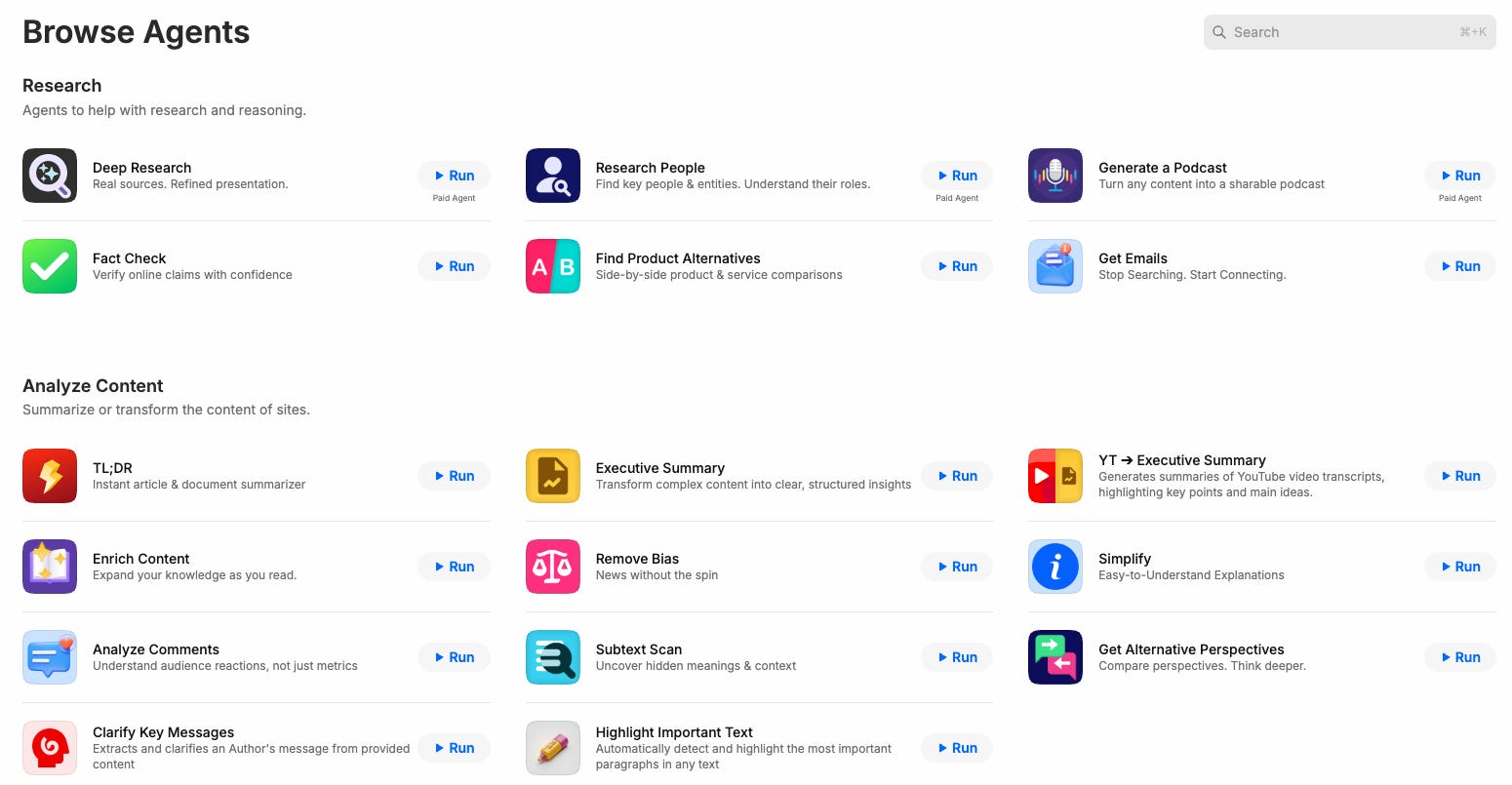
You can build your own internal GPT-like agents, plug in enterprise tools like Slack, HubSpot, Notion, or Google Calendar, and even deploy externally as public-facing chat interfaces. It’s designed to let non-technical users do what it used to take product and data engineering weeks to ship.
Why GTM Teams Should Care
Here’s where MindStudio gets interesting for go-to-market teams:
Real-World Use Cases
During my evaluation, I created:
A “win-loss interview analyzer” agent that took call transcripts and produced a categorized view of pricing objections, competitor mentions, and risk flags.
A “GTM maturity assistant” that lets enablement teams run a Q&A with sellers and score competencies based on AI evaluation against SPICED or MEDDPICC frameworks.
A “content summarizer” for the marketing team that pulls all SEO blog content into a Notion database and summarizes the performance, gaps, and trends weekly.
Each of these took less than 90 minutes to prototype. And because MindStudio handles both the frontend and the backend orchestration, you can deploy usable apps instantly with no need for hosting, deployment pipelines, or dev support.
Strengths
Multimodel: MindStudio supports OpenAI, Anthropic, Google, Meta, and Mistral, letting you build with the best model for the job — and change it later.
Rapid Build Velocity: You don’t need to write a line of code. Most GTM professionals can ship a workflow or internal tool in hours, not weeks.
Integration Ready: It integrates with Slack, Google Workspace, Twilio, HubSpot, and more — and you can call APIs from anywhere in the flow.
Enterprise Friendly: Workspace structure, usage-based pricing, audit trails, and model logging make it scalable for larger teams.
Limitations
Explainability: You can inspect prompt logic, but it doesn’t yet offer robust transparency or explainability for agent actions.
Complex Agents: For more advanced multi-agent workflows or long-form memory, LangChain or CrewAI are still better options.
Customization Ceiling: While fast to build, extremely complex apps with branching logic or embedded vector databases may require you to graduate out of MindStudio.
Final Take
If you're leading a GTM team and still waiting on engineering to “build the AI stuff,” MindStudio gives you the keys.
TL;DR for GTM Pros
MindStudio is a no-code AI orchestration platform that puts real agent power in the hands of sales, marketing, and RevOps teams. Fast to learn, flexible to deploy, and deeply practical.
If your team is stuck waiting for IT to greenlight AI tools, this is the backdoor that becomes the front door to innovation.
his issue distills the most recent insights from Anthropic’s Claude Code best practices, OpenAI’s agent design guide, Google’s AI strategy surge, NFX’s upgraded GTM playbook, and Google’s practical prompt engineering manual.
From Prompts to Platforms: The Strategic Inflection Point in AI GTM and Execution
GTM leaders are entering a new operating era. The AI landscape is shifting away from narrow models and productivity hacks toward orchestration systems, agent ecosystems, and infrastructure-as-advantage. This edition examines how Claude Code is becoming a low-level IDE for agentic workflows, why Google has structurally overtaken OpenAI in enterprise adoption, and how the most successful startups are no longer playing SEO or PLG games—they are rewriting the GTM playbook around community, agent-ops, and ecosystem leverage.
The pattern is clear: winners are not chasing model innovation. They are mastering orchestration, integration, and deployment.
What is happening and overall trends:
1. Coding Workflows Are Becoming Agentic Interfaces
Anthropic’s release of Claude Code marks the maturation of agentic developer environments. It is not a chatbot or an IDE plugin. It’s a CLI-first system that executes full workflows—planning, verifying, iterating, testing, and committing. Best practices include setting up CLAUDE.md files that serve as persistent contextual memory, defining shell-accessible toolchains, and orchestrating multi-agent coding pipelines. Its extensibility includes slash commands, MCP integration, test-driven development cycles, and even Docker-based safe execution modes.
Implication for GTM: Technical buyers are shifting expectations. Selling into engineering teams now means proving agent compatibility, customization, and auditability. Sales engineers must become fluent in CLI- and API-level orchestration. Buyers will ask not what the agent can generate, but how it verifies, iterates, and safely deploys code.
Action: Ensure your AI-powered product shows up not as a feature layer, but as an orchestration-ready actor in dev workflows. Invest in docs, prompts, and agent ops—just as you do in API stability.
2. Google’s Reversal: From Reactive to Dominant in Enterprise AI
At Cloud Next 2025, Google declared its AI lead—not with marketing, but with architecture. Gemini 2.5 Pro has emerged as the most performant enterprise model across reasoning and context length, beating GPT-4o in side-by-side evaluations. But the model is only part of the story. Google has achieved vertical integration across infrastructure (TPUs), application layer (Workspace), orchestration (Agentspace), and data (BigQuery, Vector Search, Knowledge Graphs). The result is enterprise AI that's not just faster, but cheaper per intelligence unit, more interoperable, and natively deployable in regulated environments.
Implication for GTM: Every vendor that plugs into enterprise IT will face a question from buyers: can your AI product operate with Google's ecosystem? From Workspace Flows to Vertex AI to distributed cloud, AI is moving from product feature to foundational stack. GTM leaders must understand Google's integrated play, and either ride its momentum—or explain why they don’t need to.
Action: Align with the Gemini-Vertex ecosystem where possible. Explore integration with Agentspace and commit to supporting A2A (Agent-to-Agent) protocols. Google isn’t just building agents. It’s creating the protocol layer for enterprise agent orchestration.
3. Prompt Engineering Has Become System Design
Google’s new Prompt Engineering whitepaper reveals just how operational prompting has become. It is no longer just prompt crafting—it’s system architecture. The document details techniques such as chain-of-thought (CoT), self-consistency sampling, step-back abstraction, and tool-augmented prompting like ReAct and Tree-of-Thoughts (ToT). Crucially, the guide shows how prompts are structured around roles, context layering, and schema definitions, turning them into reusable components in production.
Implication for GTM: Prompt engineering isn’t a UX trick. It is a competitive advantage in product design, onboarding, sales tooling, and customer support. Prompts are replacing business logic in many GTM flows, from onboarding to proposal creation to follow-up sequencing.
Action: Design a prompt operating model. Establish prompt versioning, testing environments, and success metrics. Turn GTM workflows (e.g., proposal generation, pricing analysis, qualification scoring) into prompt-driven agents that self-improve over time.
4. The GTM Playbook Has Changed: Ecosystem, Community, and Virality Now Drive Growth
NFX’s GTM strategy update shows that the old pull-based (SEO/PR) and even first-gen PLG tactics (viral loops, referrals) are no longer sufficient. Today’s fastest-growing AI companies—Cursor, Mercor, Lovable—scale through community embedding, open-sourced brand scaffolding, and community-native growth. These are off-platform push strategies that ride the networks users already inhabit (e.g., Discord, Slack, Reddit). Authenticity and experimentation trump paid campaigns. Growth now resembles a multiplayer game more than a funnel.
Implication for GTM: Marketing and sales must become distribution orchestrators. You are no longer “driving traffic”—you are co-building networked spaces, embedding product where trust already lives, and enabling users to self-navigate into deeper tiers of the product.
Action:
Start with narrow ICPs and seed micro-communities where your product is central to their workflow or identity.
Build virality not through gimmicks, but through features that reward collaborative use.
Let self-service dominate your entry motion; move to sales once trust and ARR validate the enterprise layer.
Recommendations for GTM and Revenue Leaders
Operationalize Prompt Engineering
Create internal tooling to manage prompt libraries, benchmarking, and iterations.
Use schema-based prompting to structure CRM, pricing, and messaging tasks.
Train enablement and RevOps teams on step-back, CoT, and ReAct patterns.
Deploy Agents Intentionally
Use Claude Code or Gemini Agents to automate high-friction GTM processes: deal qualification, onboarding scripts, campaign QA.
Assign owners to each agent like a team member. Score them based on outcomes.
Explore multi-agent workflows (e.g., deal triage agent handing off to comp analyst agent).
Leverage Google's Momentum
Treat Vertex AI and Agentspace as deployment targets. Buyers increasingly assume compatibility.
Re-evaluate your roadmap to consider Gemini 2.5 Flash for low-latency agent operations.
Train your solutions architects on Pathways, vLLM integration, and A2A protocols.
Restructure Growth Around Community
Build growth loops inside real communities. Don’t start a forum; start a Slack.
Launch influencer enablement kits tailored to your ICPs. Make it easy for users to show off what they build.
Incentivize usage, not signups. Your AI experience should market itself through the user journey.
Closing Thought: Agents Are the New APIs
The metaphor has shifted. APIs were the interface between services. Agents are the interface between workflows, tools, and decisions. Your CRM, CMS, and ad platform won’t remain siloed—they will be intermediated by agents that reason, orchestrate, and act.
The future GTM organization won’t run agents. It will manage them. Those who master the orchestration layer—tools like Claude Code, Agentspace, prompt systems—will win. Not by doing more, but by doing differently.
Source Summary
This edition draws on five advanced sources that reflect the latest developments in enterprise AI strategy, agentic infrastructure, and GTM innovation:
Anthropic’s Claude Code Best Practices
Outlines how engineers and AI teams are using Claude as an autonomous coding agent, with CLI-level control, custom workflows, memory files, and tool orchestration. Demonstrates how agentic design is being hardened into software development infrastructure.OpenAI’s Practical Guide to Building Agents
Provides a system-level framework for building, orchestrating, and deploying agents using LLMs. Covers agent architecture, tool integration, orchestration patterns (manager and decentralized), guardrails, and real-world implementation principles.Google's Enterprise AI Strategy (VentureBeat Deep Dive)
Details Google’s rapid ascent from laggard to leader in enterprise AI. Explores Gemini 2.5’s superior reasoning, TPU-based infrastructure, Agentspace, and Google’s integration advantages across application, model, and compute layers.NFX’s Upgraded GTM Playbook
Identifies the collapse of traditional pull-based and PLG growth channels and emergence of off-platform push strategies, community-native virality, ecosystem embedding, and influencer-based trust systems.Google’s Prompt Engineering Whitepaper (Kaggle)
A technical manual showing prompt structures for high-reliability outputs, including tool-augmented prompts, step-wise reasoning, and evaluation techniques used in real-world AI applications.BONUS: ChatGPT Cookbook Prompting Guide
The GPT-4.1 Prompting Guide from OpenAI represents a significant advancement in prompt engineering, emphasizing the transition from traditional prompt crafting to the development of agentic workflows. This guide provides strategic insights for developers and organizations aiming to leverage GPT-4.1's enhanced capabilities effectively.
1. Transition to Agentic Workflows
GPT-4.1's architecture supports the development of agents that can autonomously plan, execute, and reflect on tasks. By incorporating specific system prompts that encourage persistence, tool usage, and planning, developers can transform GPT-4.1 from a reactive chatbot into a proactive problem-solving agent. This approach has demonstrated a substantial improvement in task completion rates, notably a 20% increase in SWE-bench Verified scores.
2. Enhanced Tool Integration
The guide emphasizes the importance of utilizing the OpenAI API's tools field for passing tool information, rather than embedding tool descriptions within prompts. This method ensures that GPT-4.1 remains within its training distribution, reducing errors and improving reliability during tool-assisted tasks. Implementing this practice has been associated with a 2% increase in task success rates.
3. Precision in Instruction Following
GPT-4.1 exhibits a heightened sensitivity to prompt specificity, adhering closely to user instructions. While this enhances control over the model's outputs, it necessitates meticulous prompt design. Developers must provide clear, unambiguous instructions to guide the model effectively, as GPT-4.1 is less inclined to infer intent from vague prompts compared to its predecessors.
Recommendations for Implementation
Develop Structured Prompt Templates: Create standardized prompt structures incorporating persistence, tool usage, and planning instructions to streamline agent development.
Leverage API Tool Fields: Utilize the designated tools field in the OpenAI API to pass tool information, ensuring compatibility with GPT-4.1's training and reducing the likelihood of errors.
Establish Prompt Evaluation Protocols: Implement evaluation frameworks to assess prompt effectiveness, allowing for iterative refinement based on performance metrics.
Train Teams in Advanced Prompt Engineering: Educate development teams on the nuances of GPT-4.1's prompt responsiveness to maximize the model's potential in various applications.
By adopting the strategies outlined in the GPT-4.1 Prompting Guide, organizations can enhance the autonomy and effectiveness of AI agents, leading to improved performance in complex tasks and workflows.