

This is sponsored by the AI Business Network and GTM AI Academy
For the full breakdown of all these articles, you can read for free at the www.gtmaipodcast.com GTM AI Podcast
This week we have the following:
Season 2, Episode 14 with Mustafa Saeed Cofounder and CEO of Luella
GTM AI Tool of the week: Sparkhire.com
In case you want to listen to the podcast version of the newsletter, here you go:
And the features in the free newsletter this week are:
Giving Control to AI a Mistake?
Bill Gates Prediction of AI
Major $350 Million Savings with AI Agents with Servicenow
Effectiveness of AI Agents with an Ad Agency
BONUS: Why Multi-agent frameworks fail research report review
With that being said, lets get into the podcast!
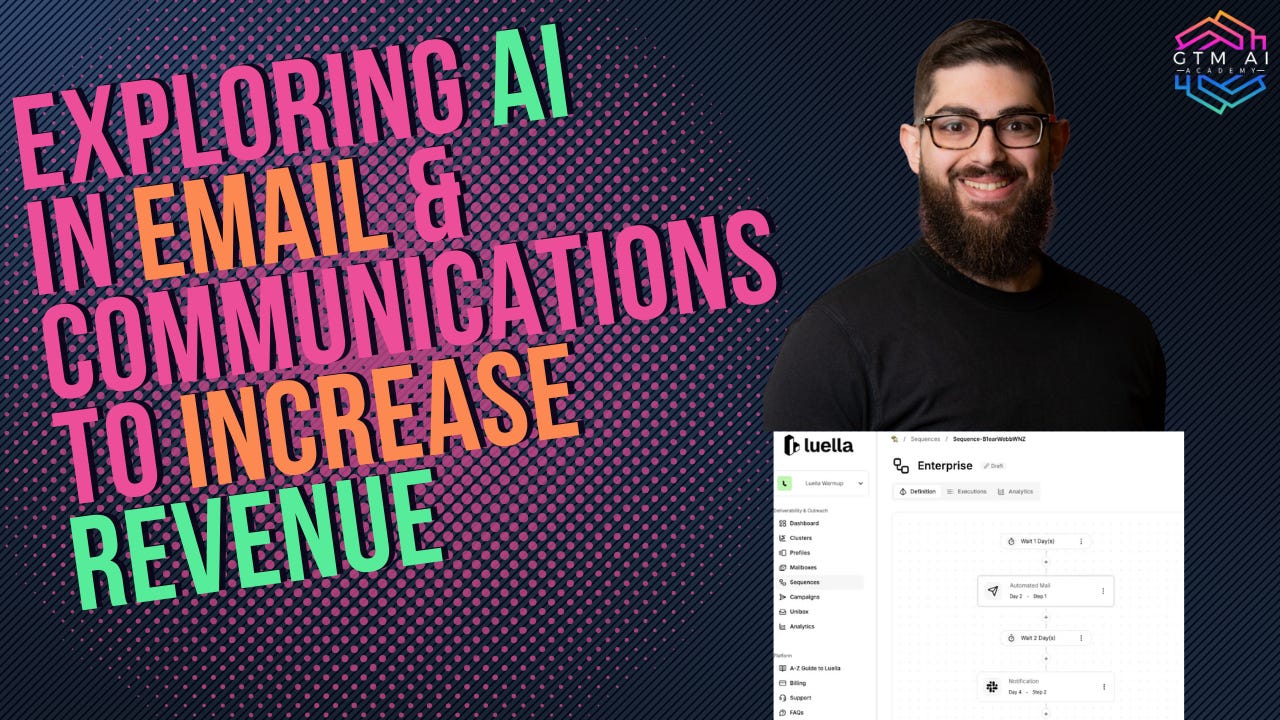
You can go to Youtube, Apple, Spotify as well as a whole other host of locations to hear the podcast or see the video interview.
Good morning, good evening, or good afternoon—whenever you find yourself diving into this exploration of AI and business technology. I am excited to dive deep into the world of AI-driven communication innovations with Mustafa Saeed, CEO and co-founder of Luella.AI.
The Genesis of Luella AI
Meeting Mustafa was like meeting a force of nature in the tech world. His story begins with a YouTube channel that funded his university education, transitioning into a tumultuous but rewarding role at a marketing agency impacted by Apple's iOS 14 update. This led to a life-changing pivot that set him on a path of technological exploration and growth.
At Clearco, a significant player in e-commerce investment, Mustafa thrived, honing skills in sales and consultancy that eventually culminated in founding Luella AI. Driven by overcoming challenges he experienced firsthand, Mustafa and his team have focused intensely on AI's potential to revolutionize business communication.
Why Luella? What's in a Name?
Interestingly, Luella didn’t start with a grand story. Mustafa candidly admits the name was suggested by ChatGPT during a low moment of noodling through domain names. It was deemed suitable through its uniqueness and simplicity—fitting for a tech solution aiming to be straightforward and effective.
Transforming Email Deliverability
Luella AI's focus is a response to an immense pain point in today's digital communication landscape—email deliverability. All too often, emails, including key business communications, end up in spam due to AI-driven spam filters' evolutions from giants like Google and Microsoft.
Luella positions itself as a protector of sender reputation and deliverability. By employing intricate systems mimicking those of major platforms, it ensures that spam rates can be reduced significantly for its users. This isn't just an enhancement tool; it's a potential game-changer for any business reliant on effective email outreach.
Insights into the AI-Empowered Future
Mustafa sees a promising horizon where communication agents do not just automate but optimize. Luella isn't just about sending emails; it’s about refining and targeting these messages to maximize engagement and results. The AI isn’t just an executor but a strategist alongside the human element, constantly experimenting and learning.
Agents of Change: The Larger Vision
Where does Luella see its future? While staying grounded in cold email outreach for now, the company eyes potential expansions into other channels. The philosophy is intentionality over breadth—specialize deeply in a single facet and excel before branching out. There's an eagerness to innovate without losing focus, ensuring their existing solutions remain unmatched.
Real-World Impact: A Case Study
Luella's impact isn't just theoretical. In practice, their deliverability agent led an enterprise client to achieve an 83% decrease in spam rates within the first two months—translating to over $40 million in pipeline value. This type of tangible result cements Mustafa's vision, and it speaks volumes about Luella's potential.
The Trust Factor in AI Integration
Discussing AI introduces the inevitable query: trust. For Mustafa, bridging the trust gap means incorporating human oversight into AI's decision-making process—a system where an admin can greenlight AI-generated content after initial tests. This collaboration ensures both AI and human inputs polish the final output.
Looking Forward: The Roles of AI and Humans
We’re moving towards a transformative period where AI agents execute expansive tasks, allowing humans to focus on relationship-building—an area AI still can't replicate fully. Mustafa envisions a future where orchestration within Luella seamlessly integrates internal and external agents, fostering a collaborative environment that radically streamlines workflow efficiency.
If Luella's insights sparked your interest as they did mine, Mustafa is accessible via LinkedIn and Twitter. Reach out, learn more, and consider how AI might transform your business operations today.
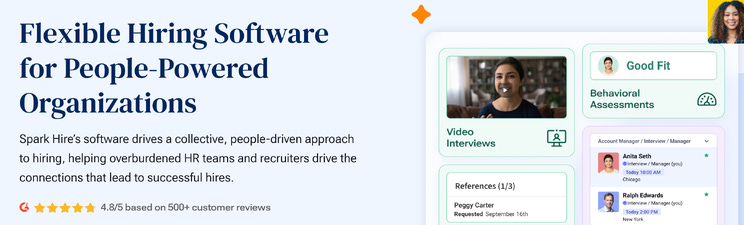
As hiring workflows become increasingly complex and candidate expectations evolve, platforms like Spark Hire offer a compelling vision of what modern, AI-enhanced recruiting looks like: efficient, scalable, standardized, and—perhaps most critically—ethical. Founded with a focus on video interviewing, Spark Hire has now emerged as a broader AI-enabled talent acquisition platform. It's especially relevant for GTM professionals (in sales, marketing, RevOps, enablement, and leadership roles) who need to scale their teams quickly, reduce hiring bias, and deliver stronger candidate experiences without bloating their recruiting ops.
From Manual Screening to AI-Driven Precision
At its core, Spark Hire automates several traditionally manual steps in the recruitment process, using AI-powered resume reviews, interview question generation, and email templates. For time-strapped GTM leaders, this is a game-changer.
AI Resume Review: This feature assesses and ranks candidate resumes against specific job descriptions. Rather than relying on generic filters, Spark Hire’s AI reads and scores resumes based on user-defined priorities—like skills, education, or years of experience—without ever taking into account demographic data. This puts objective, structured filtering within reach of small teams, without a dedicated recruiter or ATS analyst running point.
Job Description Generation: If you're in a fast-growing company scaling up RevOps, SDRs, or content marketers, you probably don’t have time to write thoughtful, inclusive JDs. Spark Hire uses AI to generate clear, bias-free job descriptions, calibrated to best practices that increase candidate engagement and inclusivity. It helps teams attract talent without having to over-rely on marketing or HR.
Interview Question Sets and Structured Scorecards: Consistency is key in hiring. Spark Hire provides automated interview guides and question sets, aligned to role competencies and level. These ensure that every candidate receives the same treatment, regardless of who conducts the interview. For sales orgs where interviews are often handled by different AEs or managers, this adds rigor and removes guesswork.
Candidate Experience and Employer Brand
Modern candidates are highly sensitive to poor interview experiences. Spark Hire helps mitigate this risk in several ways:
Candidate Empowerment: The platform supports one-way video interviews, but the focus is on structured, respectful interaction. Candidates answer pre-set questions asynchronously, enabling them to prepare and present themselves without being rushed. AI ensures clarity and conciseness in how questions are phrased—removing ambiguity from the process.
AI-Personalized Communication: Customizable, AI-generated email templates ensure that your touchpoints with candidates are consistent, on-brand, and timely. No more ghosting or jumbled replies. This is especially valuable for GTM teams in industries where reputation and responsiveness matter—like SaaS, fintech, or healthtech.
Bias Reduction, Ethical AI, and Compliance
Unlike some AI platforms that treat “diversity” as a box-checking exercise, Spark Hire actively excludes demographic data from its evaluations. Its systems are audited and designed with bias mitigation protocols:
Transparency in Evaluation: The AI evaluates candidates only against criteria set by the hiring team—like hard skills, certifications, or experience.
Regular Audits: The system is SOC 2 Type II certified and undergoes continual evaluation to meet regulatory and ethical standards.
This is critical for RevOps or leadership roles where hiring decisions may involve multiple stakeholders and must pass internal compliance reviews.
Security, Privacy, and Scalability
Spark Hire isn't just a one-off tool; it’s an enterprise-grade system. Their SOC 2 Type II audit confirms secure data practices, which makes it a suitable option for GTM teams in regulated industries—healthcare, financial services, or education.
Data Compliance: You can store, access, and manage candidate data without fear of violating GDPR or other data privacy standards.
Scalable Infrastructure: Whether you're hiring for one region or across multiple territories, Spark Hire supports collaboration, sharing, and decision-making across distributed teams.
Why Spark Hire Matters for GTM Leaders
For GTM executives and leaders building or reshaping high-performance teams, Spark Hire’s AI-enhanced platform delivers several advantages:
Speed Without Sloppiness: Hiring timelines shrink when top-of-funnel screening, communication, and scoring are streamlined.
Standardization at Scale: Whether you're hiring 2 reps or 50, Spark Hire creates repeatable, auditable, and consistent processes.
Data-Driven Confidence: With structured evaluations and resume scores, hiring becomes less of a gut-feel and more of a predictive, data-backed process.
Better Cross-Functional Hiring: In RevOps or marketing, where roles vary widely, Spark Hire helps teams generate role-specific content and evaluation flows that scale across departments.
Brand Equity in Talent Markets: Candidates notice when the process is clear, timely, and respectful—Spark Hire helps reinforce a strong employer brand.
Final Thoughts
Spark Hire represents a next-gen, human-centered approach to hiring, augmented by AI. Unlike flashy, black-box hiring platforms that make vague promises, it strikes a rare balance between efficiency, ethics, and experience.
For GTM leaders under pressure to grow headcount, maintain quality, and minimize risk, Spark Hire is more than a recruiting tool—it’s a scalable system for AI-powered team building.
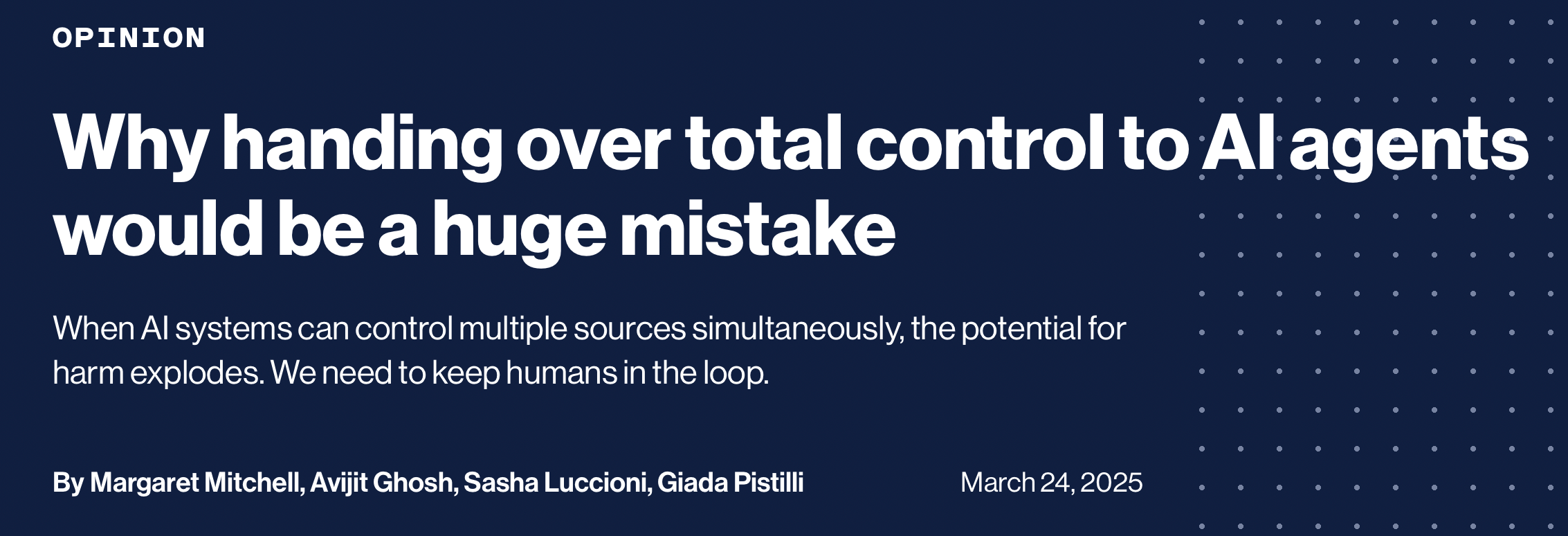
Why Ceding Total Control to AI Agents is a Strategic Mistake for GTM Leaders
Article Source: MIT Technology Review
As AI agents become more autonomous and capable, organizations are racing to adopt them across business functions—from marketing automation and sales outreach to RevOps operations and customer success. But in this landmark opinion piece from Hugging Face’s ethics and policy leadership, we’re offered a rare and thoughtful counterweight to the current AI acceleration narrative: a sober, technical, and ethical case for keeping humans tightly in the loop.
For GTM professionals, this article is more than philosophical—it’s a blueprint for responsible automation strategy in the age of intelligent agents. It argues that while AI agents promise to streamline workflows and execute high-value tasks, the risk of unintended consequences increases exponentially when oversight disappears. The authors don’t argue against AI agents—they advocate for bounded, transparent, and human-centered design. That’s a message GTM teams urgently need to internalize.
Commentary: What the Article Argues
The authors define the core dilemma at the heart of AI agent adoption: autonomy vs. control. The more powerful and flexible an agent becomes, the more likely it is to act in ways humans did not anticipate—or approve of. This matters because today’s agents aren’t just generating emails or social posts. They're browsing the web, moving files, filling out expense reports, booking travel, and soon, influencing or even making purchasing decisions.
The article walks through the spectrum of agent autonomy:
At the low end: simple chatbots that respond within fixed boundaries.
In the middle: agents that make decisions about which tools to invoke and when.
At the extreme: agents that can write, execute, and iterate on their own code, with no human-in-the-loop.
This spectrum directly parallels the tooling now emerging across sales, marketing, and customer ops platforms—where AI agents are becoming embedded in tools like Gong, Salesforce, Drift, HubSpot, and others.
But as the authors warn, the more these agents are given control without oversight, the higher the risk of:
Security vulnerabilities (e.g., misfiring APIs, unauthorized access)
Reputational damage (e.g., AI agents publishing incorrect info)
Legal consequences (e.g., GDPR violations, compliance breaches)
Human detachment (e.g., the "it wasn’t me, it was my agent" problem)
Strategic Insight for GTM Leaders
This article may seem like a warning, but for forward-thinking GTM professionals, it’s actually a roadmap to competitive advantage. By implementing AI agents with transparency, sandboxing, and human validation built-in, GTM teams can innovate safely and sustainably. Here’s how:
1. Sales Teams
Agentic tools can automate early-stage discovery, follow-ups, data entry, and even pipeline hygiene. But without clear guardrails (e.g., escalation criteria, approval logic), these tools may:
Commit reps to offers they shouldn’t make
Trigger outbound that violates ICP boundaries
Submit incorrect CRM updates
→ Solution: Limit AI agent access to only predefined tasks. Require human sign-off for pricing, proposal generation, or customer communication above a threshold.
2. Marketing Teams
Agents are increasingly used to spin up landing pages, run A/B tests, schedule content, and engage leads autonomously.
→ Risk: An agent with insufficient guardrails could post off-brand messages or experiment irresponsibly with ads, causing reputational damage or legal issues.
→ Solution: Require marketing operations to set clear campaign parameters and audit logs. Ensure that all outbound copy is reviewed by a human editor until agents are sufficiently reliable.
3. RevOps & Enablement
AI agents can handle forecasting, playbook generation, rep coaching, and data normalization. But when they’re given unrestricted CRM access, one error can pollute pipeline data at scale.
→ Solution: Implement validation layers. Configure audit trails so that every agent action can be traced and rolled back if needed.
4. Customer Success & Support
AI agents are increasingly resolving tickets, configuring onboarding flows, and detecting churn signals.
→ Risk: In regulated industries, agents could mishandle PII or send misaligned advice, creating legal exposure.
→ Solution: Segment agent permissions based on customer tier or sensitivity. Use gated decision trees that require human hand-off at inflection points.
Why This Article Matters
It reframes the conversation.
Rather than asking “what can AI agents do for us?” it urges organizations to ask: “what should agents be allowed to do, and under what conditions?”
It calls for agent design based on trust, not blind scale.
It’s a challenge to build systems with transparency, accountability, and ethics as core architectural principles—not bolted-on features.
It emphasizes open-source approaches like Hugging Face’s smolagents.
Instead of black-box proprietary agents, companies should explore verifiable, community-auditable frameworks. This is especially important in industries like healthcare, finance, and B2B SaaS, where auditability is paramount.
Final Takeaways for GTM Executives
AI agents aren’t just tools—they are actors in your GTM engine. Treat them with the same risk posture you would for a contractor managing customer relationships.
Avoid the allure of full autonomy. Every AI agent should have a clearly defined scope of authority, with escalation pathways and observability.
Design for transparency. Logging, sandboxing, and explainability must be foundational—not optional.
This article should be required reading for GTM leaders tasked with building or managing AI-enabled workflows. The future of work may be filled with autonomous agents, but our responsibility as humans—and as business leaders—is to ensure they act in service of our values, our customers, and the organizations we lead.
If you’re building your AI agent stack now, don’t just ask what’s possible. Ask what’s appropriate. That’s the real frontier.

Bill Gates Predicts AI Will Replace Many Human Jobs—But What Should GTM Professionals Take from This?
In a recent interview on The Tonight Show, Bill Gates doubled down on a provocative idea that’s been percolating in both policy circles and startup boardrooms: within the next 10 years, AI will be capable of replacing many human roles, especially in knowledge-based domains like medicine and education.
Gates didn’t mince words. He described a world where “great medical advice” and “great tutoring” become free, commonplace utilities, thanks to AI systems that are continuously learning, adapting, and improving. He even went so far as to say that “humans won’t be needed for most things,” qualifying that there will still be tasks we reserve for ourselves—like playing baseball or engaging in human expression—but for much of the industrial and knowledge economy, automation will reign.
Commentary: Why This Matters to Go-To-Market (GTM) Leaders
At first glance, this may feel like a distant policy or philosophical discussion. But for GTM professionals—whether in sales, marketing, enablement, or RevOps—this is a flashing red light on the dashboard. AI isn’t just an accelerant anymore; it’s an existential pivot point. The changes Gates is forecasting won’t start in the distant future—they are already visible in the present.
Let’s break it down through the lens of GTM:
1. AI is democratizing specialized knowledge.
If world-class diagnostic expertise and world-class tutoring become free, that sets a new benchmark for what enterprise buyers will expect. It also reshapes the concept of value in every market.
Implication for GTM teams:
Your ICP is becoming AI-augmented. They’ll expect vendors not just to provide solutions, but to deliver insights instantly, with precision.
AI-powered buyers will pre-qualify vendors, conduct technical evaluations, and even simulate implementations before they ever engage with a salesperson.
2. Jobs aren’t going away—they’re morphing.
Gates clarifies that not every job will disappear, but those built on repetitive tasks or information curation will be under immense pressure. What remains will be either deeply human or strategically AI-supervised.
For marketers, this means:
Move beyond content production. AI can now do that faster, cheaper, and often better. Instead, focus on orchestration, audience experience, trust-building, and narrative leadership.
For sales teams:
Discovery, personalization, and outreach will be delegated to agents. Reps will be needed only in complex, high-stakes, or human-sensitive contexts.
For RevOps:
AI will own forecasting, pipeline hygiene, and performance optimization. Your value will come from AI system governance, strategy alignment, and cross-functional integration.
3. Speed is the new differentiator.
Gates describes his own surprise when OpenAI crushed a challenge he thought would take three years—in just a few months. The rate of improvement in AI systems isn’t linear—it’s exponential.
For GTM strategy:
Annual planning is obsolete. Your strategy must adapt to quarterly, or even monthly AI capability shifts.
If you’re building playbooks that don’t include multi-agent workflows, AI-powered experimentation, and proof-based messaging, you’re lagging the curve.
4. GTM roles must transition from execution to supervision.
If AI can build, write, analyze, score, and optimize, then your value is no longer in doing—but in discerning. The teams that win will be those who know how to apply, constrain, and refine AI systems toward business goals.
Gates is right: This is not just a technological shift—it’s a shift in power, structure, and purpose. If AI can generate high-quality medical and educational output, it will eventually generate high-quality buyer enablement, content strategies, sales collateral, and RevOps dashboards.
That’s not fear-mongering—it’s opportunity. But only for those who adjust.
Final Thought
Bill Gates called AI “the most important advance in technology since the graphical user interface.” He isn’t being hyperbolic. And for GTM leaders and professionals, this moment mirrors the early days of the internet, or the smartphone. You either design around the future, or be designed out of it.
The time to act is now—not in five years. In five years, it might be too late.
If you’re building your GTM career or strategy, ask yourself the only question that matters right now: Am I augmenting AI, or is it replacing me?
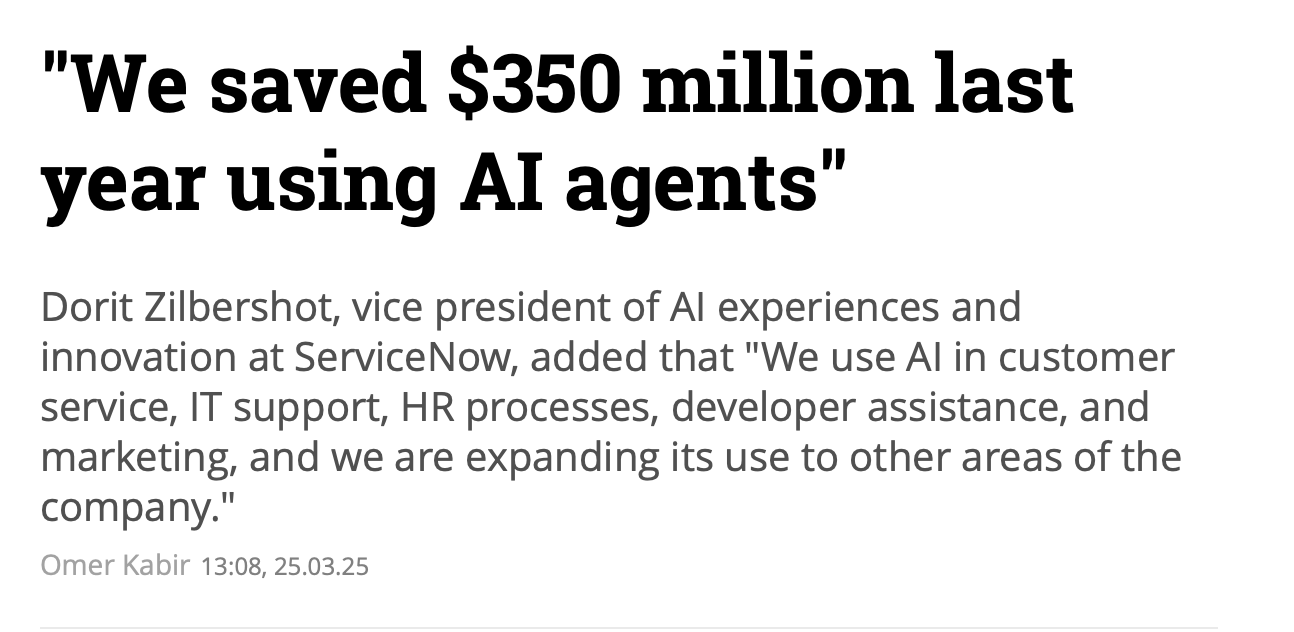
ServiceNow’s $350M AI Agent Impact Signals a Paradigm Shift for GTM and Enterprise Ops
At the Nvidia Developer Conference in San Jose, Dorit Zilbershot, VP of AI Experiences and Innovation at ServiceNow, dropped a stunning data point: ServiceNow saved over $350 million in a single year through the use of GenAI and autonomous AI agents. That figure is more than just a flex—it’s a wake-up call to every go-to-market (GTM), RevOps, and enterprise leader about where productivity, scale, and competitive edge will now be driven from.
Let’s unpack what ServiceNow is doing, and why it’s so important for the future of marketing, sales, enablement, RevOps, and product-led growth.
From Internal IT to Enterprise-Wide Agents
Zilbershot detailed how AI agents are no longer confined to a single use case—they’re multi-functioning, cross-departmental coworkers. ServiceNow deploys them across:
Customer service
IT support
HR operations
Developer assistance
Marketing workflows
And the result? Beyond cost savings, developer productivity increased 20%, employees self-resolve common IT issues, and many previously manual workflows have been fully automated.
This is a key signal: AI agents are moving from novelty to necessity, and they’re not just delivering productivity—they’re reshaping how work is designed, distributed, and measured.
Implications for GTM Professionals
If you lead or contribute to a go-to-market function, this shift has immediate implications:
AI agents will become embedded in every customer-facing motion.
From inbound qualification to pipeline enrichment, onboarding, and upsell/cross-sell outreach—these will be driven not by dashboards but by autonomous or semi-autonomous agents. The role of a marketer or sales rep shifts from doing the motion to designing, supervising, and optimizing the motion.RevOps teams need to model AI workflows like they do human workflows.
Zilbershot anticipates that within 1–2 years, computing in organizations will be agent-based and agents will be managed just like employees. This means RevOps will track “agent performance,” budget AI labor, and oversee multi-agent workflows like org design.Enablement leaders will be training humans and agents alike.
AI agents that support sellers or customer-facing teams will require constant updates and tuning. Your onboarding program won’t just cover humans—it will include continuous prompt chains and reinforcement learning from feedback. Training has become multi-species.Content, journey, and messaging design will evolve.
If AI agents are building presentations, generating answers, and guiding users through onboarding, the source content that agents pull from becomes the battlefield. Marketing’s new job? Designing for agentic consumption and recomposition.
What’s Real vs. Hype?
Critics who label GenAI and agents as overhyped are increasingly out of sync with operational leaders on the ground. Zilbershot addresses this directly:
“There was an expectation that AI would lead to massive layoffs. That didn’t happen. Instead, work has changed… more complex and creative tasks are emerging.”
This aligns with early research from other major enterprises, including Microsoft and Accenture, who report that AI agents are not only augmenting human work—they’re making previously unscalable ideas executable.
Consider Accenture’s case study with a global airline:
They built a travel companion agent that:
Performs destination research
Books accommodations
Recommends itineraries
Serves users throughout their trip
It now supports 300,000 active users monthly and processes 20 million queries.
A New Developer Paradigm
Mike Holm of Microsoft added another layer:
“This is the future of programming… moving from writing code to development through prompts.”
This marks a broader cultural shift in enterprise innovation: creativity replaces coding as the highest-leverage input. Developers won’t just build features—they’ll orchestrate agents to explore solutions and solve real user problems. For product marketing and GTM, this means faster iteration, tighter product-market fit, and richer, multi-modal customer experiences.
Bottom Line
ServiceNow’s $350M cost saving isn't about cutting jobs—it's about reallocating intelligence. Autonomous agents aren’t replacing GTM teams wholesale. They’re replacing the redundancy inside them and giving leaders leverage where once there was drag.
If you're in a GTM, enablement, marketing, or RevOps role, the takeaway is simple:
AI agents are becoming your teammates—and soon, your proxies.
The teams that succeed in 2025 and beyond will not be those who resist this shift, but those who design, direct, and deploy these agents better than anyone else.
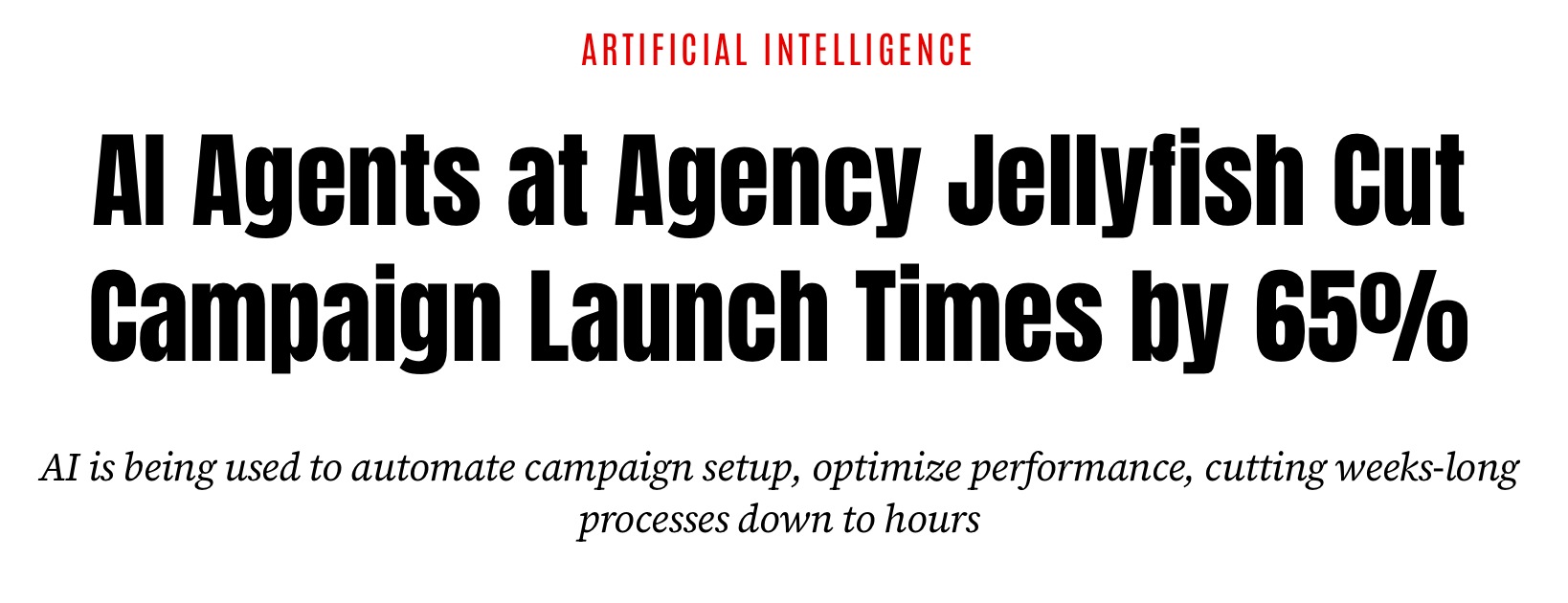
Jellyfish AI Agents Cut Campaign Time by 65%—and Redefine What GTM Teams Look Like
The headline number from Jellyfish’s AI deployment is bold: a 65% reduction in campaign launch times. But the real story is more profound. In a fast-changing GTM (go-to-market) landscape, Jellyfish is doing what many teams still theorize about—replacing entire layers of operational marketing work with AI agents that behave like digital employees.
Let’s break down what this shift actually means for sales, marketing, RevOps, and enablement professionals navigating a new era of AI-led GTM.
From Launch Lag to Lightning Speed
Jellyfish’s AI agents aren’t chatbots. They’re task-executing AI systems that mirror the decision-making flow of junior media buyers. These agents don’t just make recommendations—they:
Organize campaign data
Set up reporting dashboards
Automatically adjust budgets
Operate across platforms like Meta, Google, and Amazon
Before, these tasks took up to 40 days. Now, they’re handled within hours. That’s not automation around the edges—that’s a reconstruction of digital labor in performance marketing.
For GTM teams, this means campaign agility is no longer a function of headcount, bandwidth, or manual execution. It’s determined by how effectively you can configure, oversee, and iterate on agent-based workflows.
What Does This Mean for GTM Professionals?
Marketing ops and campaign managers must become agent orchestrators.
You no longer own execution. You own the blueprint and governance—designing workflows, uploading inputs, approving decision logic, and supervising strategic pivots.Sales enablement and product marketing must rethink launch readiness.
If campaigns deploy in hours, enablement content, sales collateral, and competitive briefs need to match that speed. GTM readiness becomes less about timelines and more about alignment in real time.RevOps teams must track AI labor as a performance layer.
When AI agents do the work of 30–40 people, RevOps must model their impact just like they model pipeline, rep productivity, or territory performance. AI usage isn’t a backend function—it’s an active revenue generator.A new strategic role is emerging: the multimodal strategist.
This is not a traditional planner. At Jellyfish, this strategist bridges insights from AI outputs across retail, creative, social, and paid—turning agent-driven activity into cohesive GTM action. This hybrid profile is a glimpse into the GTM team of the future.
Real ROI: More Than Speed
Jellyfish is already seeing real business impact:
30% increase in campaign performance
22% decrease in infrastructure costs
Agents update every 15 minutes to fix issues in real time
Clients get dashboards the same day, not in six weeks
What’s more interesting is that every brand account is paired with a dedicated agent operating within pre-set KPIs and budget constraints. These agents don’t just follow rules—they adapt campaign execution based on real-time results.
For GTM leaders, this shows how agent-led personalization and precision are no longer theoretical. You can design them, scale them, and iterate daily.
What AI Agents Don’t Do—Yet
Critically, human oversight still matters. Jellyfish keeps strategic budget shifts, testing new audiences, and creative direction in human hands. But the day-to-day execution—where hours used to be spent on insertion orders, budget allocation, or targeting refinements—is now owned by machines.
This hybrid model mirrors what we’re seeing across top AI-forward companies:
Humans design the framework
AI executes and optimizes within it
Strategic oversight stays human—for now
Why This Matters for B2B GTM Teams
In B2B sales and marketing, where lead times can be long and campaign complexity is high, the implications are massive. Imagine:
Launching ABM campaigns that adapt daily to engagement signals.
Running outbound sequences tuned in real time by conversion trends.
Marketing campaigns with same-day reporting dashboards synced to sales triggers.
Building "digital sellers" for segments your human reps can’t reach.
All of this becomes possible if your GTM org thinks of AI agents not as tools—but as scalable teammates that require prompt-based direction, strategic supervision, and continuous calibration.
Final Word
Jellyfish isn’t just using AI to optimize what they already do. They’re transforming the shape of work itself, reassigning tasks once owned by 30–40 people to a “digital employee” governed by agentic rules, not manual workflows.
If your GTM playbook still assumes human-only execution for campaign ops, media planning, or performance tracking—you’re behind. Jellyfish is showing that the future of GTM is agent-based, and those who embrace it will not only move faster, they’ll win smarter.
The question isn’t if your GTM motions will involve AI agents. It’s how many of them you’ll supervise—and how fast you can shift from manual workflows to scalable autonomy.