

My friends!
In our free tier, you’ll still get:
1. Podcast In-Depth Notes: Key takeaways and actionable insights from each episode.
2. GTM AI Tool of the Week: In-depth reviews and practical applications.
3. Weekly Research Update: Expert analysis of the latest trends in GTM and AI.
Introducing the Paid Tier
For those looking to dive even deeper, we’re launching a premium tier packed with exclusive resources like:
• Advanced AI Prompts and Templates
• In-depth Case Studies and Success Stories
• Video Breakdowns and Exclusive Events
This new structure allows you to choose the level of insights you need to elevate your GTM strategy.
Thank you for being a part of this journey! Let’s continue pushing the boundaries of what AI can do for GTM.
As an FYI, we will be only featuring the podcast and GTM AI Tool of the week here on Linkedin, the rest will be in our newsletter www.gtmaipodcast.com
GTM AI PODCAST AND NEWSLETTER
The newsletter and GTM AI Podcast & Newsletter are sponsored by GTM AI Academy with additions article submissions, and my cohost of Jonathan Moss of AI Powered GTM.
Business Impact> Learning Tools
We have the SLACK COMMUNITY around AI , come hang with your fellow GTM professionals, get insights, and content free to help in your teams and roles.
Now with all that being said, lets move forward with todays newsletter which is:
We have #41 with the the CEO of 1mind Amanda Kahlow going over some mind bending concepts around AI led growth.
To access the rest of the articles and reviews, subscribe for free to the newsletter
Perplexity Shops Launch and what does that mean for GTM
Harvard Business Review article on AI's impact on the Labor Market
Measuring AI ROI
Challenges of Deploying AI
GTM AI Tool of the week: Ragie
Some AI posts from this last week in case you missed it:
Prompt for account research using SearchGPT
Coach K Interview about AI and Enablement strategy
Step 4 in the 7 steps of AI Enablement
How are business leaders using AI Gartner
Now to the podcast!
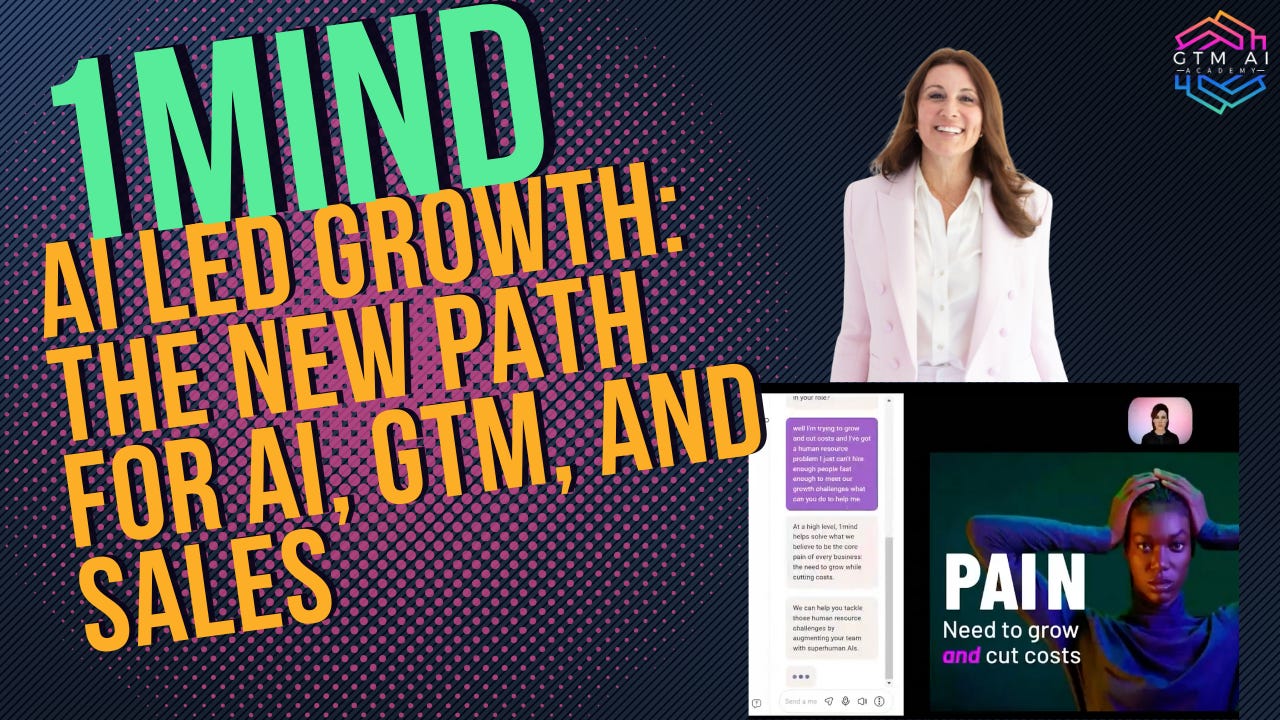
You can go to Youtube, Apple, Spotify as well as a whole other host of locations to hear the podcast or see the video interview.
Had the pleasure of interviewing Amanda Kahlow CEO of 1mind and it was FASCINATING
YOU CAN WATCH A DEMO OF 1MIND IN THE GTM AI TOOLS DEMO LIBRARY
The Wake-Up Call: This Isn't Just Another AI Tool
After my conversation with Amanda Kahlow, I couldn't sleep. And it wasn't just the afternoon coffee. What kept me up was the dawning realization that everything I thought I knew about go-to-market strategy might be on the verge of fundamental change.
Let this sink in for a moment: imagine running your entire sales operation at 2% of your current cost. Not 20%. Not 10%. Two percent. When Amanda first mentioned this number, I thought I'd misheard. But here's the kicker - this dramatic cost reduction isn't even the most important part of the story.
The Technology Gap Is Becoming a Chasm
Remember when we thought AI in sales meant automated email sequences and basic chatbots? That's like comparing a paper airplane to a SpaceX rocket. What I saw in Amanda's demo was something entirely different. Picture an AI jumping into your sales calls as a solutions engineer, pulling up perfect case studies mid-conversation, and handling complex technical discussions without missing a beat. It doesn't just remember every past interaction - it weaves that information naturally into conversations, creating a level of personalization we've only dreamed about.
Why This Changes Everything We Know About GTM Teams
The implications are staggering. Think about your traditional SDR team structure - it might become optional. Those technical sales cycles that typically stretch for months? They could compress dramatically. Global coverage issues? Gone. Your sales team suddenly operates 24/7 with perfect consistency.
For marketing teams, this is like going from broadcasting to having a personal conversation with every prospect - at scale. Your carefully crafted messages don't just sit in collateral anymore; they become part of dynamic, adaptive conversations. That elusive alignment between sales and marketing? It's not just possible - it's automated.
To my RevOps friends (and I know you're overthinking this already), imagine:
- Attribution that actually makes sense
- Data that's consistently clean
- Forecasting that's predictable
- Execution that's consistent
Customer Success Enters a New Era
This might be where things get really interesting. The idea of consistent onboarding experiences at scale, proactive issue resolution, and technical support that never sleeps isn't just a pipe dream anymore. It's happening.
The Hard Questions We Need to Ask
For Leadership Teams
The strategic questions are piling up: How will this change your competitive advantage? What's your timeline for adoption? How will you measure success? These aren't theoretical anymore - they're becoming increasingly urgent.
For Operations
The practical considerations are equally challenging: How do you integrate this into current processes? What training will your team need? How do you maintain quality control? What metrics need to change?
The Path Forward
This shift to "AI-Led Growth" isn't just another trend to watch from the sidelines. It's a fundamental transformation in how B2B buying and selling works. The advantages for early adopters are clear:
- Dramatically lower operational costs
- Significantly faster sales cycles
- Consistently better customer experiences
- Unlimited scalability potential
- Perfect execution consistency
What This Means for Different Roles
CEOs and Founders
Your AI integration strategy isn't a "nice to have" anymore. It's becoming central to survival. Start planning now, because your competitors certainly are.
Sales Leaders
The focus needs to shift from technical expertise to relationship building. Your team structure, hiring profiles, and coaching approaches all need rethinking.
Marketing Leaders
Get ready for personalization at a scale we've never seen before. Your content strategy needs to evolve from static assets to dynamic conversations.
RevOps Leaders
Your entire process landscape needs reimagining. The metrics that mattered yesterday might be irrelevant tomorrow.
The Urgency Is Real
Here's what keeps me up at night: The gap between companies that adapt and those that don't won't be incremental - it'll be exponential. The window for gaining these advantages won't stay open forever.
Looking Ahead
The future of go-to-market strategy isn't being written in some distant boardroom - it's being rewritten right now, in conversations like the one I had with Amanda. The question isn't whether to embrace this change - it's how quickly you can start.
Remember what Amanda said: We can embrace change with fear or with love. I'd add a third option: embrace it with strategic urgency. Because while we're debating whether to dip our toes in the water, others are already learning to swim.
The time to start thinking about this isn't next quarter or next year - it's today. The future of GTM is being rewritten, and you have the chance to be part of that story. The question is: Will you be writing it, or trying to catch up to those who did?
Final Thoughts
The conversation with Amanda made one thing crystal clear: The future of GTM isn't just about adding AI tools to your stack – it's about fundamentally rethinking how you approach the market. The question isn't whether to adapt, but how quickly you can start.
As Amanda put it, "We can embrace change with fear or with love." I'd add that we need to embrace it with strategy and purpose.
For those interested in learning more, visit 1Mind.com or reach out to Amanda at amanda@1mind.com. The future of GTM is here – make sure you're ready for it.

Perplexity is Launching SHOPPING
Yesterday Perplexity.ai launched Shopping on their platform for pro users. Just like how they have shifted how people search, this will dramatically change how people buy.
Why This Matters to Buyers
Buyers are getting a more seamless, efficient shopping experience. The one-click checkout feature, Buy with Pro, is a game-changer. It reduces the friction that often comes with online shopping—no need to re-enter shipping or payment details for every purchase. It’s streamlined and fast, and for U.S.-based Perplexity Pro users, there’s even free shipping. This kind of convenience makes the shopping journey more enjoyable and eliminates a lot of the small frustrations buyers often face. If the feature isn’t available, buyers are still smoothly redirected to the merchant’s site, maintaining a flow that feels effortless.
The Snap to Shop visual search tool brings an entirely new way to discover products. If you’ve ever wanted to buy something but didn’t know its name or where to find it, you can now simply take a photo, and Perplexity does the heavy lifting. It’s practical, intuitive, and saves users the hassle of endless searches for vague product descriptions. This tool creates an immediate bridge between curiosity and purchase, making discovery much simpler.
The updated product discovery experience is another win for buyers. By showing unbiased product cards powered by AI, users get access to clear, tailored, and objective recommendations—no clutter, no confusing sponsored content. This means buyers can compare options quickly without falling down the rabbit hole of irrelevant reviews or lengthy research. It’s like having a personal shopping assistant that filters out noise and gives you only what you need.
Why This Matters to GTM Teams and Strategy
For GTM teams, these updates unlock exciting opportunities to redefine how brands interact with customers. The Buy with Pro feature offers a direct-to-consumer (DTC) path with minimal friction. If your business is part of this ecosystem, you gain a clear edge: faster conversions, better customer retention, and reduced cart abandonment. It shifts the focus from transaction barriers to engagement and loyalty.
The Snap to Shop tool introduces a new way to engage with customers at the discovery stage. GTM teams can now leverage this functionality to better align their visual branding with customer intent. For example, if a company’s product is visually distinctive or iconic, this tool ensures that buyers can easily find it with just a photo. This opens new doors for creative campaigns that integrate visual cues to drive interest.
The Perplexity Merchant Program is a huge opportunity for GTM strategy. By participating, merchants increase their visibility and relevance in Perplexity’s search results. This is particularly valuable since buyers are presented with unbiased recommendations, and products indexed in Perplexity’s system stand a greater chance of being selected as a “recommended product.” Beyond visibility, the program provides merchants with free tools like API access and custom dashboards, empowering GTM teams with insights into shopping trends and buyer behavior. This data isn’t just valuable—it’s critical for creating strategies that resonate with real-time consumer needs.
Shaping the Future of Commerce
For buyers, this evolution removes barriers between discovery and purchase. It turns shopping into a fluid experience where AI handles the complexity, and users get what they need with minimal effort. For GTM teams, it’s a chance to build tighter integrations between product visibility, searchability, and purchase readiness. By aligning strategies with Perplexity’s ecosystem, brands can stay ahead of the curve in an increasingly AI-driven market.
The Perplexity Merchant Program, in particular, should catch the attention of GTM leaders. It offers retailers a direct path to participate in an AI-powered marketplace while arming them with data that can drive smarter decisions. Additionally, features like API access for custom search tools can help companies extend Perplexity’s power into their own ecosystems, creating a seamless buyer journey that starts wherever the customer is and ends in conversion.
In short, this isn’t just an upgrade for Perplexity users—it’s a rethinking of how modern commerce operates, blending convenience, personalization, and strategy into a cohesive whole. Buyers benefit from simplicity; GTM teams benefit from insights and visibility. Everyone wins.
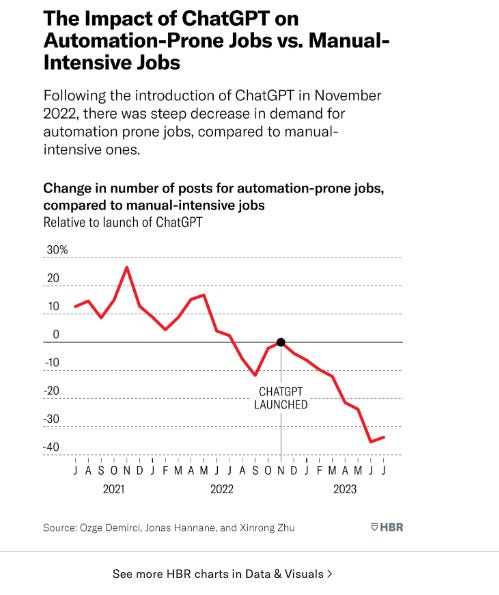
HBR Research Article: How Gen AI is Impacting the Labor Market
Fascinating study released on November 11, 2024, HBR digs into the labor market and how AI is impacting what is happening.
The rise of generative AI (gen AI) like ChatGPT is reshaping the workforce in unprecedented ways, forcing employees and companies alike to rethink roles, skills, and strategies for the future. Unlike previous automation waves, which primarily affected manual and repetitive tasks, gen AI targets a broader spectrum, including highly skilled jobs like writing and coding. Here’s why this shift matters and how companies and employees can adapt.
The Employee Perspective: Challenges and Opportunities
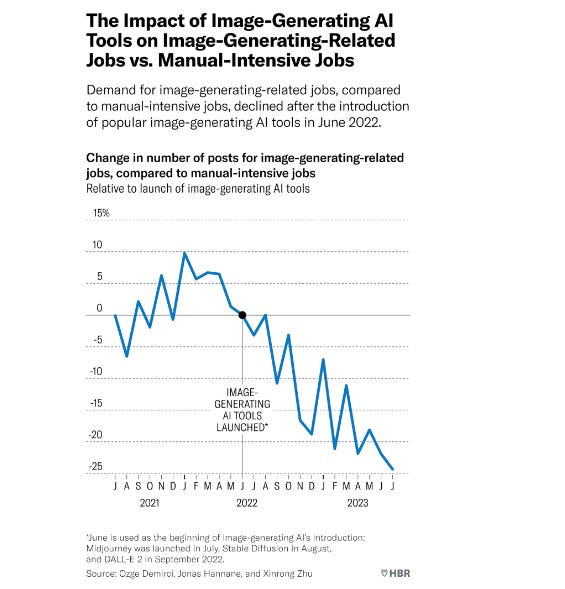
For employees, the impact of gen AI is both alarming and full of potential. As shown in research, the demand for automation-prone roles such as writing, software development, and graphic design has significantly declined—up to 30% in some cases. This drop in demand means stiffer competition for fewer jobs and a heightened need to stand out in a crowded field. Freelancers, for example, now face not only competition from peers but also from AI itself, which can handle many tasks faster and cheaper.
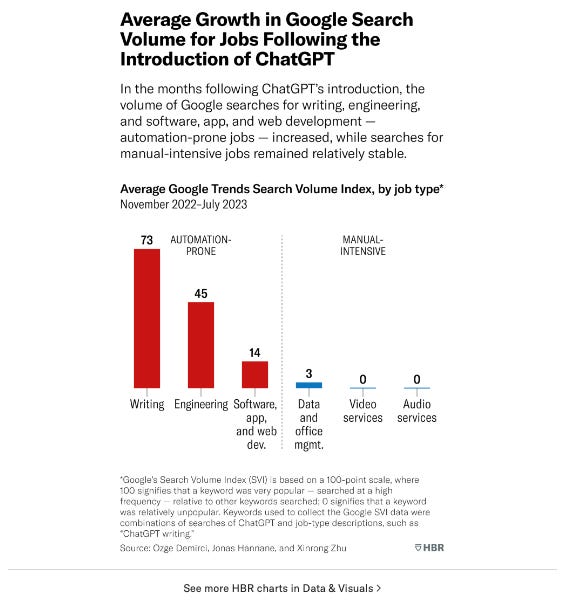
But there’s an opportunity embedded in this challenge. Employers are beginning to value roles that integrate AI skills, with listings explicitly mentioning “ChatGPT” or similar tools as desirable qualifications. This trend underscores a shift in the labor market: employees who can wield AI effectively are better positioned to secure jobs, command higher pay, and take on more complex, high-value tasks. Reskilling is no longer optional—it’s essential. Workers must focus on adapting to the new reality by learning how to collaborate with AI rather than competing against it. This means shifting from routine tasks to roles requiring human creativity, judgment, and decision-making—areas where AI, for all its power, still falls short.
The Company Perspective: Integrating AI with a Human Touch
For companies, gen AI’s rapid advancement presents both risks and opportunities. On the one hand, the ability to automate tasks that once required human labor can cut costs and boost productivity. But on the other, businesses risk alienating their workforce and stifling creativity if they focus solely on replacement rather than augmentation. Successful companies will strike a balance, using AI to empower their employees rather than displacing them entirely.
Transparency is key. Employees are understandably concerned about their future in an AI-driven workplace, so companies must communicate openly about how AI will be integrated. This includes outlining the specific tasks AI will handle and emphasizing the value of human contributions. Businesses that fail to do this risk creating a culture of fear and resistance, which can undermine innovation and productivity.
Upskilling and reskilling initiatives should be at the core of any company’s strategy. AI-related skills are becoming the new baseline for many roles, and businesses that invest in training their workforce will gain a competitive edge. This is especially important for lower-wage roles, where the greatest productivity gains from AI have been observed. Equipping these workers with the tools and knowledge to thrive alongside AI can unlock significant value for both employees and employers.
Additionally, companies must address disparities in AI adoption, such as the gender gap seen in tools like ChatGPT. By designing inclusive training programs and ensuring equitable access to AI technologies, businesses can create a more balanced and effective workforce.
Navigating the Evolving Labor Market
The dynamics of the labor market are shifting in ways that demand proactive strategies. The rise of gen AI has increased competition in automation-prone sectors, with freelancers and employees alike competing for a shrinking pool of opportunities. At the same time, job complexity and employer willingness to pay for skilled roles are on the rise. This suggests that the jobs that remain are becoming more demanding but also more rewarding for those who have the right skills.
Companies must rethink how they assign tasks, blending AI systems with human talent to maximize efficiency without sacrificing creativity. Managers, in particular, will need to develop new competencies to lead teams effectively in this hybrid environment. Understanding what tasks are best suited for AI versus human employees will be critical in maintaining a balanced, productive workforce.
The Path Forward: Collaboration, Not Competition
For both employees and companies, the key to thriving in a gen AI-driven world lies in collaboration. Employees must embrace continuous learning, updating their skill sets to include AI capabilities and focusing on tasks that leverage their uniquely human strengths. Companies, in turn, must invest in their workforce, creating opportunities for growth and adaptation rather than simply replacing people with machines.
By approaching gen AI as a tool for augmentation rather than replacement, organizations can foster innovation, drive long-term growth, and build a resilient workforce capable of navigating the challenges and opportunities of the AI era. The future of work isn’t about humans versus AI—it’s about humans working with AI to achieve more than ever before.
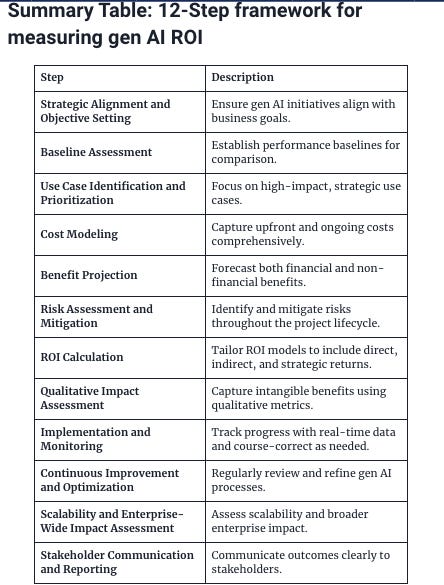
MEASURING AI ROI
Venturebeat has a fascinating article regarding AI and ROI which I wanted to dive into.
Generative AI platforms for enterprises are forcing organizations to rethink how they measure and justify investments in transformative technology. The comparison to teleportation measured in miles per gallon captures the struggle perfectly: we’re applying outdated metrics to an entirely new paradigm. The challenge is even more pronounced for employees and companies tasked with integrating AI into their workflows while proving its value.
Why It Matters for Companies
For businesses, generative AI like ChatGPT and other platforms offers transformative potential, but the impact is complex to measure. Traditional ROI metrics like cost savings or revenue growth fall short because AI often drives indirect benefits—like improved decision-making, faster innovation cycles, and better customer experiences—that are harder to quantify in financial terms. This can leave companies in a bind: leaders need to justify investments in gen AI to stakeholders but struggle to show immediate, tangible results.
The key challenge lies in attribution. AI implementations rarely operate in isolation. They transform entire processes, making it difficult to separate AI’s impact from other factors like workforce dynamics, tech upgrades, or market trends. Yet, companies that wait for perfect metrics risk falling behind as competitors leverage AI to accelerate growth.
Companies need a mindset shift: instead of asking, “What are the financial returns today?” they should focus on, “How is AI driving strategic advantages for the future?” This involves expanding ROI frameworks to include qualitative benefits like employee productivity, risk reduction, and innovation speed.
Why It Matters for Employees
For employees, generative AI is a double-edged sword. On one hand, it automates repetitive tasks, enabling people to focus on higher-value work. On the other, it creates uncertainty about job security and career trajectories. However, the companies that embrace AI as a tool for augmentation—not replacement—stand to foster a more engaged, innovative workforce.
Generative AI is rapidly changing the skills landscape. Employees who can adapt by mastering AI tools and integrating them into their roles will become indispensable. For example, roles in writing, design, and development are evolving as AI handles routine aspects of these jobs, leaving human employees to tackle more creative, strategic, or judgment-driven tasks. This shift requires a focus on upskilling and reskilling, which companies must actively support.
Additionally, as AI becomes a core part of enterprise operations, employees must learn to collaborate effectively with these tools. The new workplace dynamic isn’t humans versus AI—it’s humans working with AI to achieve better results. This collaboration enhances creativity, efficiency, and problem-solving capabilities, setting the stage for new levels of innovation.
A Balanced Approach to Value Creation
The real power of generative AI lies in its ability to enhance processes and spark innovation across the organization. Companies must redefine value creation to encompass both tangible outcomes—like cost reductions and time savings—and intangible benefits, such as better customer engagement or higher-quality decision-making. Employees, on the other hand, need to embrace continuous learning, using AI to amplify their capabilities rather than replace them.
For both companies and employees, the future of work with generative AI isn’t about rigid metrics or narrow definitions of ROI. It’s about building adaptable frameworks that evolve with the technology, creating long-term value for everyone involved. Success will come to organizations that foster collaboration, invest in people, and treat AI as a partner in growth.
Here are key KPI examples to measure ROI from generative AI initiatives, balancing tangible financial metrics with strategic, long-term benefits:
1. Productivity Gains
• Metric: Tasks completed per hour or per employee.
• Example: Number of documents processed daily before and after AI integration (e.g., a 70% increase in processing speed).
• Why It Matters: Highlights efficiency improvements and time saved, allowing employees to focus on strategic work.
2. Cost Savings
• Metric: Reduction in operational costs, such as labor or outsourcing expenses.
• Example: Annual savings from automating repetitive tasks like data entry or customer support ($100,000 saved from reduced staffing needs).
• Why It Matters: Demonstrates immediate financial benefits and resource optimization.
3. Error Reduction
• Metric: Decrease in error rates for AI-augmented workflows.
• Example: Errors in financial reporting dropped from 15 per 1,000 entries to 3 per 1,000, representing an 80% reduction.
• Why It Matters: Prevents costly mistakes and boosts the quality of outcomes.
4. Time-to-Completion Improvements
• Metric: Average time to complete a specific task or process.
• Example: Sales proposals generated in 2 hours instead of 8 hours, leading to faster deal closures.
• Why It Matters: Shortens cycle times and improves speed-to-market or customer responsiveness.
5. Revenue Growth
• Metric: Increased revenue driven by AI-enabled capabilities.
• Example: AI-assisted personalization in marketing campaigns increased conversion rates by 25%, generating $500,000 in additional revenue.
• Why It Matters: Connects AI use to direct financial performance.
6. Customer Satisfaction
• Metric: Improvement in Net Promoter Score (NPS) or Customer Satisfaction Score (CSAT).
• Example: NPS rose from 50 to 70 after AI-powered customer support improved response times and accuracy.
• Why It Matters: Enhances customer loyalty and retention.
7. Time Savings
• Metric: Hours saved across teams or processes.
• Example: Weekly meeting prep time reduced by 20 hours through automated insights and summaries.
• Why It Matters: Frees up employee time for higher-value work.
8. Return on Data (RoD)
• Metric: Percentage of data effectively utilized for decision-making.
• Example: AI enabled 90% of historical sales data to be actionable, compared to 60% pre-AI.
• Why It Matters: Shows how AI unlocks the value of previously underutilized data.
9. Enhanced Decision-Making
• Metric: Decision speed or number of AI-driven actionable insights.
• Example: AI reduced decision-making time on key projects by 50%, enabling faster pivots.
• Why It Matters: Demonstrates how AI improves strategic agility.
10. Training and Adoption Metrics
• Metric: Employee AI adoption rates and training completion.
• Example: 85% of staff completed AI upskilling programs within 3 months.
• Why It Matters: Tracks readiness and acceptance of AI across the workforce.
11. Innovation Pipeline
• Metric: Increase in new product launches or innovation cycles.
• Example: AI-led R&D reduced time to prototype new features by 40%.
• Why It Matters: Shows AI’s role in fostering innovation and competitive differentiation.
12. AI-Specific Revenue
• Metric: Revenue attributed directly to AI-enabled products or services.
• Example: AI-enabled upselling in customer service generated $250,000 in incremental annual revenue.
• Why It Matters: Isolates AI’s direct contributions to business growth.
13. Employee Engagement
• Metric: Engagement levels or survey scores after implementing AI tools.
• Example: Employee satisfaction increased by 15% after repetitive tasks were automated.
• Why It Matters: Reflects how AI positively impacts employee morale and productivity.
14. Cost Per Insight
• Metric: Total AI investment divided by actionable insights generated.
• Example: $500,000 investment yielded 1,000 insights, leading to $500 per insight.
• Why It Matters: Quantifies the efficiency of AI-driven decision support.
These KPIs can be tailored based on the specific use cases and goals of the organization, enabling a comprehensive understanding of AI’s value across financial, operational, and strategic dimensions.

Why Data Readiness Matters to GTM Teams and Leaders
For GTM (Go-to-Market) teams and leaders, AI holds the promise of transforming how businesses operate—streamlining workflows, uncovering new opportunities, and driving deeper insights into customer behavior. However, the reality is clear: the biggest obstacle to deploying AI isn’t the technology itself but the state of your data. Without unified, accessible, and properly governed data, even the most advanced AI models are effectively useless. This creates both a challenge and an opportunity for GTM teams to lead the charge in aligning business objectives with data readiness.
The GTM Impact: Data Silos Are Your Biggest Enemy
AI initiatives for GTM teams rely on breaking down silos and integrating data from multiple sources—sales, marketing, customer success, and product usage analytics. If this data isn’t centralized and accessible, GTM teams can’t deliver the insights needed to personalize buyer journeys, optimize lead targeting, or accurately forecast revenue. Leaders need to partner with data teams early to map out which datasets matter most for their AI use cases and ensure they’re ready for use.
Moreover, many AI-driven GTM initiatives, such as predictive lead scoring or customer churn analysis, demand constant updates to models with new data. This requires a robust governance framework to ensure data is tagged, classified, and shared appropriately across teams without jeopardizing privacy or security.
The New Role of Data Governance in AI-Driven GTM
Traditional governance models don’t cut it anymore. AI requires continuous data integration from both internal systems and external sources, like third-party intent data or social sentiment analysis. For GTM leaders, this means collaborating closely with IT, legal, and engineering to establish governance policies that are both agile and compliant.
Imagine an AI-driven sales assistant that pulls data from your CRM to recommend actions for your reps. Without proper tagging and classification, this tool might surface sensitive HR data or deliver inaccurate insights, eroding trust and compliance. Governance isn’t a “set it and forget it” exercise; it requires constant refinement to address changing business needs and evolving AI capabilities.
What GTM Leaders Can Do
1. Prioritize Data Readiness: GTM leaders must ensure their teams’ data is organized, accessible, and appropriately tagged. Start with a data inventory to understand what’s available and what’s missing. Engage data engineers to unify siloed information and create a centralized repository.
2. Appoint Data Stewards: Assigning a “data steward” within GTM teams can help bridge the gap between business needs and technical implementation. These team members should oversee how data is collected, managed, and used in AI-driven workflows.
3. Establish Feedback Loops: AI systems need monitoring and refinement. Create channels—such as a Slack channel or a formal model review board—where GTM teams can report issues like hallucinated insights or irrelevant recommendations. Regular feedback ensures AI systems align with business objectives and deliver value.
4. Align with Business-Ready Use Cases: Focus AI deployments on clear, high-impact GTM use cases. Examples include optimizing lead scoring, generating hyper-personalized marketing campaigns, and identifying product expansion opportunities. Ensure data readiness specifically supports these priorities.
5. Measure AI Readiness: Adopt AI readiness scores to quantify your progress. For GTM teams, this might mean evaluating datasets based on completeness, accessibility, and relevance to business objectives. A clear scoring system ensures continuous improvement.
Long-Term Benefits for GTM Teams
By focusing on data readiness, GTM leaders position their teams to extract the maximum value from AI investments. Unified and governed data enables more accurate buyer segmentation, better forecasting, and stronger customer relationships. It also fosters cross-departmental collaboration, as teams align around shared datasets and objectives.
As AI becomes increasingly central to GTM strategy, the ability to deploy it effectively will distinguish high-performing teams from the rest. Data readiness isn’t just an IT concern—it’s a critical enabler for GTM success. Leaders who prioritize this foundation will gain a competitive edge, driving growth and innovation in an AI-powered market.
GTM AI Tool of the week RAGIE.AI
GTM AI TOOL OF THE WEEK RAGIE.AI
Deep Dive Review of RAG and Ragie.ai: Revolutionizing Lead Engagement with AI
The rise of Retrieval-Augmented Generation (RAG) has ushered in a new era of AI-driven tools capable of blending real-time information retrieval with generative capabilities. This fusion allows AI to not only generate human-like responses but also ground those responses in accurate, contextually relevant information pulled from external data sources. Ragie.ai leverages this innovative approach to redefine how sales and Go-To-Market (GTM) teams manage lead engagement, follow-ups, and deal progression.
Let’s break down what RAG is, why it’s powerful, and how Ragie.ai takes this capability to the next level for GTM professionals.
Understanding RAG: Retrieval-Augmented Generation
1. What is RAG?
RAG combines two core AI components:
• Retrieval: This involves pulling relevant information from a database, live web search, or other external data sources. It ensures that the AI has access to up-to-date and context-specific content.
• Generation: Leveraging large language models (LLMs), RAG takes the retrieved data and crafts coherent, human-like responses that are personalized and actionable
In short, RAG bridges the gap between generative AI, which can produce creative responses, and factual reliability by grounding its outputs in real-world data.
2. Why is RAG a Game-Changer?
• Contextual Accuracy: RAG mitigates the “hallucination” issue common with traditional LLMs by basing its outputs on factual, retrieved content.
• Dynamic Adaptability: It can provide real-time insights by pulling data directly from current sources, such as CRM systems, live web searches, or external knowledge bases.
• Scalable Intelligence: RAG systems are ideal for complex workflows requiring a mix of creativity and precision, such as lead engagement, marketing messaging, and customer support.
For GTM professionals, the power of RAG lies in its ability to personalize interactions, optimize workflows, and provide actionable insights in real-time, creating a more efficient and effective approach to customer engagement.
Ragie.ai: Harnessing RAG for GTM Success
Ragie.ai builds on the foundation of RAG to deliver a specialized tool for sales and GTM teams. Its unique combination of real-time retrieval, intelligent automation, and personalized communication makes it an indispensable platform for managing leads, nurturing prospects, and driving conversions.
Key Features of Ragie.ai
1. AI-Powered Lead Engagement:
• Ragie.ai uses RAG to generate personalized, contextually grounded outreach and follow-ups. By retrieving data about prospects, past interactions, and relevant insights, it ensures every message resonates with the recipient.
2. Dynamic Next-Step Recommendations:
• Acting as a virtual sales manager, Ragie.ai suggests actionable next steps, such as creating tailored proposals, sharing case studies, or escalating deals. These recommendations are informed by the context of previous interactions and the specific needs of the lead.
3. Real-Time Lead Prioritization:
• Ragie.ai uses behavioral analytics to identify “hot” leads and prioritize them in real time. By analyzing engagement patterns, email responses, and other signals, it ensures reps focus their efforts where it matters most.
4. Customizable Messaging Templates:
• Users can create and store templates for common outreach scenarios, which the AI personalizes based on the recipient’s behavior, pain points, and preferences. This combination of scalability and personalization boosts efficiency without sacrificing quality.
5. Integration with Existing Tools:
• Ragie.ai seamlessly integrates with CRMs like Salesforce or HubSpot, as well as email platforms, enabling teams to embed its capabilities into their existing workflows without disruption.
6. Adaptive Playbook Generation:
• The platform generates dynamic playbooks tailored to specific leads or segments. These playbooks provide step-by-step guidance, including talking points, outreach strategies, and follow-up actions.
Why GTM Professionals Should Care
For GTM professionals, Ragie.ai offers the ability to combine the intelligence of RAG with practical tools designed to address real-world sales challenges. Its focus on automating repetitive tasks while enhancing personalization makes it a critical asset for teams looking to scale their operations without compromising engagement quality.
1. Efficiency and Focus
• Automating manual tasks like lead follow-ups, research, and prioritization frees up time for sales reps to focus on high-impact activities like closing deals or building relationships.
2. Personalized Engagement at Scale:
• By using RAG to ground communications in accurate, real-time data, Ragie.ai ensures every interaction feels uniquely tailored to the prospect, increasing the likelihood of conversion.
3. Data-Driven Decision Making:
• Ragie.ai’s ability to analyze engagement patterns and behavioral data provides teams with actionable insights, helping them refine strategies and allocate resources more effectively.
Practical Applications of Ragie.ai for GTM Teams
1. Sales Teams:
• Use Case: Automate follow-ups and generate tailored outreach messages.
• In Depth: By retrieving and analyzing data about prospects, Ragie.ai crafts emails and messages that address specific pain points, making interactions more impactful. It also suggests next steps to ensure deals progress smoothly.
2. Customer Success Teams:
• Use Case: Automate customer check-ins and retention workflows.
• In Depth: Ragie.ai helps customer success teams proactively engage with clients, addressing potential issues before they escalate and improving long-term satisfaction and retention.
3. Marketing Teams:
• Use Case: Gain insights from lead behavior to refine campaigns.
• In Depth: Marketing teams can use Ragie.ai’s analytics to identify which messaging resonates most with leads, allowing for real-time adjustments to campaigns for better ROI.
4. Enablement Teams:
• Use Case: Equip sales reps with dynamic, AI-driven playbooks.
• In Depth: By generating playbooks tailored to specific leads and scenarios, Ragie.ai helps enablement teams standardize best practices while adapting to individual rep and prospect needs.
5. Business Development Teams:
• Use Case: Automate prospecting and research workflows.
• In Depth: Ragie.ai’s retrieval capabilities allow business development reps to gather comprehensive insights about potential partners or markets, streamlining the research process and enhancing outreach efforts.
6. Revenue Operations (RevOps):
• Use Case: Optimize sales pipelines with actionable insights.
• In Depth: Ragie.ai provides RevOps teams with a bird’s-eye view of the sales pipeline, highlighting bottlenecks, conversion trends, and opportunities for improvement.
The Power of RAG in Ragie.ai’s Capabilities
Ragie.ai’s integration of RAG transforms traditional sales workflows by ensuring every action is informed by real-time, context-specific data. This makes it not just an automation tool but an intelligent collaborator, capable of guiding teams through complex sales cycles with precision and foresight.
• Grounded Creativity: By combining retrieval and generation, Ragie.ai ensures that every piece of communication is both creative and grounded in facts.
• Scalable Personalization: The RAG framework allows Ragie.ai to personalize interactions across thousands of leads without sacrificing authenticity.
• Strategic Decision-Making: With its ability to analyze and interpret data in real time, Ragie.ai empowers teams to make smarter, faster decisions.
Conclusion
Ragie.ai is more than just a sales tool—it’s a strategic partner for GTM teams looking to harness the power of RAG. By combining real-time data retrieval with generative AI, Ragie.ai enables teams to engage leads with precision, optimize workflows, and make data-driven decisions that drive results. Whether you’re in sales, marketing, or customer success, Ragie.ai’s ability to scale personalized engagement and streamline operations makes it an essential tool for staying ahead in today’s competitive landscape.