

This is sponsored by the AI Business Network and GTM AI Academy
For the full breakdown of all these articles, you can read for free at the www.gtmaipodcast.com GTM AI Podcast
This week we have the following:
Season 2, Episode 12 with Paul Glover of Burendo
GTM AI Tool of the week: Tidio
And the features in the free newsletter this week are:
Hugging Face and the AI Future
Gemini and Data Analysis
Section's AI Proficiency Report results
Forrester's Agentic AI From Words To Actions
With that being said, lets get into the podcast!
You can go to Youtube, Apple, Spotify as well as a whole other host of locations to hear the podcast or see the video interview.
Had a blast on the GTM AI Podcast with Paul Glover. As a tech enthusiast and a principal consultant at Burendo, Paul shares his profound understanding of AI's role in enhancing business processes, and I'm eager to share our dialogue with you.
Discovering AI's Potential
From tech beginnings as a business analyst to becoming a luminary in AI, Paul Glover has a rich story. He started exploring AI by viewing interactions with large language models as microservices, each contributing to the broader value in business settings. His journey led him to create PromChain, where he delved deeper into AI applications.
Unravelling Burendo’s Mission
Burendo is a UK-based consultancy firm. Paul, as a principal consultant, runs the AI community of interest and guides clients on utilizing AI effectively. Burendo’s approach is about embracing productivity through AI while ensuring that the clients can harness this technology efficiently. Simply put, it’s about trimming the complexity and aiding businesses in understanding and applying AI to streamline their procedures.
The Shift in AI Usage
AI is rapidly morphing, but there's a common pattern Paul has observed: organizations test AI tools stealthily. They view tools like ChatGPT as supportive yet unofficial. The challenge today is how businesses can officially integrate AI into their operations to derive clear value and efficiency.
The Tools of Tomorrow
As for the future, Paul believes we’re leaning towards deeper automation in tools like Jira and Azure DevOps. Companies are testing new functionalities to manage projects better, enhancing productivity by automating significant chunks of work. Transforming how we work with AI isn't just about adopting technologies; it’s about how these tools mature and reshape operations to reduce the workload on human resources.
Process Overhaul
One significant discussion point was the balance between adopting AI and evolving processes. AI isn’t a silver bullet that simply makes old processes faster; it's about understanding when current methods need transformation. Implementing AI should inspire improvements rather than merely automate outdated methods.
Creating the Right Structure
A pivotal part of this AI revolution is having the correct data structure. Paul emphasizes the importance of a knowledge base that supports AI tools, allowing efficient access and the right context for quality outputs. For those venturing into AI, setting up a test group to identify potential benefits across various tools is crucial.
The Human Element in AI
Paul’s innovative perspective involves working alongside AI, using it as a tool to support human creativity. By delegating routine tasks to AI, teams can focus on value-added activities, ensuring an optimal blend of human oversight and machine efficiency.
Health Care App Case Study
One real-world application of these principles was when Paul's team developed a health care app prototype for a client aiming for quick market entry. By leveraging AI tools, they compressed weeks of development into a matter of hours. Such examples highlight the tangible business value brought forth by intelligent AI deployment.
Conclusion
In wrapping up our conversation, Paul left us with a thought-provoking note on how AI is transforming the landscape of business productivity. With insights, tools, and practical applications, his approach at Burendo exemplifies a forward-thinking stance on technological evolution, ensuring businesses not only survive but thrive in the digital age.
I hope you found these insights as valuable as I did. For more inspiration and information on leveraging AI in business, feel free to explore further via Paul's LinkedIn or Burendo’s resources. Until next time, keep pushing the boundaries of what's possible.
00:00 Introduction and Guest Welcome
00:26 Guest's Background and Journey
01:36 Current Role and Responsibilities
03:27 AI in Business and Enterprise
04:27 AI Tools and Future Trends
07:26 Practical Applications of AI
12:22 Implementing AI in Business Processes
21:33 Balancing AI and Human Input
23:47 Conclusion and Contact Information
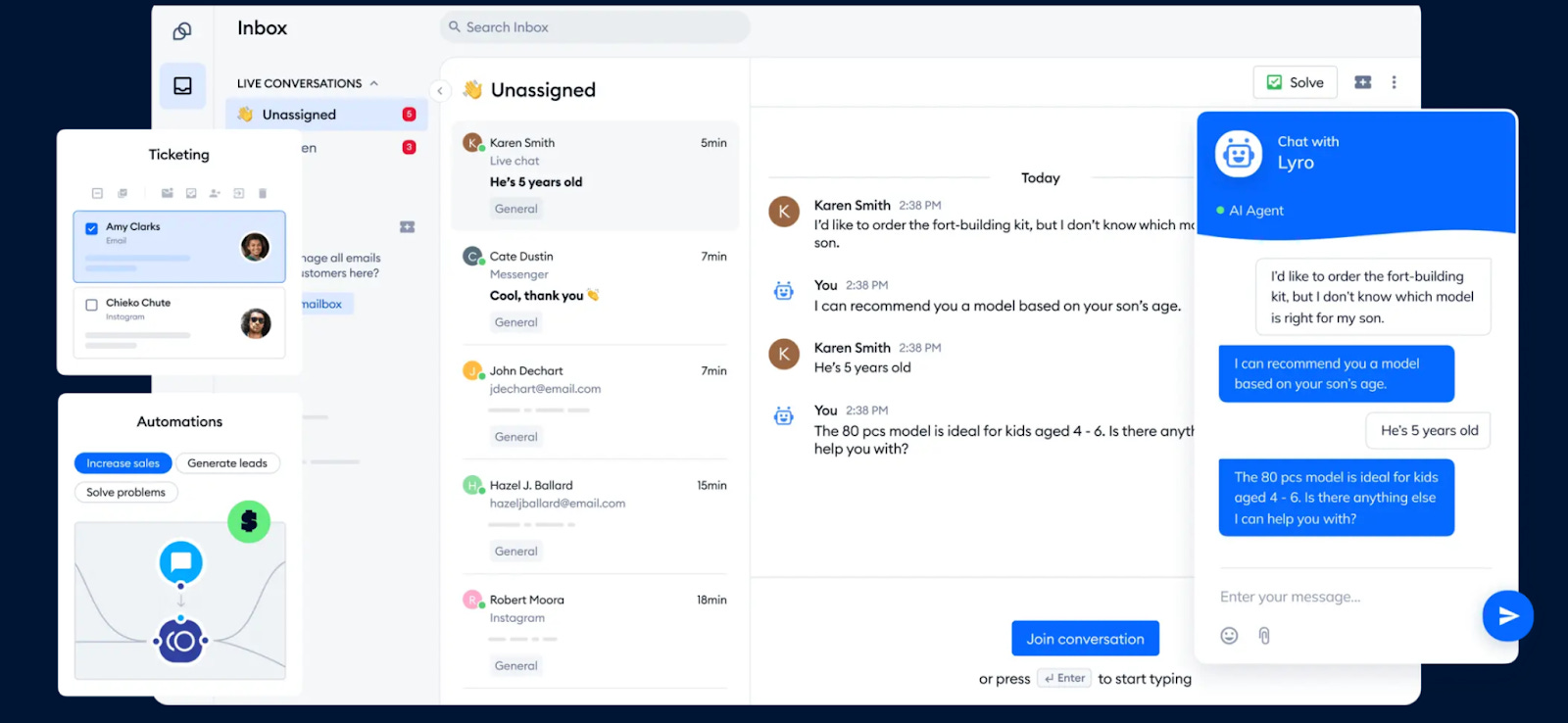
Tidio Review: AI-Driven Customer Support at Scale
Customer service automation is increasingly necessary for businesses handling high support volumes. Tidio offers a platform that combines live chat, automation, and AI-driven customer support to help businesses improve response times, reduce support workloads, and centralize communication channels.
At the center of Tidio’s automation suite is Lyro, an AI chatbot capable of resolving up to 70% of customer interactions without human intervention. Unlike traditional chatbots that rely on static keyword detection, Lyro leverages intent recognition to understand customer inquiries and provide relevant responses.
Over 300,000 businesses currently use Tidio, with case studies showing measurable impacts in customer support efficiency, response time reductions, and increased lead generation.
What Tidio Addresses
Many businesses struggle with high support ticket volumes, slow response times, and the cost of scaling human customer service teams. Tidio aims to solve these issues by:
Lyro AI: How It Works and Performance Metrics
Many AI-powered customer service tools underperform due to poor intent recognition, reliance on rigid decision trees, or high escalation rates to human agents. Lyro AI attempts to address these weaknesses with a natural language processing model that understands customer queries beyond exact keyword matching.
Beyond AI: Additional Tidio Features
✅ Live Chat
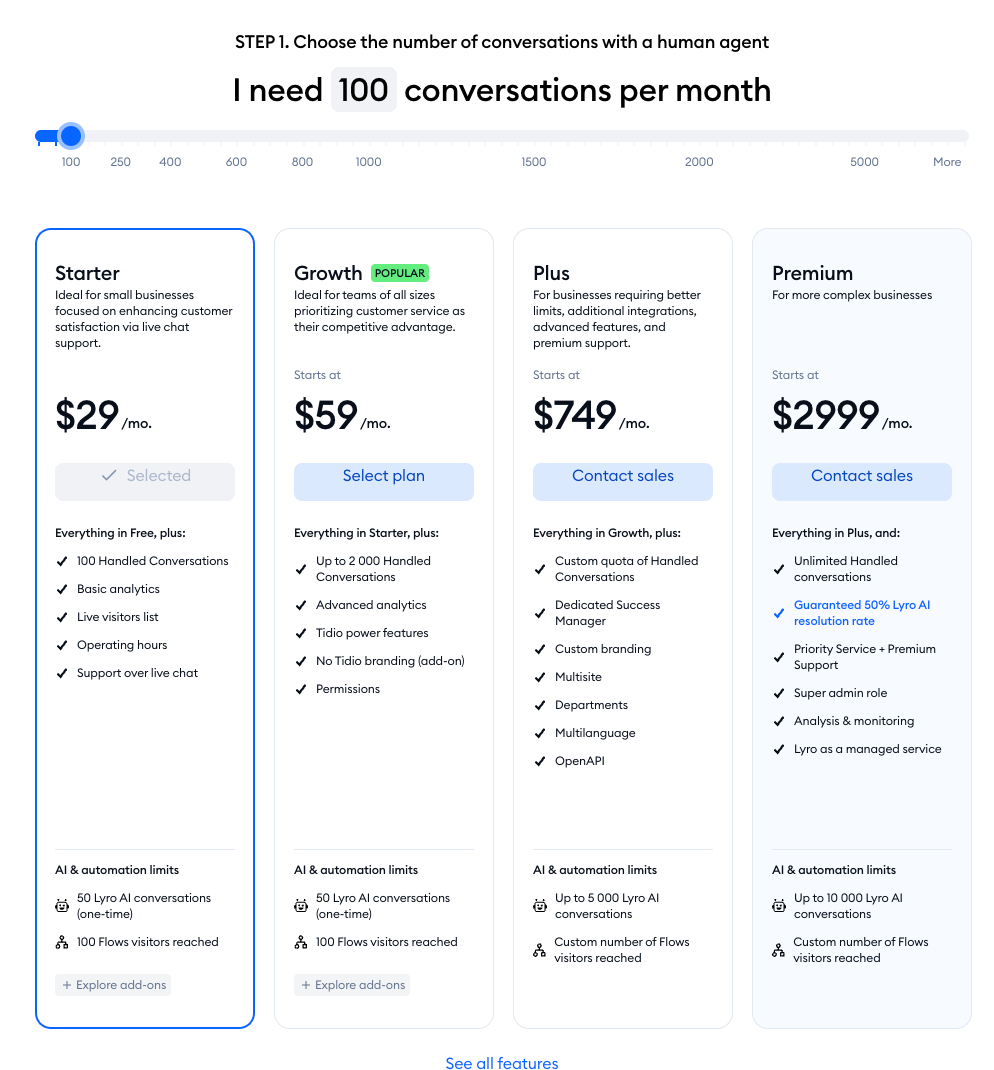
Tidio Pricing Overview
Tidio is priced lower than competitors like Intercom and Drift while offering a similar feature set.
Strengths and Limitations
✅ Strengths
❌ Limitations
❌ Integration limitations – Advanced third-party connections require Zapier.
Final Assessment: Should Businesses Use Tidio?
Tidio is a practical AI-powered customer service solution for businesses looking to automate repetitive inquiries, improve response times, and reduce reliance on human agents.

AI’s Future: Scaling vs. Scientific Breakthroughs – What Hugging Face’s Thomas Wolf and Anthropic’s Dario Amodei Debate Means for GTM Leaders
The AI industry is divided on what the next frontier of artificial intelligence should be. On one side, Dario Amodei, CEO of Anthropic, argues that AI will create a "compressed 21st century", accelerating scientific progress by 100x and solving major challenges in medicine, physics, and beyond. On the other side, Hugging Face’s Thomas Wolf warns that current AI systems are not designed to challenge existing knowledge or create paradigm-shifting discoveries, making them more akin to obedient students rather than revolutionary thinkers.
This debate is not just theoretical—it has direct consequences for how businesses, GTM leaders, and AI-driven companies build and deploy AI. Will AI be a scaling superpower for incremental efficiency, or will it lead to game-changing discoveries that redefine industries?
1. The Debate: AI as a Scientific Genius vs. AI as a High-Performing Assistant
🔹 Anthropic’s Vision: AI Will Compress a Century of Progress into a Decade
Dario Amodei’s vision of AI is bold and transformative. He predicts that AI will:
Accelerate breakthroughs in medicine, neuroscience, and engineering—potentially eliminating cancer and curing genetic diseases.
Expand human lifespan by decades through AI-driven biological and pharmaceutical innovations.
Surpass Nobel Prize-level intelligence, creating a future where AI contributes to groundbreaking scientific progress at a pace never seen before.
This perspective has fueled massive investments in scaling AI models, with companies like Anthropic, OpenAI, and DeepMind betting billions on larger, more powerful LLMs.
🚀 For GTM leaders, this means:
Companies investing in AI expect transformational results—AI is no longer just a tool, but a core driver of innovation and business value.
AI-driven industries (healthcare, finance, cybersecurity, research) will become even more competitive as intelligence amplifies faster than human capabilities.
Organizations must prepare for rapid AI advancements, meaning GTM strategies must be highly adaptable and AI-integrated from the ground up.
🔹 Thomas Wolf’s Counterargument: AI Is an Obedient Student, Not a Scientific Genius
Hugging Face’s Thomas Wolf takes a contrarian stance, arguing that today’s AI models are not built for true scientific discovery. Instead, they:
Excel at answering known questions but struggle to create new hypotheses or challenge existing paradigms.
Reinforce existing knowledge rather than introducing revolutionary thinking like historical scientists (Einstein, Newton, Copernicus).
Are trained to conform to data, not to challenge it, making them great assistants but poor innovators.
Wolf critiques the benchmarks used to measure AI progress, noting that most tests focus on how well AI replicates known answers rather than how well it generates new, groundbreaking ideas.
🚀 For GTM leaders, this means:
AI isn’t yet the silver bullet for breakthrough innovation—companies must still rely on human creativity and intuition.
Enterprise AI investments should be framed around productivity, automation, and decision support, rather than expecting AI to drive industry-defining discoveries.
AI strategy should focus on collaboration—leveraging AI to enhance human insight rather than replace it.
2. What This Debate Means for AI Strategy in GTM Teams
🔹 AI as a Scaling Advantage: Where GTM Teams Should Leverage AI
Even if AI is not yet capable of scientific revolutions, it is already driving significant competitive advantages in sales, marketing, and revenue operations.
📌 Where AI Can Drive Immediate GTM Impact:
✅ Automated Sales Intelligence: AI can analyze buyer intent, predict deal outcomes, and optimize outreach in real-time.
✅ Personalized Marketing at Scale: AI-driven segmentation and dynamic ad targeting create hyper-personalized content that boosts conversion rates.
✅ Customer Success Automation: AI can proactively identify churn risks, automate support workflows, and increase retention.
✅ Competitive Intelligence & Market Research: AI can synthesize vast amounts of industry data, providing faster, data-driven GTM decisions.
🚀 GTM leaders should prioritize AI for: efficiency, revenue acceleration, and competitive advantage.
🔹 AI as a Disruptive Innovator: When to Bet on Long-Term AI Strategy
While Wolf’s critique suggests AI is not yet ready for scientific revolutions, that doesn’t mean GTM teams should ignore the disruptive potential of future AI breakthroughs.
📌 Where AI Could Become a True Game-Changer:
✅ R&D and Product Innovation: Future AI models may develop new algorithms, create novel product designs, or even suggest breakthrough business models.
✅ Automated AI Agents for Decision-Making: AI may evolve beyond supportive tools to full-fledged GTM strategists, autonomously optimizing revenue, marketing spend, and pricing models.
✅ Industry-Specific AI Innovation: AI in healthcare, finance, and cybersecurity could reach a point where machine-driven insights redefine how businesses operate.
🚀 GTM leaders should stay ahead of AI advancements to capitalize on future breakthroughs.
3. How Should GTM Leaders Think About AI Investments Today?
AI’s business impact will depend on where companies focus their investments. GTM leaders must balance short-term AI-driven efficiency with long-term AI innovation strategies.
🔹 1. AI-Driven Efficiency: Implement AI Where It Delivers Immediate Value
For most organizations, AI’s current strength is in enhancing human productivity, reducing costs, and automating repetitive processes.
📌 Short-Term AI Strategy for GTM:
AI-powered automation for sales & marketing workflows.
AI-driven analytics for data-driven decision-making.
Personalized AI-powered customer interactions.
🔹 2. AI as a Strategic Investment: Prepare for Disruptive AI Innovations
While AI is not yet creating paradigm-shifting scientific breakthroughs, companies investing in AI-driven research, advanced reasoning models, and next-gen AI applications will be best positioned for long-term industry disruption.
📌 Long-Term AI Strategy for GTM:
Invest in AI-driven research and development.
Build AI-powered decision-making into business strategy.
Adopt AI-agent-driven GTM workflows as they become more reliable.
4. Final Thoughts: Balancing AI Optimism with AI Reality
The Wolf vs. Amodei debate reveals a fundamental divide in how AI’s future is perceived—will AI simply scale human capabilities, or will it become a revolutionary force in discovery and innovation?
🚀 What GTM Leaders Must Do:
✅ Leverage AI now for automation, efficiency, and intelligence in GTM operations.
✅ Stay ahead of AI research, evaluating when AI-driven innovation will reshape business strategy.
✅ Adopt a hybrid approach—enhancing human expertise with AI while preparing for a future where AI may truly transform industries.
The key takeaway? AI isn’t a replacement for human creativity and intuition—yet. But as AI evolves, GTM professionals who master AI-driven automation today will be the ones who lead in an AI-first world tomorrow. 🚀
Google’s Data Science Agent in Colab: The Future of Automated Data Analysis for GTM Teams
Introduction: AI-Powered Data Science in Google Colab
Google Colab has long been a go-to tool for data science professionals, offering a cloud-hosted Jupyter Notebook environment that provides access to free Google Cloud GPUs and TPUs. Now, with the introduction of Google’s Data Science Agent, powered by Gemini, data analysis is entering a new era of automation and efficiency.
This development is particularly relevant for Go-To-Market (GTM) professionals, as AI-powered data science tools accelerate market research, customer insights, and predictive analytics. The Data Science Agent in Colab removes the need for tedious setup, allowing users to focus on extracting business value from data rather than managing infrastructure.
1. How Google’s Data Science Agent Works
Google’s Data Science Agent automates the entire data analysis process, turning natural language prompts into fully functional Python notebooks. Here’s how it works:
Start fresh: Open a blank Colab notebook.
Upload your data: Load datasets from CSV, JSON, Kaggle, or Data Commons.
Describe your objectives: Use natural language in the Gemini side panel (e.g., “Visualize trends,” “Optimize a prediction model,” “Select the best statistical technique”).
Let AI do the work: The Data Science Agent writes the necessary code, imports libraries, and runs the analysis automatically.
Unlike traditional code-generation tools, the Data Science Agent doesn’t just generate snippets—it produces fully functional, executable notebooks that users can modify, share, and build upon.
2. Why This Matters for GTM Professionals
For GTM leaders, the ability to quickly analyze market trends, customer data, and competitive insights is critical. The Data Science Agent in Colab allows marketing, sales, and revenue operations teams to:
Speed up market analysis: Instantly generate visualizations and statistical insights from customer data.
Optimize revenue forecasting: Train predictive models for lead conversion and churn reduction with minimal coding.
Automate performance reporting: Generate real-time business intelligence dashboards.
Collaborate efficiently: Share insights across teams using Colab’s built-in collaboration tools.
Example GTM Use Cases
📌 Marketing Analytics
Upload customer engagement data and ask the agent to identify behavioral trends.
Automate A/B test analysis, finding the best-performing ad creatives or email campaigns.
📌 Sales Performance Analysis
Use historical sales data to train a predictive model for deal closure likelihood.
Automate lead scoring calculations based on past conversions.
📌 Customer Success & Churn Prediction
Analyze support ticket trends and correlate them with churn risk.
Use sentiment analysis on customer feedback to identify satisfaction drivers.
3. Why Data Science Agent is a Game-Changer
🔹 Automating Complex Data Workflows
Traditionally, data teams spent hours writing boilerplate code to load datasets, clean data, and visualize results. The Data Science Agent automates this entire process, reducing setup time from hours to minutes.
🔹 Customization and Flexibility
While the AI generates full notebooks, users can modify and fine-tune the outputs to fit specific business needs, datasets, and hypotheses.
🔹 Seamless Collaboration
Because Colab is cloud-based, GTM teams can share, edit, and collaborate on data projects in real time, ensuring that everyone works from the same source of truth.
🔹 Performance Leadership
The Data Science Agent has already outperformed leading AI agents in multi-step data reasoning, ranking 4th place on the Hugging Face DABStep Benchmark—beating models powered by GPT-4, DeepSeek, Claude 3.5 Haiku, and Llama 3.3 70B.
4. How GTM Leaders Should Leverage AI-Driven Data Science
The Data Science Agent in Colab is more than just an automation tool—it is a strategic enabler for data-driven decision-making.
📌 How GTM Leaders Can Drive Impact with AI-Powered Data Science
1️⃣ Empower Teams to Self-Serve Insights
Marketers, sales teams, and RevOps professionals can extract insights without waiting for data teams.
Faster decision-making leads to more agile GTM strategies.
2️⃣ Develop AI-Powered Forecasting & Predictive Models
Revenue teams can quickly build models to predict sales performance.
Customer success teams can automate churn risk detection.
3️⃣ Standardize Data-Driven GTM Execution
Automated reporting & dashboards ensure GTM teams make consistent, data-backed decisions.
AI-driven analysis improves the accuracy of lead scoring, pipeline health tracking, and customer segmentation.
5. Final Thoughts: The Future of AI-Powered Data Science in GTM
Google’s Data Science Agent in Colab marks a turning point for how AI integrates into business intelligence and analytics.
For GTM teams, this means:
✅ Faster, more reliable access to actionable data insights.
✅ Less dependency on technical data teams to generate reports and analysis.
✅ More accurate forecasting and data-driven strategic execution.
AI-powered data science is no longer just for engineers and data scientists—it’s now a critical capability for GTM professionals who want to drive faster, smarter business decisions.
The AI Proficiency Report: A Wake-Up Call for GTM Leaders and Professionals
As artificial intelligence rapidly integrates into modern business operations, companies are realizing that AI proficiency is not just a technical requirement—it’s a competitive necessity. The AI Proficiency Report provides a sobering look at the state of AI readiness across industries, revealing that most employees lack the skills needed to effectively and safely deploy AI in their workflows. The report, based on a survey of over 5,000 knowledge workers across the U.S., U.K., and Canada, uncovers critical gaps in AI usage, understanding, and proficiency.
For go-to-market (GTM) professionals, this report is an urgent call to action. AI is already reshaping sales, marketing, customer success, and product-led growth. The companies that prioritize AI proficiency will have a substantial edge in efficiency, revenue generation, and customer engagement. This review dives deep into the report’s key findings, what they mean for GTM teams, and how leaders can take actionable steps to improve AI proficiency within their organizations.
Key Findings from the AI Proficiency Report
1. Most Employees Are Not AI-Proficient
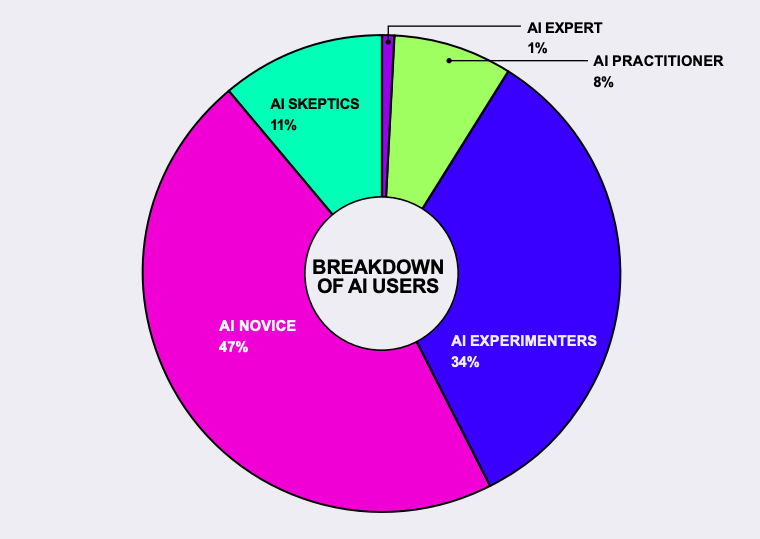
Despite AI tools being widely available, only 9% of employees qualify as AI Experts or Practitioners. Nearly 81% fall into lower proficiency categories, with 47% identified as AI Novices and 34% as AI Experimenters.
This means that the vast majority of knowledge workers are either:
Not using AI effectively
Not using AI frequently enough to gain real benefits
Using AI but failing to extract meaningful productivity gains
For GTM teams, this means that while AI-driven workflows are possible, they are not being fully optimized. AI-powered sales forecasting, automated content creation, and intelligent customer engagement strategies remain underutilized because employees are not skilled in prompting AI models effectively.
2. AI Proficiency Directly Correlates with Productivity Gains
The report found a direct link between AI proficiency and time savings:
90% of AI Experts report saving at least 10% of their time using AI.
AI Practitioners save an average of 10-20% of their weekly work hours.
Experimenters and Novices see significantly fewer benefits, highlighting the importance of proper training.
For GTM teams, this means that investing in AI training can deliver measurable ROI in terms of productivity. AI-literate sales reps can automate research, marketing teams can generate personalized content faster, and customer success teams can streamline support workflows.
3. Company Policies and Managerial Support Dictate AI Adoption
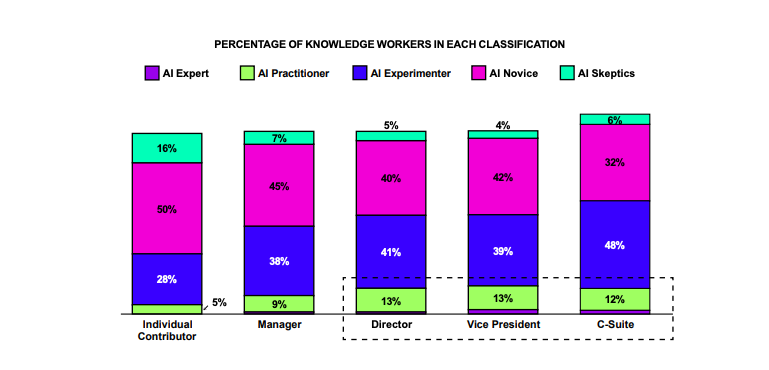
Employees in companies that actively encourage AI use and provide training are far more likely to become AI Experts or Practitioners. However, even in companies that approve AI use, managers who discourage AI can cut proficiency rates in half.
For GTM leaders, this is a critical insight: frontline managers must be trained and incentivized to support AI adoption. A lack of alignment between executive AI strategy and team-level execution can lead to missed opportunities, inefficiencies, and even employee frustration.
What This Means for GTM Teams and Professionals
1. AI Will Be a Competitive Differentiator in Sales and Marketing
The difference between high-performing sales and marketing teams and those that struggle will come down to AI proficiency. Sales professionals who can effectively prompt AI tools will generate better sales insights, automate prospecting, and refine outreach strategies. Marketing teams that master AI can personalize campaigns at scale and create high-converting content more efficiently.
🔹 Actionable Takeaway: Ensure that AI tools like ChatGPT, Perplexity, or Jasper AI are embedded into your sales and marketing playbooks. Train teams on advanced prompting techniques so they can extract real value from AI.
2. Customer Success and Support Teams Must Adapt Quickly
With AI-powered chatbots and support agents becoming the first line of customer engagement, human agents must focus on higher-value interactions. However, if they lack AI proficiency, they won’t know how to leverage AI outputs effectively, leading to missed opportunities for deeper customer relationships.
🔹 Actionable Takeaway: Train customer success teams to use AI-powered analytics to predict churn, identify upsell opportunities, and automate repetitive queries while focusing on human-driven engagement for complex issues.
3. AI-Driven GTM Strategy Requires Cross-Functional Buy-In
GTM teams that succeed with AI will be those that integrate AI training across departments, ensuring that sales, marketing, and customer success teams are aligned in how they use AI.
🔹 Actionable Takeaway: Build an AI proficiency roadmap that includes:
Baseline AI training for all employees
Advanced training for AI-heavy roles (marketing automation, sales operations, revenue intelligence)
A feedback loop to continuously improve AI workflows
How to Increase AI Proficiency Within GTM Teams
1. Provide Hands-On AI Training
The report found that companies offering AI training increase employee proficiency dramatically. However, most AI training today focuses only on security policies and ethical guidelines—not on practical AI usage.
Solution: GTM leaders should prioritize hands-on AI training that focuses on:
How to write effective AI prompts
How to interpret AI outputs critically
How to automate daily tasks with AI tools
2. Deploy a Company-Wide AI Platform
Companies that provide a centralized AI platform see higher AI proficiency across teams. Without an official AI tool, employees use random free versions, leading to inconsistent results and security risks.
Solution: Choose an AI platform (e.g., ChatGPT Enterprise, Microsoft Copilot, or Perplexity) and ensure that all GTM teams are using the same model for revenue intelligence, content creation, and customer insights.
3. Invest in Frontline AI Champions
One of the biggest obstacles to AI adoption is middle management resistance. Even when executives support AI, managers can create bottlenecks if they don’t encourage their teams to use AI effectively.
Solution: Appoint AI Champions within each GTM function (Sales, Marketing, CS) to:
Facilitate AI training
Share successful AI use cases
Encourage adoption through performance incentives
Conclusion: AI Proficiency Is Now a Business Imperative for GTM Teams
The AI Proficiency Report is clear: AI fluency is now a must-have skill for modern GTM teams. Organizations that prioritize AI training, align AI usage across teams, and embed AI into their GTM strategies will have a massive competitive advantage.
🔹 Key Takeaways for GTM Leaders
AI proficiency correlates directly with productivity gains—invest in training now.
Company policies and managerial support dictate whether AI adoption succeeds or fails.
AI is no longer optional in GTM—it is a fundamental driver of sales, marketing, and customer success efficiency.
By building a culture of AI proficiency, GTM professionals can automate low-value tasks, gain richer insights, and drive better business outcomes—setting their teams apart in an increasingly AI-driven marketplace.
Agentic AI: Transforming Generative AI from Words to Actions—What It Means for GTM Professionals
Introduction: AI’s Shift from Passive Models to Autonomous Agents
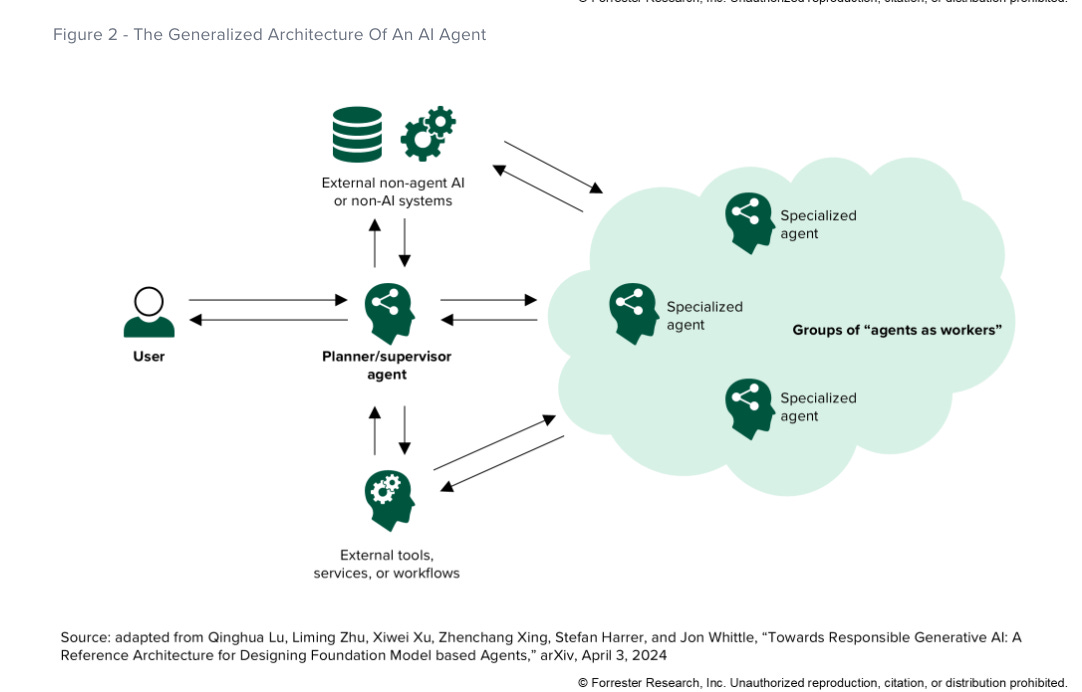
Forrester published this fascinating article on Agentic Ai and business that I had to talk about. The evolution of AI is accelerating, moving beyond simple text-based responses to fully autonomous agentic workflows that can analyze, plan, and act. Forrester’s latest report, “With Agentic AI, Generative AI Is Evolving from Words to Actions,” explores this transformation and the impact of AI-driven autonomy on businesses, automation, and customer interactions.
For Go-To-Market (GTM) leaders, this shift is monumental. Agentic AI represents a breakthrough in automation, decision-making, and efficiency, allowing AI-driven sales, marketing, and customer success operations to operate with little to no human intervention. Understanding how AI agents function and how to integrate them into GTM workflows will define the next generation of competitive advantage.
1. The Three Stages of Generative AI Evolution
The report breaks down generative AI’s progression into three key stages, each building upon prior advancements:
🔹 Stage 1: Prompt Engineering & Fine-Tuning
Early genAI applications focused on text generation via carefully crafted prompts.
AI models responded to queries but lacked independent reasoning or decision-making abilities.
Impact on GTM: Limited use in sales, marketing, and CX automation, requiring constant human input.
🔹 Stage 2: Knowledge Integration & Retrieval-Augmented Generation (RAG)
AI integrates external knowledge sources to reduce hallucinations and improve accuracy.
Vector databases enable AI to pull in real-time customer data, sales intelligence, and market trends.
Impact on GTM: AI can pull in CRM data, competitive intelligence, and customer insights to create personalized sales and marketing campaigns automatically.
🔹 Stage 3: Agentic AI Systems (Current Phase)
AI transitions from passive to autonomous agents, capable of taking action without human intervention.
Multi-agent workflows allow AI to perform complex, cross-functional business processes.
Impact on GTM: AI agents can now manage customer interactions, optimize revenue strategies, and even perform autonomous sales operations.
🚀 Key Takeaway: GTM teams must prepare for a world where AI doesn’t just assist—it autonomously executes entire workflows.
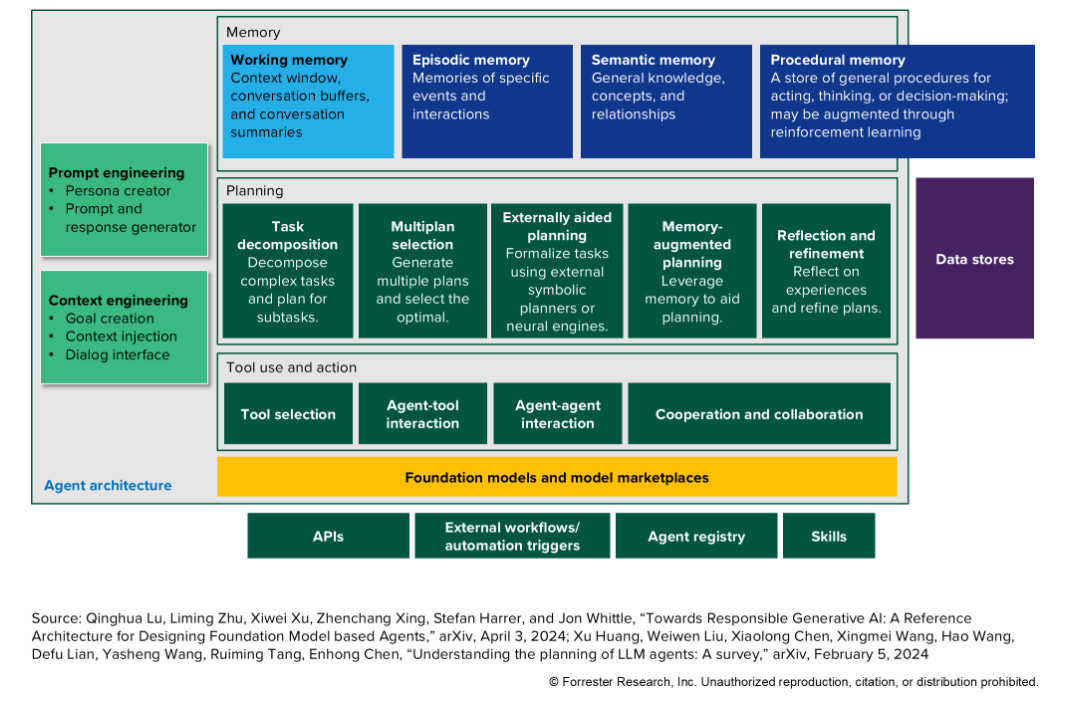
2. What Defines Agentic AI?
Forrester defines Agentic AI as:
“Advanced AI systems, powered by foundation models, that demonstrate a high degree of autonomy, intentionality, and adaptive behavior, extending beyond traditional AI agents.”
This means AI no longer just answers questions—it actively solves problems, takes action, and adapts to complex, real-world scenarios.
Core Capabilities of Agentic AI
Reflection – AI critiques its own output and improves iteratively.
Memory – AI remembers past interactions and retains knowledge for long-term learning.
Planning – AI breaks down complex tasks into executable steps.
Tool Use – AI interacts with APIs, software, and external tools to execute actions.
Multi-Agent Collaboration – Multiple AI agents work together, similar to human teams.
Autonomy – AI operates independently, making decisions and taking actions.
🚀 Key Takeaway: GTM leaders must design AI strategies that incorporate AI agents into sales, marketing, and customer workflows—not just as assistants but as fully functioning decision-makers.
3. How GTM Teams Can Leverage Agentic AI
🔹 AI-Driven Sales Automation
AI agents qualify and nurture leads autonomously, using real-time customer data.
Multi-agent workflows coordinate outreach, follow-ups, and deal progression.
AI analyzes CRM data and market trends to prioritize high-value opportunities.
✅ Example Use Case: AI autonomously drafts sales emails, schedules meetings, and refines outreach strategies based on prospect engagement.
🔹 AI-Powered Marketing Execution
AI orchestrates personalized campaigns, adjusting messaging in real time.
Agentic workflows optimize ad spend and predict high-converting channels.
AI autonomously generates blog posts, video scripts, and ad copy.
✅ Example Use Case: AI detects a surge in interest from a specific ICP segment and automatically deploys targeted campaigns to increase conversions.
🔹 AI-Enhanced Customer Success & Support
AI monitors customer behavior and predicts churn before it happens.
Autonomous AI handles Tier 1 and Tier 2 support with natural conversation flows.
AI suggests upsell/cross-sell opportunities in real-time, increasing revenue per customer.
✅ Example Use Case: AI proactively offers personalized product recommendations based on usage data, improving expansion revenue.
4. The Strategic Impact of Agentic AI on GTM Operations
🔹 The AI-First GTM Model: Replacing Human-Driven Workflows
Traditional GTM teams rely on manual processes and static automation.
AI-driven GTM replaces static workflows with AI agents that optimize revenue autonomously.
📌 Shifts in GTM Strategy:
From Human-Centric to AI-First → AI agents handle sales, marketing, and support independently.
From Manual Pipelines to Autonomous Workflows → AI moves leads through the funnel based on real-time intent signals.
From Data Reporting to AI Decision-Making → AI predicts revenue outcomes and optimizes GTM execution in real time.
🚀 Key Takeaway: Companies that fail to integrate AI agents into their GTM strategy will fall behind competitors leveraging autonomous GTM operations.
5. Challenges and Considerations for Implementing Agentic AI
🔹 Avoid Over-Reliance on AI Without Proper Guardrails
AI decisions must be monitored for bias, accuracy, and ethical considerations.
Multi-agent systems must work within compliance and security frameworks.
Human oversight is still critical for strategic decision-making.
🔹 Ensure AI Alignment with Business Objectives
AI should enhance human capabilities, not replace strategic roles entirely.
Agentic AI should be tested rigorously before full-scale implementation.
6. Final Thoughts: Preparing GTM Teams for the Agentic AI Revolution
Agentic AI is not just an evolution—it is a fundamental shift in how businesses operate. AI is moving from a supporting tool to an autonomous revenue-driving engine.
🔹 What GTM Leaders Must Do Now:
✅ Start integrating AI-driven automation into sales, marketing, and customer success.
✅ Educate teams on how AI agents work and how to leverage them effectively.
✅ Pilot agentic AI workflows to improve efficiency, lead conversion, and customer engagement.
The future of GTM belongs to AI-driven revenue organizations. The companies that adopt agentic AI today will define market leadership tomorrow.