

Hey my friends!
With the release of the ChatGPT Pro account for a hefty $200 a month, I wanted to get into this topic in general and give my thoughts.
First, I want to split this into 2 parts, there is a budget that a company should consider for AI tech and then for you as an individual outside of company use.
From a company POV, what I am seeing is a few things.
1-Companies are pulling back on expensive tech because there are many startups that they can leverage for cheaper OR they are building in house.
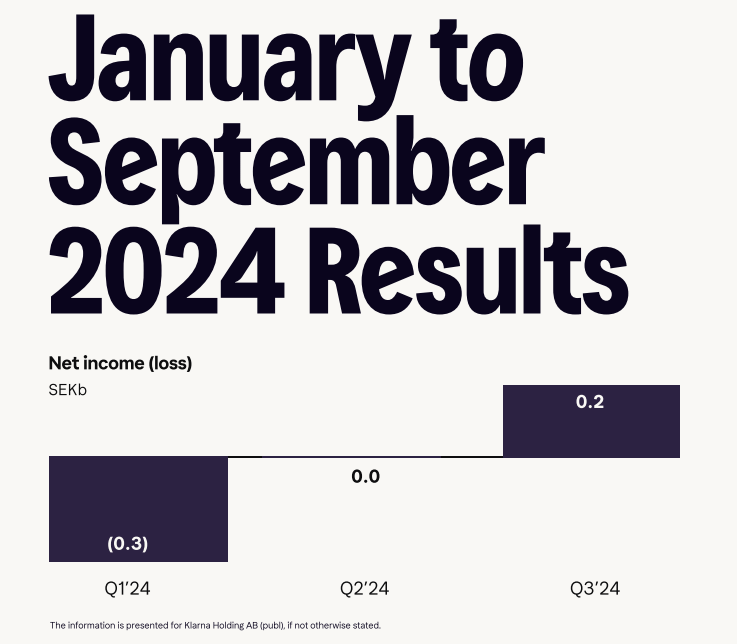
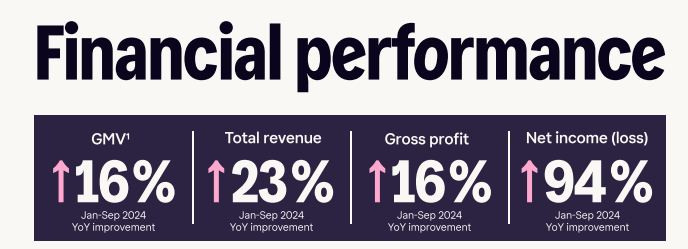
Example would be Klarna that got rid of Salesforce and Monday to do a replacement tech that they build internally and since then, they have released their financials and their bet is obviously working.
Corporate AI Budgets and Best Practices for GTM Leaders
Part 1: Corporate AI Budget Considerations
GTM leaders must strategically align their AI investments with business objectives to maximize ROI while ensuring efficient resource allocation. Below is a structured approach based on trends, practices, and lessons from Klarna’s AI-driven cost optimization.
Budget Allocation for AI in 2024-2025
1. Overall AI Spending Trends:
• Enterprise AI spending is projected to increase by 5.7% in 2025 despite IT budgets growing less than 2%.
• AI projects are expected to comprise up to 10% of IT budgets, a sharp rise from less than 1% in 2023.
2. Average Corporate AI Budget:
• AI spending will account for 30% of IT budget increases, translating to approximately $3.4 million per organization on average.
• Nearly 25% of companies plan to boost AI spending by 10% or more, signaling its growing importance.
3. Case Study: Klarna:
• Klarna replaced costly enterprise software like Salesforce and Monday.com with proprietary AI tools, reducing operating expenses by 23% year-over-year.
• By integrating AI agents into customer service, Klarna automated two-thirds of interactions, improving efficiency and cutting costs.
Best Practices for AI Budgeting
1. Align AI Spending with Business Priorities:
• Focus on projects that directly drive growth, efficiency, or competitiveness.
• Example: Klarna’s decision to replace traditional software prioritized both cost control and operational excellence.
2. Adopt an Agile Approach:
• Start with a general AI experimentation fund.
• Pilot AI tools with small teams, measure outcomes, and scale successful projects.
3. Allocate for Data and Soft Costs:
• Budget for data cleaning, normalization, and ongoing management costs, critical for reliable AI outcomes.
• Include training and user adoption expenses to ensure your team can fully leverage the new tools.
4. Maintain Flexibility:
• AI evolves rapidly; revisit budget allocations frequently during pilot and scaling phases.
• Keep room for pivoting investments based on real-time results.
5. Involve Cross-Functional Stakeholders:
• Engage teams from sales, marketing, operations, and IT in the budgeting process.
• Gather user feedback early to ensure solutions meet operational needs.
Framework to Analyze Your Tech Stack for AI Potential
To determine if a tool should stay, be replaced, or be removed, follow these steps:
1. Inventory All Tools:
• Create a comprehensive list of current tools, their costs, and usage levels across departments.
2. Categorize by Functionality:
• Core Tools: Critical for revenue and team operations.
• Secondary Tools: Useful but non-essential.
• Underutilized Tools: Low usage or duplicative with other tools.
3. Evaluate ROI and Costs:
• Cost per user vs. usage rate: Are you paying for features that aren’t being used?
• Revenue impact: Does the tool directly or indirectly drive revenue?
4. Explore AI Alternatives:
• Identify areas where AI tools or in-house development could replace existing solutions (e.g., Klarna’s AI replacing Salesforce).
5. Run Pilots:
• Test replacements with a small team, tracking metrics like cost savings, efficiency gains, and user satisfaction.
6. Decision Matrix:
• High cost, low impact → Replace or eliminate.
• Low cost, high impact → Retain.
• High cost, high impact → Optimize usage or negotiate pricing.
Part 2: Individual AI Budget Considerations
For individual professionals, especially GTM leaders, investing in AI tools can boost productivity, upskill, and create career leverage. Here’s how to approach budgeting:
Key Areas for AI Spending
1. Subscription-based Tools:
• Popular platforms like ChatGPT Plus ($20/month) or Grammarly Premium ($12/month) are affordable, high-impact investments.
• Budget: $20-$100/month for essential tools.
2. Learning and Development:
• Invest in courses and certifications on platforms like GTM AI Academy, Udemy, or Coursera.
• Budget: $100-$500/year.
3. Cloud and Hardware Costs:
• For advanced users, allocate for cloud computing services or upgrading personal devices to handle AI workloads.
• Budget: $50-$200/year.
4. Experimental Tools:
• Explore tools for personal projects, creative work, or side hustles (e.g., MidJourney for design, Notion AI for task management).
• Budget: $10-$50/month.
Framework for Evaluating Individual AI Investments
1. Define Goals:
• Are you improving productivity, learning new skills, or exploring creative projects?
2. Prioritize High ROI Tools:
• Choose tools that save time or improve results in your day-to-day work.
3. Experiment and Reassess:
• Test new tools monthly and cancel subscriptions that don’t deliver value.
4. Balance Work and Personal Growth:
• Include AI tools that support professional and personal goals, such as financial management apps or mental health assistants.
Summary for GTM Leaders
• For Companies: Allocate 10%-30% of IT budgets to AI, focusing on tools that enhance efficiency, reduce costs, and drive revenue. Use Klarna’s strategy of replacing expensive tools with AI-powered alternatives as a model.
• For Individuals: Spend $20-$150/month on AI tools that boost productivity, skills, or personal projects. Prioritize subscriptions and learning resources that align with professional goals.
Both company leaders and individuals should continuously evaluate their investments to ensure they remain aligned with evolving priorities and emerging technologies.

Key Insights for GTM Leaders on AI-Driven Transformation
I recently found 5 articles from Mckinsey, Deloitte, Zaggle, Accenture, and US Bank that show recurring themes emerge that highlight the transformative potential of generative AI (GenAI) in enterprises. I wanted to point out a few trends or themes that I feel like are important for you to be aware of.
1. Human + AI Collaboration: The Central Theme
The fusion of human creativity and AI capabilities emerges as a cornerstone of future enterprise strategies. AI is seen not as a replacement but as an augmentation, enabling humans to operate more effectively and tackle challenges with enhanced precision and speed. This partnership demands a reimagining of workflows, roles, and skills to fully realize the potential of this collaboration.
Now to be quite honest, I believe that when agents are more and more used, it is inevitable that humans on some level will be replaced or potentially some jobs will be replaced.
An example is if you had a sales team and someone in their job is responsible for 100 tasks and AI could replace 50 of them, it will impact future hiring because the needs are not as high. Yes it can augment the human in the seat, but it will also eliminate future jobs.
I believe this is where we are going in general, but it seems people are shy about talking about this reality, I believe for 2 reasons, 1-because it has not materialized yet and 2-because its a sensitive subject. So just food for thought. From the articles:
• Deloitte: Emphasizes the “Human + AI Advantage” where AI augments human skills to increase efficiency and competitiveness. CEOs must articulate how AI can empower employees and reshape business models for higher value.
• McKinsey: Describes the shift to “Artisan Patterns” in enterprise workflows, where humans lead creative processes augmented by AI agents.
• Accenture: Focuses on responsible AI to drive inclusion, sustainability, and workforce enhancement, blending AI’s capabilities with human judgment.
2. Strategic Investment in AI Infrastructure
Future-ready enterprises recognize the need to build robust, scalable AI infrastructure as a foundation for innovation. Investments in modernizing systems, streamlining data workflows, and creating scalable platforms are vital. These efforts prepare businesses to harness AI’s full potential while improving operational efficiencies and supporting data-driven decision-making.
• Deloitte: Calls for CEOs to make hard investments in AI capabilities, including infrastructure, data management, and organizational change.
• US Bank: Highlights the modernization of legacy systems to scale AI capabilities, enhancing data access and supporting AI-powered innovation.
• McKinsey: Advises shifting budget allocations towards growth-oriented projects powered by multi-agent AI architectures.
• Zaggle: Attributes its award-winning transformation to consistent investment in cutting-edge technology.
3. AI as a Driver of New Work and Business Models
AI technologies are reshaping how work is structured and executed, enabling the creation of entirely new business models. Beyond optimizing existing workflows, AI unlocks opportunities for innovation by automating routine processes, supporting creative tasks, and providing new tools for decision-making and customer interaction.
• Deloitte: Envisions AI enabling autonomous enterprises and reshaping business frameworks rather than merely enhancing existing processes.
• McKinsey: Identifies new work patterns, such as deploying AI agents for routine tasks and transitioning to multi-agent architectures for complex goals.
• Accenture: Points to responsible AI maturity as a pathway to redefining operations and accelerating time-to-value.
• US Bank: Demonstrates how AI enables new services like fraud detection and personalized financial advice, transforming customer experiences.
4. Focus on Measurable Value Creation
Organizations increasingly prioritize AI initiatives that yield measurable business outcomes. By focusing on metrics like revenue growth, efficiency gains, and customer satisfaction, businesses ensure their investments are aligned with strategic goals and deliver tangible returns.
• Accenture: Quantifies the revenue impact of AI, with respondents expecting an 18% increase in AI-driven revenue once responsible AI is operational.
• Zaggle: Links technological innovation directly to growth, demonstrating the financial benefits of AI-enabled spend management solutions.
• US Bank: Highlights performance gains, cost optimization, and operational efficiency improvements from AI-driven modernization.
5. Responsible and Collaborative AI Adoption
As AI becomes deeply embedded in enterprise operations, ethical considerations and cross-functional collaboration are critical. Companies must ensure AI systems are inclusive, sustainable, and compliant with regulations, while fostering collaboration across teams to align AI projects with organizational goals.
• Accenture: Stresses the importance of responsible AI, ensuring ethical considerations like inclusivity, sustainability, and regulatory compliance.
• Deloitte: Advocates for collaborative budgeting involving cross-functional stakeholders to align AI projects with business priorities.
• McKinsey: Highlights the need for organizational shifts, such as creating new roles and skill sets to manage AI-led tasks effectively.
Citations:
[1] https://www2.deloitte.com/ca/en/pages/consulting/articles/a-ceo-guide-to-envisioning-generative-ai-enterprise.html
[2] https://www.mckinsey.com/capabilities/mckinsey-digital/our-insights/enterprise-technologys-next-chapter-four-gen-ai-shifts-that-will-reshape-business-technology
[3] https://www.accenture.com/content/dam/accenture/final/accenture-com/document-3/Accenture-Responsible-AI-From-Risk-Mitigation-to-Value-Creation.pdf
[4] https://assets.ctfassets.net/2f3meiv6rg5s/zuePqRg0veRMntPC4nGlA/6eddc64b198881d7ec594b21de25849c/VAST-Top-5-US-Bank-V4.pdf
[5] https://cxotoday.com/press-release/zaggle-receives-transformation-tech-award-at-deloitte-technology-fast-50-india-2024/
[6] https://www2.deloitte.com/us/en/pages/consulting/articles/ceo-guide-to-generative-ai-enterprises.html

PROMPTS FOR THE DAY!
Had someone ask me about a prompt for helping SDRs with writing sequences but making sure it was attached to a webinar, here is a great prompt for that:
Below is a transcript of a webinar my company ran. I plan to have my SDR team follow up with all registrants and attendees. Please help me create 2 SDR sequences, one for people who registered but didn't attend, and one for people who attended. The sequences must align to the following characteristics:
- The goal of both sequences is to engage the contact in a conversation that leads to the contact agreeing to take a demo call with one of our [[COMPANY]] Experts
-The audience for both sequences are [[ICP AUDIENCE}}
- the outreach channels for both sequences will span across email, LinkedIn messaging, and calling
- any call steps should indicate whether a voicemail is to be left and if so, what the content of that voicemail should be
- The sequences should run for no less than 10 days and no more than 21 days
- There should be no more than 3 business days between outreach attempts
- The steps should be a mix of automated and manual/personalized
- the overall tone of the sequence should be [[WHATEVER TONE YOU WANT TO CONVEY]]
[[INSERT TRANSCRIPT OF WEBINAR]]
Prompt for creating an AI strategy: (works best in Claude or ChatGPT to create visuals)
As AI becomes increasingly prevalent across industries, it's crucial for teams to have a well-defined strategy for leveraging this powerful technology to achieve their goals. This prompt will guide you through creating a comprehensive AI strategy tailored to your team's specific needs and objectives.
First, please provide a brief description of your team and the goals you hope to accomplish by incorporating AI into your processes:
<Team Description>
{$TEAM_DESCRIPTION}
</Team Description>
<Goals>
{$GOALS}
</Goals>
An effective AI strategy should cover the following key components:
1. Current State Assessment: Evaluate your team's existing AI capabilities, data resources, and infrastructure. Identify strengths, weaknesses, and areas for improvement.
2. Goal Alignment: Clearly define how AI will support and enable the achievement of your stated goals. Outline specific use cases and applications of AI that align with these objectives.
3. Data Strategy: Develop a plan for acquiring, managing, and securing the data required to train and deploy AI models effectively. Consider data quality, privacy, and governance.
4. Technology Roadmap: Determine the AI technologies, tools, and platforms that will be required to implement your strategy. Consider factors such as scalability, integration, and vendor support.
5. Talent and Skills: Assess your team's current AI expertise and identify any skill gaps that need to be addressed through hiring, training, or partnerships.
6. Change Management: Outline a plan for managing the cultural and organizational changes that may arise from the adoption of AI. Address potential concerns, provide training, and foster a culture of innovation.
7. Governance and Ethics: Establish guidelines and principles to ensure the responsible and ethical development and deployment of AI systems. Consider issues such as bias, transparency, and accountability.
8. Measurement and Evaluation: Define key performance indicators (KPIs) and metrics to track the success of your AI initiatives. Establish processes for continuous monitoring, evaluation, and improvement.
To effectively communicate and visualize your AI strategy, create the following visuals/graphs:
1. A roadmap or timeline illustrating the phased implementation of your AI initiatives and the dependencies between different components.
2. A data flow diagram depicting the sources, movement, and processing of data within your AI systems.
3. An organizational chart or skill matrix highlighting the roles, responsibilities, and expertise required for successful AI adoption.
4. A dashboard or scorecard showcasing the KPIs and metrics you will use to measure the impact and success of your AI strategy.
Remember, the ultimate goal of your AI strategy should be to enable your team to achieve the goals you outlined earlier. Ensure that each component of your strategy directly supports and aligns with those objectives.
By following this prompt and creating comprehensive visuals, you will have a well-defined AI strategy that positions your team for success in leveraging the power of artificial intelligence.
Prompt for analyzing your pipeline as a revenue leader:
You are an AI assistant tasked with creating a prompt for analyzing sales pipeline data to identify the best performing opportunities for sales leaders.
The goal is to provide a structured prompt that will guide a sales leader in reviewing their pipeline data and identifying the most promising opportunities to prioritize based on key metrics and factors.
Here are the steps you should follow:
1. Review the provided {$SALES_DATA}. This data contains information about various sales opportunities in the pipeline, including details such as deal size, stage, customer information, and other relevant metrics.
2. Identify the key metrics and factors that should be considered when analyzing pipeline opportunities for their potential. Some examples may include:
- Deal size or revenue potential
- Stage of the sales cycle (e.g., early stage vs. late stage)
- Customer characteristics (industry, size, existing relationship)
- Probability of closing
- Competitive landscape
- Strategic importance or alignment with company goals
3. Create a prompt template that will guide the sales leader through the analysis process. The prompt should include the following components:
a. Identifying the best opportunities:
- Instruct the sales leader to review the pipeline data and rank the opportunities based on the key metrics and factors identified in step 2.
- Provide guidance on how to prioritize and weigh different factors when evaluating opportunities.
b. Providing justification and reasoning:
- Ask the sales leader to provide a detailed justification for why each identified opportunity is considered one of the best, referring to specific data points and metrics from the pipeline data.
- Encourage the sales leader to think through the potential risks, challenges, and competitive landscape for each opportunity.
c. Formatting the response:
- Instruct the sales leader to structure their response using the following XML tags:
<Top Opportunities>
<Opportunity>
[Rank or priority level]
[Opportunity details: deal size, customer, stage, etc.]
<Justification>
[Detailed justification and reasoning for identifying this as a top opportunity]
</Justification>
</Opportunity>
... [Repeat for each identified top opportunity]
</Top Opportunities>
- Emphasize the importance of providing clear and well-structured responses within the specified XML tags.
4. Optionally, you can instruct the sales leader to use a <Scratchpad> section to think through their analysis and jot down notes before providing their final response.
Remember, your goal is to create a comprehensive prompt that will guide the sales leader through the process of analyzing their pipeline data and identifying the best opportunities based on key metrics and factors. The prompt should encourage a structured and well-reasoned approach, with justifications and reasoning provided for each identified opportunity.