

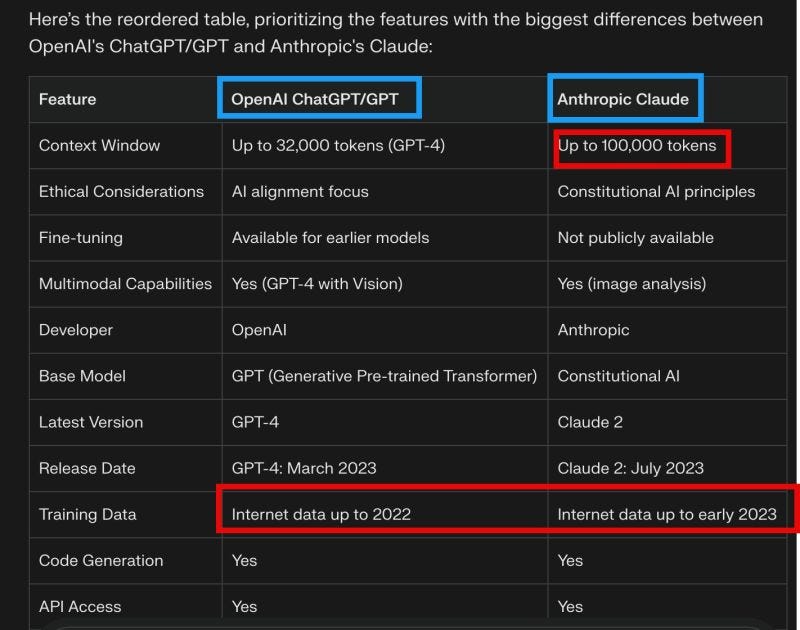
For GTM professionals, choosing between Claude Projects and ChatGPT Custom GPTs depends on your specific needs for context, customization, and scale. Both tools bring powerful AI to the table but cater to different workflows. Claude shines with its ability to handle enormous datasets and maintain coherence over long documents, while ChatGPT thrives in customization, multimodal capabilities, and tailored outputs. Let’s break them down.
Claude Projects (Anthropic)
Claude Projects is built for scale, offering an impressive 100,000-token context window that’s perfect for long-form analysis, strategy planning, or brainstorming complex workflows. Its foundation in “Constitutional AI” ensures ethical and controlled outputs, making it a dependable option for regulated industries or sensitive use cases. While it doesn’t allow for customization like fine-tuning, its expansive capabilities make it a reliable choice when handling large datasets or documents is your priority.
ChatGPT Custom GPTs (OpenAI)
ChatGPT Custom GPTs prioritize flexibility and creative control, allowing you to fine-tune outputs for specific workflows or branding. With robust multimodal capabilities, it supports both text and image inputs, making it a versatile option for creating sales assets, marketing materials, or customer-facing content. While its 32,000-token context window isn’t as vast as Claude’s, it’s more than sufficient for most GTM tasks, and its adaptability makes it indispensable for teams needing customized and visually integrated outputs.
Claude Projects is your heavy hitter when:
- You're drowning in data and need to process entire market research reports, competitive landscapes, or strategy docs at once. That 100K token limit isn't just a number - it's like having an analyst who can read and remember an entire quarterly business review without breaking a sweat
- You need someone to connect dots across massive amounts of information (think full product roadmaps + market analysis + customer feedback all at once)
- Privacy is make-or-break for your project
- You want consistent, reliable outputs without having to fine-tune anything
Custom GPTs shine when:
- You need specialized tools that feel like they were built just for your team
- Visual content is a big part of your workflow (the GPT-4V capabilities are seriously impressive)
- You want to create customer-facing tools quickly
- Your team needs something that can be customized to match your brand voice or specific processes
For GTM Teams
For Strategy Work:
- Going deep on market analysis or working with mountains of data? Claude Projects
- Need quick, specialized tools for specific campaign workflows? Custom GPTs
For Content & Creativity:
- Writing long-form content or analyzing massive documents? Claude Projects
- Creating visual content or need brand-specific outputs? Custom GPTs
For Team Implementation:
- Need enterprise-grade privacy and consistent outputs? Claude Projects
- Want tools that can be quickly customized and shared? Custom GPTs
Bottom line: Both tools are powerful, but they serve different needs. Claude is your analyst who can handle massive amounts of info and give you consistent, thoughtful analysis. Custom GPTs are your specialized team members you can train for specific tasks.
The key isn't which one is "better" - it's about matching the tool to your specific GTM challenges. What kind of projects are you typically handling? That'll help me give you an even more specific recommendation.
Prompts of the day!
FYI, if you are needing a workflow or a prompt built, let me know! I will create one for you ;)
GRACE Framework
Here as a reminder is the GRACE framework for prompting that I love to use for instructions either in a CustomGPT, a Claude Project, or in general prompting:
Goal/Role: Clearly state the goal or the role that the AI needs to adopt. For example, “Generate a content strategy targeting healthcare CIOs interested in AI solutions for reducing operational costs.”
• This is direct and leaves no ambiguity about the purpose.
• Rules: Set clear parameters for how the AI should approach the task. “Ensure each piece of content highlights the cost benefits of AI, includes a CTA, and adheres to a professional tone tailored to C-suite executives.”
• By setting specific rules, you ensure the output aligns with strategic KPIs or messaging guidelines.
• Advanced Context: Provide as much background information as possible. “Our AI platform has helped reduce costs by 15% in hospitals and healthcare networks by automating back-office operations. We need to emphasize this success in the content.”
• This advanced context gives the AI enough information to tailor the content to your specific goals.
• Clear Instructions: Outline the exact structure or deliverable you’re looking for. “Provide a 5-part blog series. Each blog should focus on a specific operational pain point in healthcare and how our AI solution addresses it. Include real-world examples.”
• This ensures that the AI produces a complete and structured output that fits the required format.
•Examples: Finally, provide a sample or reference to guide the AI. “For reference, check our existing case studies for tone and structure. See the case study on ‘AI in hospital administration’ as an example of the detail level we’re aiming for.”
PROMPT TO VISUALIZE PIPELINE DATA
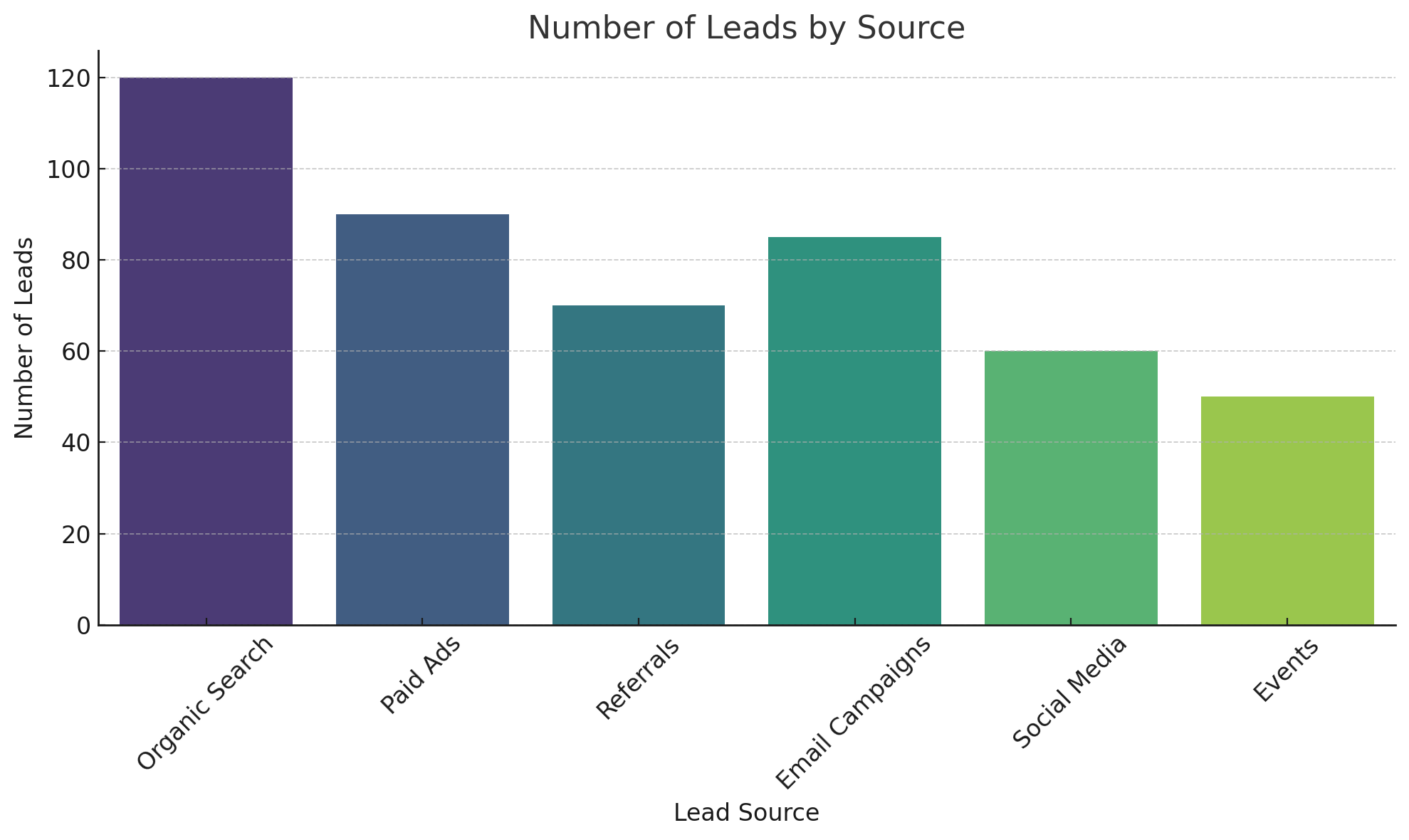
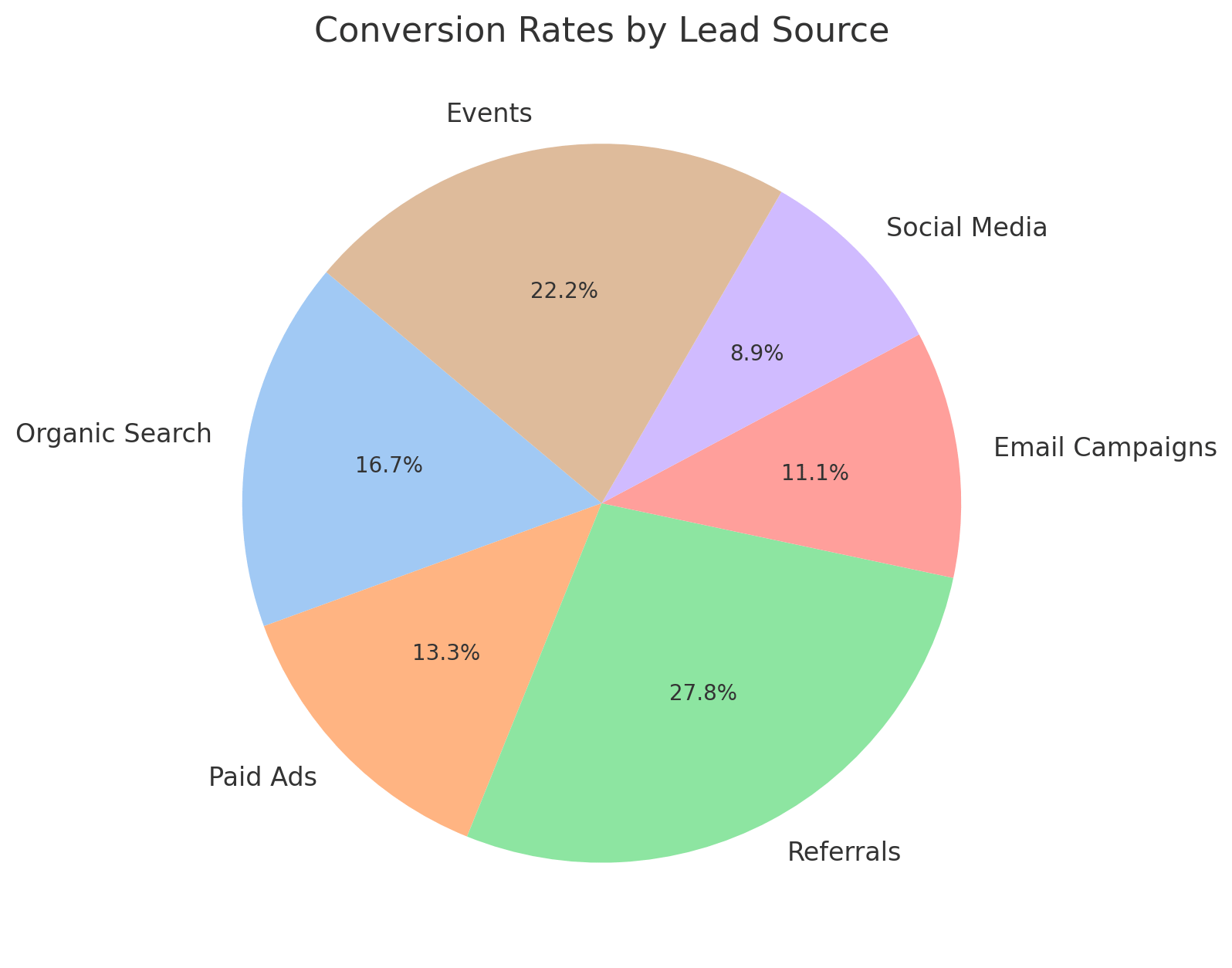
Here is a prompt to visualize pipeline data based on lead source, The visual is a response from ChatGPT (using dummy data):
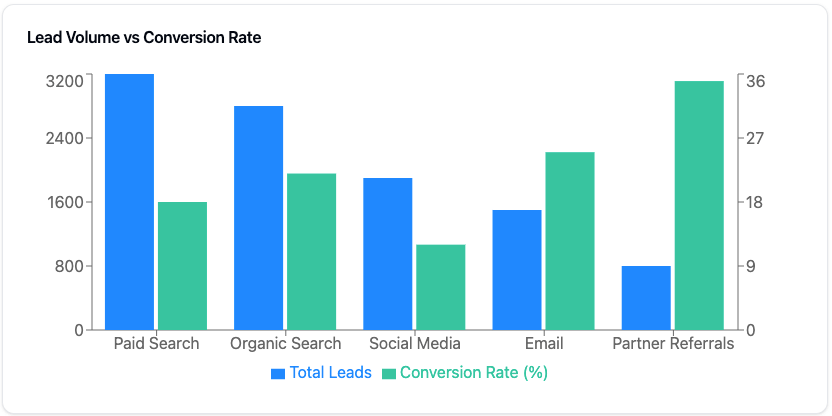
Here is the results from Claude (using dummy data):
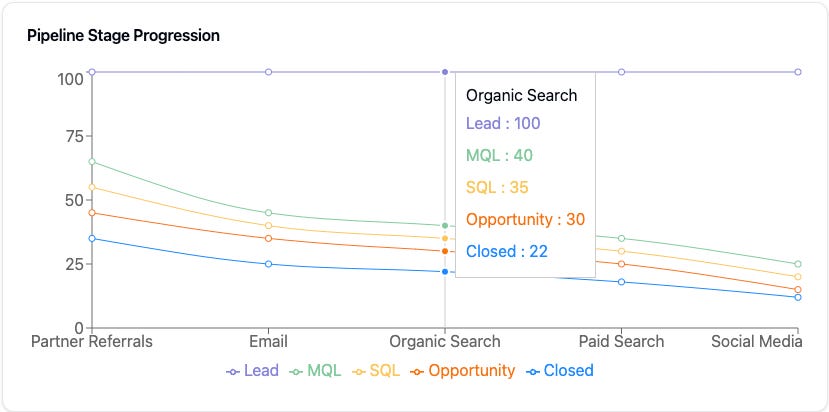
Goal/Role:
"You are a world-class data analyst specializing in data visualization and lead source analysis. Your goal is to create a comprehensive visual dashboard that reveals how different lead sources contribute to and perform within our sales pipeline."
Rules:
- Take a deep breath, go step by step and be thorough.
- All visualizations must include clear titles, legends, and annotations
- Use distinct, visually appealing color schemes for different lead sources and stages
- Each visual must be accompanied by interpretative analysis
- Focus on actionable insights derived from the data
- Maintain professional data visualization best practices
- You MUST ask the below 5 questions to the user before moving forward with a response.
Advanced Context:
"Before creating the visualization, I need to understand several critical aspects of your data and objectives:
1. Business Decision Focus:
- What specific business decisions are you trying to make with this visualization?
2. Pipeline Structure:
- What are your complete sales pipeline stages?
3. Lead Source Information:
- What are all your active lead sources?
4. Time Period & Data Quality:
- What time period should we analyze and is your data consistent as well as high quality?
5. Audience & Key Metrics:
- Who is the primary audience for these visualizations and what are key metrics?
Please provide this information so I can create the most relevant and actionable visualization for your needs."
Clear Instructions:
"Once you provide the above information, I will create a visual dashboard with:
1. Bar Chart:
- X-axis: Lead sources
- Y-axis: Number of leads
- Purpose: Compare lead volume across sources
2. Pie Chart:
- Segments: Lead sources
- Values: Conversion rates
- Purpose: Show relative conversion success
3. Flowchart:
- Input: Lead sources
- Flow: Pipeline stages
- Purpose: Visualize journey through pipeline
4. Executive Summary:
- Key findings
- Performance insights
- Recommended improvements
- Data-backed action items"
Examples:
"The dashboard will follow professional visualization standards similar to:
- Bar chart: Similar to Salesforce's lead source analysis charts
- Pie chart: Following conversion tracking visualizations in HubSpot
- Flowchart: Comparable to Sankey diagrams in Google Analytics
- Executive summary: Structure like a standard BI dashboard summary with bullet points and highlighted metrics"
By integrating these critical questions upfront, we ensure that:
1. The visualization will be aligned with business objectives
2. The data structure is properly understood
3. The time period and data quality are validated
4. The metrics are relevant to the audience
5. The insights are actionable
Prompt for GTM Strategy Analysis or Strategy
You are a world-class business strategist specializing in go-to-market (GTM) strategies. Given the following context, criteria, and instructions, craft a comprehensive outline for a go-to-market strategy.
## Context
A user is seeking assistance in formulating a go-to-market strategy for a new product. This product may target a specific industry or customer segment, and the user may have particular objectives in mind.
## Approach
Begin by asking key questions to gather relevant information about the product, market, and objectives. Use this information to build a structured outline for the GTM strategy, covering essential elements like target market, value proposition, marketing channels, sales strategy, and metrics for success.
## Response Format
Provide the response in an outline format that includes headings and subheadings for each key component of the GTM strategy. Ensure clarity and conciseness in the presentation of ideas.
## Instructions
1. Start by asking the user the following key questions:
- What is the product or service being launched?
- Who is the target market or ideal customer?
- What are the primary objectives of the go-to-market strategy (e.g., revenue goals, market share)?
- Are there specific competitors to consider?
- What resources or budget are available for marketing and sales?
2. Based on the user's responses, create a detailed GTM strategy outline that addresses all necessary components and is tailored to the provided information. Prioritize actionable insights and practical steps that can be implemented in the strategy.
Prompt for ICP Creation
You are a world-class business strategist specializing in Ideal Client Profile (ICP) development. Given the following context, criteria, and instructions, assist in the analysis, creation, or critique of an Ideal Client Profile.
## Context
A clear and well-defined Ideal Client Profile is essential for targeting marketing efforts and enhancing sales strategies. Understanding the characteristics of the ideal client helps businesses focus their resources effectively. The user may be looking for guidance on refining their existing ICP or creating a new one based on specific business needs and goals.
## Approach
Begin by asking key questions to gather relevant information about the user's business, target market, and objectives. This will help in tailoring the Ideal Client Profile effectively. Analyze the responses to identify common characteristics, pain points, and motivations of the target clients. Provide actionable insights and examples based on the gathered information to strengthen the final profile.
## Response Format
Present the information in a structured format that includes:
1. Key Questions to Assess Current Understanding
2. A Detailed Analysis of Responses
3. A Proposed or Critiqued Ideal Client Profile
4. Recommendations for Implementation and Next Steps
## Instructions
1. Start by asking a series of probing questions to understand the user's market and business objectives.
2. Analyze the information provided and synthesize it into a cohesive Ideal Client Profile.
3. Include suggestions for refining or expanding the profile as necessary.
4. Ensure clarity and comprehensiveness in the final output, laying out actionable steps for utilizing the Ideal Client Profile effectively.