

First we want to celebrate and tell you THANK YOU for the love and listen, we hit the #30 spot on the Spotify Top Business Podcasts lists. Means more than you know!
Also a few changes.. at the GTM AI Academy, we have grown a lot and have a HUGE announcement to make regarding how you can be involved.
In the past, people asked me to create courses to consume which I did and have had many people go through.
However, because AI changes literally so fast and all the time, it has become impossible to keep things up to date, so instead I am announcing a new way to get involved with the below options:
1-Buy a course: We offer full certification courses or small outcome-focused mini courses of 30 min or less. Prices vary from $15 up to $399. All courses you will have lifetime access to those courses and they will be updated as the need arises.
2-Bundles: You can buy multiple courses for a discount.
3-Membership Subscription: I have decided to offer FULL ACCESS to the GTM AI Academy for 2 pricing options depending on your interest level. They are:
$47 GTM AI 2025 All Access Pass gives you full access to the entire GTM AI Academy. I will be uploading a ton of mini courses on a ton of subjects in order to keep up with the speed of AI and the most logical way to do this was starting where we are now with AI and update new content as changes happen
$99 GTM AI Masters Pass gives you full access to the GTM AI Academy AND you can join a weekly workshop and live Q&A where you can ask any question you want to Coach and his team.
Part of this means I will be discontinuing the paid newsletter option here (will send an email to the subscribers there later today) and will only be focusing on content with the GTM AI Academy.
This newsletter will stay free forever. To join in the GTM AI Academy (and a ton of content coming your way) you can join anytime www.gtmaiacademy.com
Now with that being said, ON TO THE NEWSLETTER!
Here is an Audio overview from our AI friends if you want to listen:
This week we have the following:
Season 2, Episode 6 with Nick Bhavsar CMO and Cofounder of VelocityEngine
GTM AI Tool of the week: Storylane.io
And the features in the free newsletter this week are:
Dario Amodei commentary on DeepSeek
Oracle’s new AI Agents
Researchers develop open rival to OpenAI for under $50
Case Study using Deep Research on most misunderstood law on the internet
With that being said, lets get into the podcast!
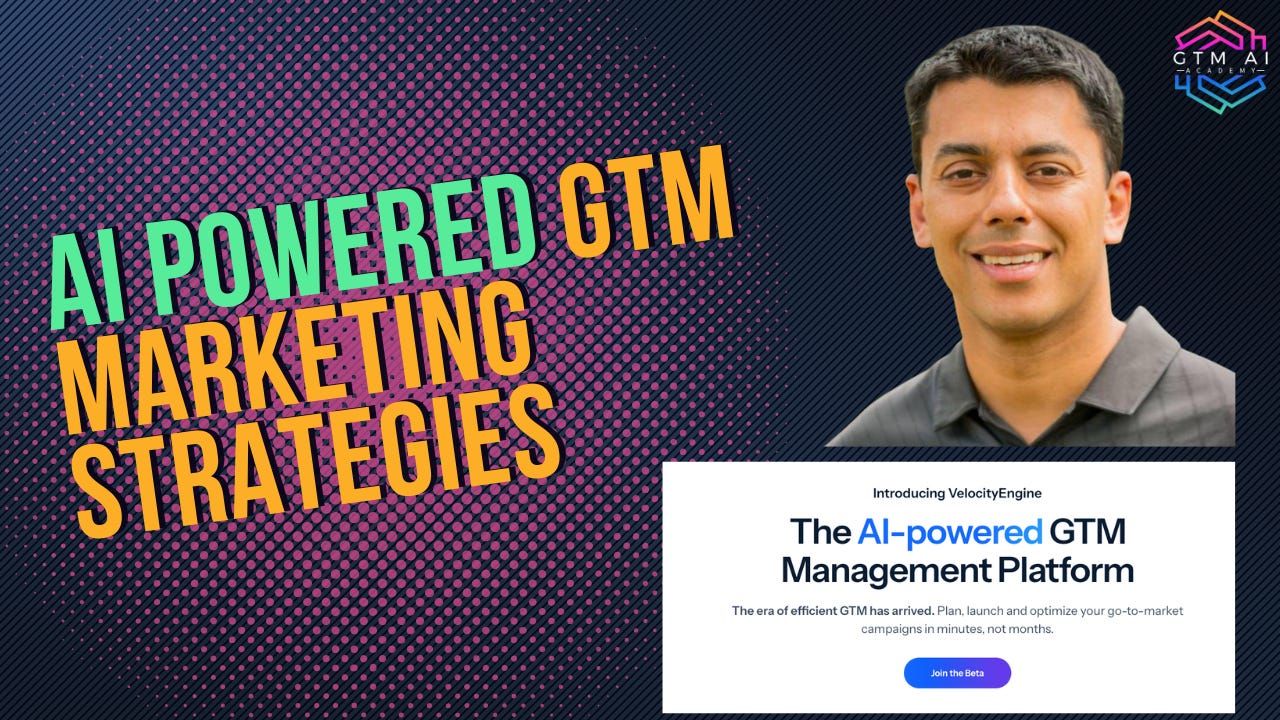
You can go to Youtube, Apple, Spotify as well as a whole other host of locations to hear the podcast or see the video interview.
Introduction
In the rapidly evolving landscape of marketing and sales, businesses are constantly seeking innovative ways to enhance their go-to-market (GTM) strategies. Acknowledging the pressing challenges in today’s B2B marketing environment, the latest episode of the GTM AI Podcast delves into the nuanced dynamics of go-to-market efficiency, the transformative role of AI, and how companies can leverage these insights for success. Featuring Nick Bhavsar, Co-founder and CMO of VelocityEngine, this episode offers a wealth of knowledge on redefining GTM approaches.
The Broken State of Go-to-Market
The B2B marketing landscape is fraught with complexity, often likened to deciphering a foreign language at a cocktail party. From MQLs (Marketing Qualified Leads) to a myriad of B2B acronyms, the process can appear convoluted and inefficient.
Companies are spending significantly more to acquire each dollar of Annual Recurring Revenue (ARR) than just a few years ago, indicating a need for more efficient strategies.
Key issues such as declining engagement rates across various channels highlight the mismatch between marketing content and actual buyer needs.
Root Causes and Symptoms of Inefficiency
Nick Bhavsar highlights a critical gap in understanding the buyer’s needs and how AI can bridge this by offering personalized and meaningful engagement.
The lack of adherence to fundamental marketing principles, like segmentation and positioning, has exacerbated inefficiencies.
AI offers the potential to rediscover these marketing fundamentals, providing a powerful tool to re-engage buyers and solve relevant problems.
AI as the Solution
AI empowers companies to create hyper-personalized content, tailored to specific personas and stages in the buyer journey.
Potential shifts include transforming traditional sales roles, allowing AI to handle more preliminary engagement tasks and freeing sales teams to focus on closing deals.
With AI, marketing can manage the entire buyer journey, from initial engagement to post-purchase expansion, creating a seamless feedback loop that informs and enhances strategy.
Velocity Engines: Pioneering AI-driven GTM
Nick Bhavsar's firm, VelocityEngine, exemplifies the innovative application of AI in GTM strategies, developing frameworks that assist companies in navigating complex market dynamics efficiently.
The company's approach involves laying a strong product marketing foundation before employing AI to automate content creation and personalization, addressing each segment and persona effectively.
This adaptive, rapid-response approach positions companies to pivot quickly, optimizing market strategies with more frequent testing and iteration cycles.
Conclusion
The shifting dynamics in B2B marketing signal a future where AI-fueled strategies will become increasingly central to successful market engagements. This podcast episode underscores that embracing AI, coupled with a foundational understanding of marketing principles, offers a path forward for businesses striving to maintain competitiveness and achieve sustainable growth.
As the industry continues to evolve, marketers and businesses must collaborate, share insights, and drive collective progress, leveraging AI as a cornerstone of future GTM strategies.
For further insights and to engage with industry leaders like Nick Bhavsar, tune into the GTM AI Podcast or connect with VelocityEngine to explore AI-driven solutions tailored to elevate your go-to-market strategies.

Dario Amodei on DeepSeek, AI Scaling, and the Case for U.S. Export Controls
Dario Amodei, CEO of Anthropic, presents a detailed argument on DeepSeek’s AI advancements, U.S. AI leadership, and the necessity of export controls on AI chips to China. While some have interpreted DeepSeek’s rapid rise as a potential threat to U.S. AI dominance, Amodei argues that DeepSeek’s success aligns with existing trends in AI cost reduction rather than being a unique breakthrough.
However, he maintains that export controls remain critical to preventing China from gaining access to the computational resources necessary for building AI models that could challenge U.S. leadership and pose national security risks.
Key Points from Amodei’s Analysis
1. The Three Dynamics of AI Development
Amodei outlines three fundamental AI scaling principles that influence model advancements:
1.1. Scaling Laws
Larger AI models consistently outperform smaller ones across a range of tasks.
More compute = better AI: A $1M model might solve 20% of coding tasks, while a $100M model might solve 60%.
AI companies are in a race to train ever-larger models to maintain an intelligence edge.
1.2. Shifting the Cost Curve
Efficiency innovations (better hardware, algorithmic tweaks) reduce the cost of AI training, enabling companies to train better models at lower costs.
AI model performance improves by ~4x per year due to these advancements.
1.3. Shifting the Paradigm
In 2024, a new paradigm emerged: using reinforcement learning (RL) for reasoning (e.g., OpenAI’s o1 and DeepSeek-R1).
Companies investing early in RL-enhanced models are making rapid gains, as this field is still in its early scaling phase.
🚀 GTM Implication:
✅ AI models are evolving quickly, and companies must constantly adapt.
✅ AI cost reduction is inevitable—GTM teams must position their AI-powered solutions based on real-world applications and ROI, not just raw model power.
2. DeepSeek’s AI Models: A Threat to U.S. AI Leadership?
2.1. Understanding DeepSeek’s Success
DeepSeek-V3 (released first) was a strong pre-trained model but did not use reinforcement learning (RL).
DeepSeek-R1 added an RL phase, bringing it closer to OpenAI’s o1 in reasoning capabilities.
2.2. The Real Cost Behind DeepSeek
DeepSeek did not achieve a radical cost breakthrough—its efficiency gains are in line with expected trends (U.S. AI models have seen similar cost reductions over time).
DeepSeek’s cost of $6M is misleading because U.S. companies also build mid-sized models at similar costs.
2.3. The Geopolitical Significance
The key difference this time is China demonstrated cost reductions first, which has never happened before.
This raises concerns about China closing the AI gap faster than expected.
🚀 GTM Implication:
✅ AI development is becoming a global competition, and businesses need to monitor emerging AI players closely.
✅ Investors may shift funding strategies, considering low-cost AI development models as a viable alternative.
✅ Enterprises need to assess AI vendors beyond just U.S. models, especially for cost-effective solutions.
3. The Case for U.S. Export Controls on AI Chips
3.1. Why Export Controls Matter
AI breakthroughs require millions of chips and billions of dollars in computing resources.
By limiting China’s access to AI chips, the U.S. can maintain an edge in AI development.
3.2. Two Possible Futures
🔹 Scenario 1: A Bipolar AI World (U.S. & China Both Compete at the Top)
China acquires millions of AI chips, allowing it to develop models rivaling the U.S.
Potential risk: China could militarize AI, leveraging it for cyber warfare and defense dominance.
🔹 Scenario 2: A Unipolar AI World (U.S. Maintains Leadership)
Export controls limit China’s AI chip supply, giving the U.S. a long-term strategic AI advantage.
The U.S. capitalizes on its AI leadership by ensuring technological dominance across industries.
3.3. Do DeepSeek’s Advances Mean Export Controls Have Failed?
No—DeepSeek’s progress is within expected cost-reduction trends.
DeepSeek’s chip supply is still limited (~50,000 chips), but future controls must prevent China from acquiring millions.
Stronger export controls on AI chips (like banning H20 chips) could slow China’s AI progress.
🚀 GTM Implication:
✅ AI infrastructure investments in the U.S. will increase, leading to more funding in domestic AI research.
✅ Companies should track AI export policies, as they could impact which AI models are available for enterprise use.
✅ Tech firms investing in AI chips and data centers may see higher demand for domestic AI hosting and training services.
Final Thoughts: DeepSeek’s Rise and the Future of AI Competition
Amodei’s analysis suggests that DeepSeek’s success is not a fundamental game-changer, but it does highlight China’s growing AI capabilities. While DeepSeek did not achieve a radical cost breakthrough, its progress proves that China is a formidable AI competitor.
🔹 Key Takeaways for GTM Teams:
AI cost reduction is inevitable → AI solutions must be positioned based on practical applications and ROI, not just cutting-edge tech.
AI development is now a global race → Emerging AI players like DeepSeek will challenge existing enterprise AI vendors.
Export controls will shape AI market dynamics → U.S. companies must stay ahead by investing in AI infrastructure, talent, and chip supply chains.
U.S. AI vendors must move fast → Companies that can commercialize AI efficiently will maintain dominance, despite rising competition.
🚀 The future of AI will be determined by who can scale faster, innovate efficiently, and secure the necessary compute resources. Businesses that align their GTM strategy with these AI trends will gain a competitive advantage in the years ahead.
Oracle’s New AI Agents for Human Capital Management: Transforming HR Automation and GTM Strategy
Oracle has unveiled new role-based AI agents for its Fusion Cloud Human Capital Management (HCM) suite, designed to automate employee-related workflows, streamline HR processes, and enhance workforce management. These AI agents build on Oracle’s broader agentic AI initiatives, bringing a new level of autonomy, intelligence, and personalization to human resource operations.
For Go-to-Market (GTM) teams, these AI-powered HR solutions signal a shift in workforce optimization, reducing administrative burdens while improving talent retention, hiring efficiency, and employee engagement. Here’s how Oracle’s latest HCM AI agents impact business strategy, AI adoption, and cross-functional collaboration.
Key Features of Oracle’s AI Agents in HCM
1. AI-Driven Performance Reviews & Career Growth
💡 What It Does:
Career Planning Assistant: Suggests career paths, training, and skills development based on an employee’s background.
Performance and Goals Assistant: Monitors employee progress, provides feedback, and prepares first-draft performance reviews using aggregated data.
🚀 GTM Impact:
✅ Sales & Marketing Enablement: GTM teams can train sales reps more effectively by using AI-driven career planning and coaching tools.
✅ Improved Workforce Retention: By aligning employees with career paths and upskilling programs, HR teams can reduce turnover, ensuring continuity in sales and marketing expertise.
✅ Data-Driven Employee Development: Performance analytics allow GTM leaders to optimize workforce planning, ensuring the right talent is in the right role.
2. AI-Powered Hiring & Onboarding Automation
💡 What It Does:
Job Requisition & Posting Automation: AI agents generate job descriptions based on company needs, reducing hiring friction.
New Hire Onboarding Assistant: Creates personalized onboarding experiences, ensuring faster integration into company culture.
🚀 GTM Impact:
✅ Faster Hiring in Revenue Teams: AI-assisted job posting ensures faster talent acquisition for sales, marketing, and customer success roles.
✅ Improved Employee Productivity: Personalized onboarding workflows get new hires up to speed faster, reducing time-to-value in sales and marketing execution.
✅ More Strategic HR Focus: HR teams can shift from manual hiring tasks to strategic talent management, improving workforce planning.
3. Automating Compensation, Benefits & Payroll Management
💡 What It Does:
Timecard Assistant: Detects errors in time-tracking and ensures payroll accuracy.
Compensation & Benefits Assistant: Guides employees through tax withholding, PTO policies, and salary structures, offering personalized financial guidance.
🚀 GTM Impact:
✅ Improved Sales Compensation Planning: AI ensures accurate commission tracking, reducing disputes in sales performance incentives.
✅ Optimized Employee Benefits Experience: GTM teams can use AI insights to personalize benefits offerings, improving employee satisfaction and retention.
✅ Reduced HR Workload: Automation of payroll and benefits inquiries allows HR to focus on strategic initiatives rather than administrative tasks.
4. AI Agents for HR & IT Collaboration
💡 What It Does:
Dynamic API Calls: AI agents access real-time business data, ensuring accurate and contextually relevant insights for employees.
HR & IT Integration: AI connects HR functions with business operations, workforce planning, and supply chain management.
🚀 GTM Impact:
✅ HR & Revenue Operations Alignment: AI insights help align HR goals with GTM strategy, ensuring the right talent is hired and retained.
✅ Seamless Workforce Data Management: AI enables real-time workforce analytics, helping leaders make faster, data-driven decisions.
✅ Cross-Department Collaboration: AI agents enhance communication between HR, IT, finance, and GTM teams, leading to greater efficiency.
5. Enhancing User Adoption & AI Trust
💡 What It Does:
User-Friendly AI Assistants: Employees and HR teams can easily interact with AI agents through click-and-prompt workflows.
Flexible Automation Levels: AI allows users to control automation levels, ensuring that AI remains a supportive tool rather than replacing human oversight.
🚀 GTM Impact:
✅ Boosts AI Adoption in HR & Revenue Teams: AI’s user-friendly design ensures faster adoption by HR, reducing resistance to AI-driven automation.
✅ Empowers Employees Through AI Training: By training employees on how to use AI in their roles, businesses can increase productivity across departments.
✅ Strengthens Employee Experience & Engagement: Employees trust AI tools when they are transparent, intuitive, and directly beneficial to their work.
Why Oracle’s AI Agents Matter for GTM Strategy
Oracle’s AI-driven HCM enhancements go beyond HR automation—they are reshaping how businesses hire, retain, and develop talent, directly impacting sales, marketing, and operational efficiency.
🔹 Key Takeaways for GTM Teams:
✅ Faster talent acquisition and onboarding = reduced time-to-productivity for sales & marketing hires.
✅ AI-driven career planning = higher retention and fewer disruptions in revenue teams.
✅ Automated performance management = better insights into sales and marketing effectiveness.
✅ AI-powered payroll & compensation management = smoother commission payouts and fewer disputes.
✅ Cross-functional integration = improved collaboration between HR, IT, and GTM teams.
🚀 The future of AI in workforce management isn’t just about automation—it’s about unlocking human potential through intelligent AI-driven decision-making. With Oracle’s new AI agents, companies can reduce administrative burdens, improve workforce agility, and drive business success in a competitive AI-powered world.
Stanford and University of Washington Researchers Train AI Reasoning Model for $50—What It Means for AI and GTM Strategy
In a groundbreaking study, AI researchers from Stanford and the University of Washington have demonstrated that advanced AI reasoning models can be trained for under $50 in cloud compute credits. Their model, known as s1, performs comparably to OpenAI’s o1 and DeepSeek’s R1 on math and coding benchmarks—a feat that previously required millions of dollars in AI training.
The success of s1, achieved through distillation of Google’s Gemini 2.0 Flash Thinking Experimental, signals a major shift in AI development, raising critical questions about the commoditization of AI models and the sustainability of high-cost AI investments.
For GTM teams, this shift introduces new opportunities and risks:
✅ Cost-efficient AI models will disrupt enterprise AI pricing and business models.
✅ AI commoditization may shift competitive advantage toward fine-tuning and proprietary data.
✅ Security and compliance concerns will intensify as open-source AI models become more powerful.
Here’s how the s1 breakthrough could reshape AI strategies, enterprise adoption, and GTM execution.
1. AI Model Commoditization: The End of Proprietary Moats?
💡 The Breakthrough:
s1 was trained in under 30 minutes using only 16 Nvidia H100 GPUs.
Researchers used a dataset of just 1,000 questions, distilled from Google’s Gemini 2.0 Flash Thinking Experimental.
The model achieved comparable reasoning performance to multimillion-dollar models like o1 and DeepSeek-R1.
🚀 GTM Impact:
✅ Low-cost AI models will challenge enterprise AI pricing.
AI solutions priced at a premium will need to justify value beyond raw model performance.
✅ Companies must focus on proprietary datasets & fine-tuning.Competitive differentiation will shift from model size to domain-specific fine-tuning.
✅ AI accessibility will increase, lowering the barrier to AI adoption.More startups and enterprises will be able to build AI-powered solutions without massive compute budgets.
2. The Rise of AI Distillation: Replicating Multi-Million Dollar Models for Pennies
💡 What Happened:
Researchers used supervised fine-tuning (SFT) to train s1 on a distilled dataset from Google’s AI model.
Distillation allows smaller models to mimic the reasoning process of larger, more expensive models.
This method is significantly cheaper than reinforcement learning (used by OpenAI and DeepSeek).
🚀 GTM Impact:
✅ AI cost efficiency will reshape GTM messaging.
AI vendors must highlight unique differentiators beyond cost, such as trust, security, and domain-specific performance.
✅ Custom AI fine-tuning will be a key GTM strategy.Companies should invest in training smaller, efficient models on proprietary business data.
✅ Expect legal battles over AI training methods.OpenAI has accused DeepSeek of data harvesting for model distillation, signaling potential legal and regulatory hurdles.
3. Test-Time Scaling & Self-Correction: The “Wait” Trick for AI Accuracy
💡 The Experiment:
Researchers discovered that adding the word “wait” to prompts caused s1 to spend more time reasoning, leading to more accurate answers.
This self-correction mechanism improves AI performance without additional compute costs.
🚀 GTM Impact:
✅ AI models will become more self-optimizing over time.
AI solutions will need to demonstrate continuous learning and adaptability.
✅ AI productivity tools can leverage test-time scaling.Sales and marketing AI tools can fine-tune prompts dynamically for better lead scoring, content generation, and customer insights.
✅ Optimized AI models will drive cost-efficient AI adoption.Enterprises can implement leaner, smarter AI models with similar performance to expensive counterparts.
4. The Billion-Dollar AI Investment Dilemma
💡 What’s at Stake:
Meta, Google, and Microsoft are investing hundreds of billions in AI infrastructure.
If low-cost AI training proves scalable, it could undermine these massive investments.
AI labs will need to justify continued high-cost model training when low-cost alternatives exist.
🚀 GTM Impact:
✅ AI companies will shift from model development to AI services.
Expect a pivot toward enterprise AI deployment, customization, and security solutions.
✅ Compute-intensive AI will need stronger commercialization strategies.AI leaders must focus on enterprise licensing, regulatory compliance, and performance guarantees.
✅ Lower AI costs could democratize AI innovation.Startups and SMBs will have greater access to powerful AI models, leveling the playing field against tech giants.
Final Thoughts: The Future of AI and GTM Strategy
The s1 breakthrough highlights the rapid cost reductions in AI model training, raising critical questions about the sustainability of expensive AI development.
🔹 Key Takeaways for GTM Teams:
✅ AI pricing strategies must adapt → Companies must emphasize enterprise security, fine-tuning, and regulatory compliance.
✅ Open-source AI will accelerate adoption → Businesses will need to navigate AI legality, data ownership, and competitive differentiation.
✅ AI vendors must pivot to service-based models → AI companies will shift focus to integration, security, and customer success rather than just model capabilities.
✅ Low-cost AI innovation will drive industry-wide disruption → Enterprises should prepare for AI commoditization, competitive price wars, and greater AI accessibility.
🚀 The AI landscape in 2025 will be shaped by who can commercialize AI effectively—not just who has the biggest models. GTM teams must adjust their strategies now to stay ahead of the AI revolution.

Testing ChatGPT’s Deep Research: Strengths, Gaps, and GTM Implications
OpenAI’s Deep Research feature is marketed as an advanced AI-powered tool capable of conducting complex research, analyzing large datasets, and generating professional-grade reports. However, real-world testing by Adi Robertson at The Verge suggests that while Deep Research can accurately retrieve and summarize information, it struggles with broader context, recent developments, and holistic analysis.
For Go-to-Market (GTM) teams, this review raises critical questions about AI’s role in research, content generation, and decision-making. The findings highlight where AI excels, where it falls short, and how businesses should adapt their AI strategies accordingly.
Key Findings: Where ChatGPT’s Deep Research Succeeds & Fails
✅ Strengths of ChatGPT’s Deep Research
1. Accurate Case Summaries & Legal Citations
ChatGPT successfully identified real, verifiable legal cases related to Section 230.
It did not fabricate sources, a critical improvement over earlier AI legal research failures.
2. Clear and Well-Structured Reports
The final report was 5,000 words long, neatly organized with headers, citations, and structured formatting.
It produced a readable, well-formatted legal analysis, making it useful for users who need AI-generated research briefs.
3. Effective for Technical & Niche Research
ChatGPT handled specific legal terminology well and was helpful for technical legal research.
It could compile, summarize, and explain complex judicial decisions in an accessible way.
🚀 GTM Impact:
✅ AI-powered research tools can accelerate content production, reducing the time needed for whitepapers, legal summaries, and industry reports.
✅ Legal, financial, and policy teams can use AI for basic research, but still require human oversight for strategic insights.
✅ AI-generated research is useful for structured reports but lacks the ability to contextualize broader industry changes.
⚠️ Weaknesses of ChatGPT’s Deep Research
1. Missing Key Recent Developments
The report claimed to cover 2019–2024 but failed to include major 2024 rulings, omitting a year’s worth of legal changes.
The omission was critical, as 2024 was a landmark year for Section 230, with significant rulings that could reshape internet law.
2. Contextual Blind Spots
ChatGPT summarized cases but ignored broader social, political, and judicial trends, which human experts consider essential.
AI research tools fail to recognize the evolving nature of legal and policy shifts, treating them as static facts rather than part of a larger system.
3. Requires Extensive Prompt Refinement
Some Verge colleagues were able to fix the missing data issue by re-running reports and specifically requesting “2024-only” cases.
Deep Research still requires heavy user guidance, meaning it’s not yet reliable as a fully autonomous research tool.
🚀 GTM Impact:
✅ AI tools are still limited in strategic research applications—business leaders must verify AI findings before using them in critical decision-making.
✅ GTM teams using AI for industry analysis must validate AI reports with human expertise to avoid outdated or misleading conclusions.
✅ AI models need structured feedback loops to refine their outputs—companies should integrate human-in-the-loop AI training to improve accuracy.
What This Means for GTM Teams Using AI for Research & Strategy
1. AI Research Tools Require Human Oversight
AI can summarize information but struggles with broader strategic context.
GTM teams should treat AI research as a starting point, not a final decision-maker.
AI-generated reports must be reviewed, fact-checked, and supplemented with expert insights.
2. AI’s Value is in Speed, Not Strategy
Deep Research is useful for rapid knowledge aggregation but lacks strategic analysis.
Use AI to quickly gather information and automate report structuring.
Let human experts refine insights, add judgment, and connect AI findings to real-world decisions.
3. AI Research Needs Better Query Refinement
GTM teams must train AI tools to ask the right questions.
AI research fails when it misses important trends or lacks recent data.
Fine-tuning prompts and iterating on AI-generated reports are critical for getting accurate results.
4. AI Research Will Improve with More Specialized Data
General-purpose AI struggles with specialized fields like law, finance, and medicine.
AI research tools need domain-specific training data to improve accuracy.
Expect more vertical AI research tools designed for legal, healthcare, and financial analysis.
Final Verdict: AI Research is Not Yet a Replacement for Human Experts
OpenAI’s Deep Research is an impressive AI tool, but it still lacks the contextual awareness, critical thinking, and up-to-date insights that human researchers provide. While it accurately compiles and summarizes existing data, it fails to recognize shifts in larger industry or legal trends.
For GTM teams, this means:
✅ AI research tools should be used for knowledge aggregation, not decision-making.
✅ AI-generated insights must always be reviewed and refined by human experts.
✅ Fine-tuning AI queries and iterating on reports is essential to extract accurate insights.
🚀 AI research is a powerful tool for GTM teams, but human expertise remains irreplaceable in high-stakes decision-making. As AI research tools evolve, the key to success will be combining AI’s speed with human strategic insight.
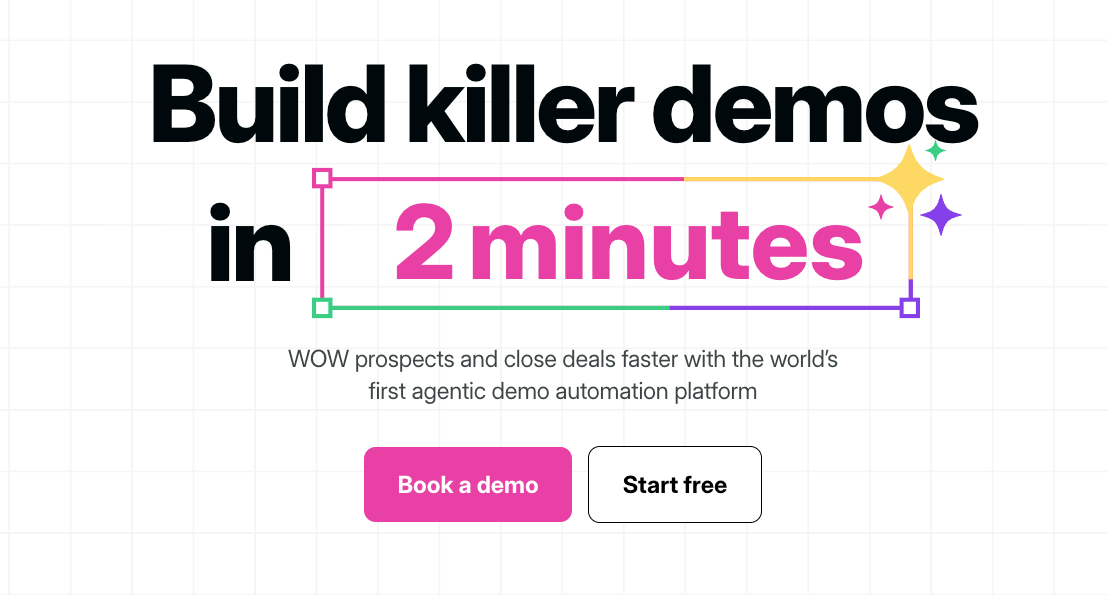
https://www.storylane.io/
You can test out the Storylane abilities here
Storylane: The AI-Powered Interactive Demo Platform Transforming GTM Strategies
In today’s fast-moving B2B landscape, interactive product demos are no longer a luxury—they’re a necessity. Customers expect self-guided, personalized, and engaging experiences that help them understand product value without needing a live sales call.
Enter Storylane, a powerful AI-driven demo automation platform that enables GTM teams to create, personalize, and analyze interactive product experiences at scale.
For Sales, Marketing, Product, and Customer Success teams, Storylane offers a frictionless way to educate, engage, and convert prospects—reducing sales cycles, improving buyer enablement, and increasing conversion rates.
This in-depth review explores Storylane’s key features, real-world use cases, and how GTM teams can leverage its AI-driven capabilities for maximum impact.
Why Storylane? The Shift to Interactive Product-Led Growth
Traditional product demos no longer meet buyer expectations. Live sales demos and static PDFs fail to provide:
❌ Scalability → Every demo requires a rep’s time.
❌ Personalization → Buyers want self-serve and customized experiences.
❌ On-Demand Access → Modern buyers expect 24/7 interactive access to explore solutions at their own pace.
Storylane solves these challenges by offering AI-powered, no-code, interactive product demos that help GTM teams convert prospects faster.
Key Features of Storylane
1. AI-Driven Interactive Product Demos
💡 What It Does:
Enables non-technical users to create click-through demos of their product in minutes—without engineering support.
Users can add guidance, tooltips, and real-time interactivity to simulate the product experience.
Demos look and feel like a real product—without requiring users to log in or access a sandbox.
🚀 GTM Impact:
✅ Sales teams can create tailored, self-guided demos for prospects—reducing sales cycles.
✅ Marketing teams can embed demos into ads, emails, and landing pages to drive higher engagement.
✅ Customer Success can onboard users faster with interactive tutorials instead of static help docs.
🔹 Real-World Example:
A SaaS company selling to enterprise buyers used Storylane to create an interactive demo that prospects could explore before booking a sales call. The result? A 30% increase in demo-to-opportunity conversion rates.
2. Demo Hub: Centralized Buyer Enablement
💡 What It Does:
Provides a centralized portal for hosting multiple demos, allowing buyers to explore different product features in one place.
Comes with two layout options:
Playlist View: Guides prospects through a structured demo flow (ideal for sales reps sharing a journey).
Gallery View: Lets users explore demos on their own time (ideal for marketing and PLG strategies).
🚀 GTM Impact:
✅ Improves sales efficiency—Prospects engage with pre-built demo flows before hopping on a call.
✅ Strengthens marketing campaigns—Users can explore product features at their own pace, increasing inbound lead quality.
✅ Drives product-led growth (PLG)—Helps self-serve users onboard faster with interactive tutorials.
🔹 Real-World Example:
A B2B fintech startup used Storylane’s Demo Hub to provide investors and enterprise customers with an on-demand, interactive product tour. This led to a 40% increase in pipeline velocity.
3. AI-Powered Personalization with Lily AI
💡 What It Does:
Lily AI automates demo creation and personalization, allowing teams to:
✅ Instantly edit HTML & CSS for seamless UI changes.
✅ Add studio-quality AI voiceovers to make demos more engaging.
✅ Automatically translate demos into 25+ languages for global reach.
✅ Customize demos with dynamic variables (e.g., prospect’s name, company logo, date).
🚀 GTM Impact:
✅ Sales teams can personalize demos for each prospect—without manual edits.
✅ Marketers can create geo-targeted campaigns with localized demos in multiple languages.
✅ Customer Success can provide AI-powered onboarding tutorials, reducing support tickets.
🔹 Real-World Example:
A cybersecurity company used Lily AI’s instant translation feature to create localized demos in five languages, resulting in a 3x increase in international conversions.
4. Meeting-Free Product-Led Sales & Marketing
💡 What It Does:
Storylane allows teams to share interactive demos via links, ads, email sequences, or embedded in websites.
Eliminates the need for prospects to schedule live demos, making product discovery frictionless.
🚀 GTM Impact:
✅ Sales teams can send personalized demos instead of cold calls—improving response rates.
✅ Marketers can run demo-driven LinkedIn & Google Ads—boosting ad engagement.
✅ Customer Success teams can reduce onboarding friction—providing instant product walkthroughs.
🔹 Real-World Example:
A B2B SaaS company ran an email campaign with embedded interactive demos—leading to a 50% increase in demo engagement and 20% higher conversions.
5. Analytics & Performance Insights
💡 What It Does:
Provides real-time analytics on demo engagement, completion rates, and viewer interactions.
Allows teams to identify high-intent prospects based on demo activity.
🚀 GTM Impact:
✅ Sales teams can prioritize follow-ups based on engagement data.
✅ Marketers can optimize demo CTAs and conversion flows based on analytics.
✅ Customer Success can track feature adoption and improve onboarding experiences.
🔹 Real-World Example:
A B2B AI startup used Storylane’s demo analytics to track which product features prospects engaged with the most—helping sales teams personalize follow-up conversations and boosting close rates by 25%.
Storylane vs. Traditional Demo Methods: Why It’s a Game Changer
Feature Storylane Traditional Live Demos Scalability ✅ 100% scalable, interactive demos ❌ Requires rep’s time per demo Personalization ✅ AI-powered, dynamic variables ❌ Manual customization required Demo Accessibility ✅ 24/7 self-serve access ❌ Limited to scheduled meetings Lead Intelligence ✅ Tracks demo engagement & buyer intent ❌ No engagement insights Localization & Voiceovers ✅ AI-powered translations & voiceovers ❌ Requires manual effort
Final Thoughts: Why Storylane is a Must-Have for GTM Teams
Storylane is not just another demo tool—it’s a full-fledged buyer enablement platform that helps GTM teams:
✅ Shorten sales cycles by providing interactive, self-serve demos.
✅ Improve lead conversion rates with AI-powered personalization.
✅ Scale marketing efforts by embedding product experiences into campaigns.
✅ Enhance customer success with frictionless onboarding experiences.
🚀 In 2025, interactive demos will be a core part of how B2B SaaS companies sell. Storylane is leading the way, helping GTM teams build immersive, data-driven, and conversion-optimized product experiences. If your team isn’t using AI-powered demos yet, it’s time to start.