

Another week of the GTM AI Podcast and newsletter.
News is coming, a few exciting changes, just thought I would tease ya a bit by letting you know changes are a coming in the first of February
As a note, The Linkedin newsletter here has the summarized version of the free newsletter, which you can access for free at www.gtmaipodcast.com
You can also join the Slack community where we share updates and news all the time
You can also listen to my lovely AI friends talking through this weeks newsletter here:
Some events for you to be aware of:
Other events happening from Revenue Magazine with the REVOLT event, packed with amazing speakers: https://www.linkedin.com/events/revenuerevolt7282898153308069889/comments/
Power to the Digital Native from Seismic https://lnkd.in/epXu33aq
ALSO QUICK NOTE:
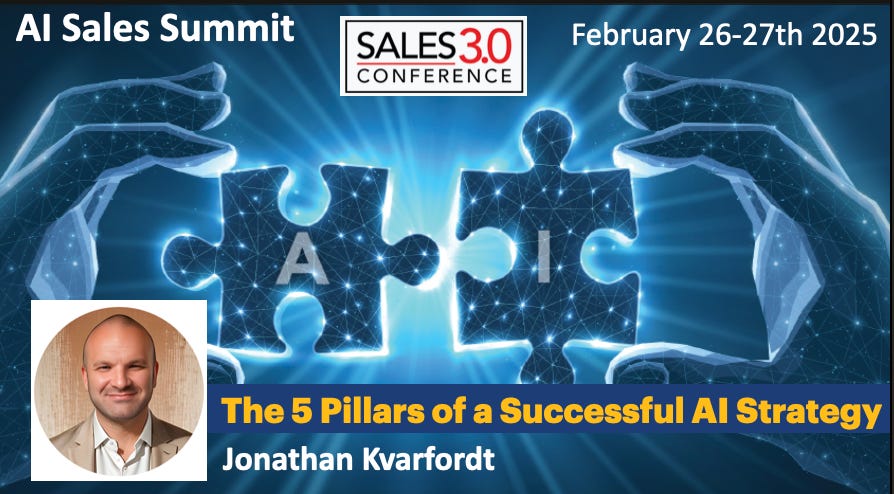
Join me at the AI Sales Summit, the premier event designed to revolutionize how sales leaders, professionals, and organizations harness AI to drive sales success.
I will be leading a panel discussion on the 5 Pillars of AI Strategy with some of my favorite people in the space.
Why You Can’t Miss This:
Besides me obviously ;)
20+ World-Class Speakers: Hear from visionaries like Bill McDermott, CEO of ServiceNow; Victor Antonio, AI expert and bestselling author; Marc Benioff, CEO of Salesforce.com and many more.
Actionable Insights: Discover groundbreaking AI sales techniques, strategies, and tools that you can implement immediately.
Unparalleled Networking: The Brella conferencing platform connects you directly with fellow attendees and speakers, enabling real-time interaction and meaningful conversations.
Whether you're a seasoned sales leader or just starting your AI journey, this summit is your gateway to: Increased productivity Streamlined workflows Exponential revenue growth
Save these dates: Date: Feb. 26-27th
Secure Your Spot Today! This is your chance to be part of the AI revolution in sales. Seats are limited—register now to guarantee your place!
Since I am leading an all-star panel of AI experts, I can offer you a FREE pass for the event. Please use this link to register: https://bit.ly/3WacqZc
This week we have the following:
Season 2, Episode 3 GTM AI Podcast with Ram Bulusu of Alert AI
GTM AI Tool of the week: Numerous.ai
To read the rest of these, join for free the www.gtmaipodcast.com newsletter:
Agentic AI will make ChatGPT look like a calculator
BCG AI Agent Report
o3 from OpenAI set to launch soon
BONUS-GTP5 changes everything.
With that being said, lets get into the podcast!

You can go to Youtube, Apple, Spotify as well as a whole other host of locations to hear the podcast or see the video interview.
How to Successfully Sell AI Solutions in Today's Market | Insights from Tech Leader Ram Bulusu
In a recent conversation with Ram Bulusu, a veteran technology leader with 35 years in healthcare technology and current head of AI and Digital at Sanofi, we explored the evolving landscape of AI implementation and go-to-market strategies. Ram shared invaluable insights from his experience bridging the gap between advanced technology and practical business applications, particularly in highly regulated industries like healthcare.
The Evolution of AI Implementation
The conversation revealed a critical shift in how organizations should approach AI adoption. Traditional methods of implementing AI have focused heavily on technological capabilities, often leading to sophisticated platforms that fail to address specific business needs. Ram emphasized that the future belongs to industry-specific solutions that prioritize practical application over technical prowess.
Healthcare serves as a perfect case study for this evolution. The industry, traditionally lagging in technology adoption due to regulatory constraints and complexity, is now seeing successful AI implementations that focus on specific outcomes rather than general capabilities. These successes come from understanding and addressing particular industry challenges, from drug development to patient care.
The New Go-to-Market Paradigm
Ram's insights revealed a fundamental truth about selling AI solutions: success lies not in the sophistication of the technology but in its ability to solve specific business problems. This approach requires a deep understanding of industry verticals and the ability to translate technical capabilities into practical business outcomes.
The most successful implementations start with a clear business problem, develop a targeted solution, and ensure easy implementation. This contrasts sharply with the traditional approach of building complex platforms and trying to find problems they might solve.
Security and Implementation Challenges
A significant portion of our discussion focused on the critical balance between innovation and security. Ram highlighted how companies, particularly in regulated industries, must navigate the complex landscape of data protection, compliance, and practical implementation. The solution, he suggests, lies in a graduated approach: starting small, proving value, and expanding gradually while maintaining robust security measures.
Looking Ahead: 2024-2026
Ram predicts a significant shift in the AI landscape over the next few years, with industry-specific solutions becoming dominant. He envisions a future where AI tools are as ubiquitous as electricity but implemented in highly specialized ways for different industries and applications.
Key Quotes from Ram:
"Nobody cares how great your technology is - show me what business problem it can solve."
"Don't start with the technology. Start with the end user problem you're trying to solve."
"You can't have your software tool making a final decision. You can have it make a recommendation, but you need a human being to come in and make sure you protect the privacy of the patient."
"The vast majority of the technology really is a platform. I can't use a platform to do my job. I want a plug and play tool."
"When I first demonstrated Gen AI to my quality team and said, this is going to create a quality plan for you... they looked at me like I was crazy. But when they saw the results, it was amazing."
"Gen AI today is not even a Beta version. It's a version 0. By first quarter 2026, you're going to see so much power, it'll blow you away."
Looking ahead, Ram's most exciting revelation was about his upcoming venture, which aims to embody these principles in a new approach to industrial AI applications. His vision suggests that the future of AI implementation lies not in building better platforms, but in creating more targeted, industry-specific solutions that solve real business problems.
This conversation serves as a valuable playbook for anyone involved in AI implementation or go-to-market strategy, emphasizing the importance of problem-first thinking, industry specialization, and practical application over technical sophistication.
Agentic AI: The Future Beyond Generative Tools
In a recent Forbes article, Bernard Marr makes a compelling case for the next evolution of artificial intelligence: agentic AI. While generative AI tools like ChatGPT and Google Gemini have transformed how businesses create content, analyze data, and solve problems, Marr argues that these systems, impressive as they are, are fundamentally reactive. They excel at responding to prompts and generating outputs but lack the autonomy to take initiative or pursue long-term goals. Agentic AI, he explains, represents a paradigm shift—an evolution where AI systems don’t just react but act independently, making decisions and adapting strategies to achieve broader objectives.
As Marr outlines, agentic AI is poised to transform industries, enabling machines to operate as collaborators rather than tools. This article dives into what makes agentic AI revolutionary, its practical applications, and its implications for Go-to-Market (GTM) teams.
What Sets Agentic AI Apart
1. Autonomy in Decision-Making
The defining difference between generative and agentic AI is autonomy. Generative AI, like ChatGPT, responds to instructions based on pattern recognition. In contrast, agentic AI can set its own objectives, plan strategies, and adapt to changing circumstances without human prompting.
Generative Example: Writing a meeting recap when asked.
Agentic Example: Tracking meeting outcomes, identifying follow-up actions, scheduling next steps, and alerting team members to deadlines.
GTM Application:
Agentic AI allows GTM teams to automate complex workflows. For example, an AI agent could manage an entire sales funnel—scoring leads, personalizing outreach, and updating CRM systems—while continuously optimizing based on real-time data.
2. Contextual Awareness and Memory
Agentic AI systems leverage advanced memory frameworks to maintain context over extended periods. This allows them to handle multi-step tasks, track progress, and dynamically adjust their strategies.
Example in Action:
A generative AI might craft a campaign email, but an agentic AI can monitor campaign performance, identify underperforming segments, and adapt messaging strategies without additional input.
GTM Application:
Sales and marketing teams can use agentic AI to manage long-term campaigns, ensuring continuity and responsiveness across customer interactions, even as conditions change.
3. Goal-Oriented Architecture
Agentic AI integrates planning modules, decision-making frameworks, and adaptive learning capabilities. This enables it to break complex objectives into manageable steps, prioritize tasks, and refine its approach when encountering obstacles.
Example in Action:
In customer service, an agentic AI could handle end-to-end issue resolution—identifying the problem, coordinating with relevant departments, and following up to ensure customer satisfaction.
GTM Application:
For GTM teams, agentic AI can manage intricate customer journeys, from initial inquiry to post-sale support, reducing manual effort and improving customer experiences.
Convergence of Generative and Agentic AI
Bridging Creativity and Initiative
We are already witnessing the first steps toward convergence. Tools like OpenAI’s ChatGPT, which now features task scheduling, hint at the integration of generative creativity with agentic autonomy.
GTM Application:
This convergence can empower marketing teams to automate campaign creation and execution. Imagine an AI that drafts personalized ads, launches campaigns, monitors performance, and tweaks strategies—all without human intervention.
Emerging Projects: Operator and Caterpillar
Rumored initiatives like OpenAI’s "Operator" and "Caterpillar" aim to enable AI systems to independently navigate digital environments, analyze data, and execute actions autonomously.
GTM Application:
For GTM teams, such technology could automate competitive analysis, identify emerging market trends, and develop strategies to capitalize on them—turning raw data into actionable insights without manual input.
Real-World Applications and Implications
1. Workflow Automation
Agentic AI can take over repetitive tasks, streamline processes, and ensure seamless operations with minimal human oversight.
Use Case:
In lead management, agentic AI can autonomously score leads, prioritize follow-ups, and adapt sales strategies based on real-time performance metrics.
2. Enhanced Customer Engagement
Agentic AI can deliver proactive, personalized customer experiences by anticipating needs and offering tailored solutions.
Use Case:
An agentic AI assistant in e-commerce could guide customers through the shopping process, recommend products, and handle post-purchase follow-ups.
3. Optimized Operations
In industries like manufacturing and logistics, agentic AI can dynamically optimize workflows, responding to real-time challenges and improving efficiency.
Use Case:
A manufacturing AI could monitor production lines, predict maintenance needs, and adjust schedules to minimize downtime.
The Future of GTM with Agentic AI
From Tool to Partner
As agentic AI systems mature, they will evolve from reactive tools into proactive collaborators. These systems won’t just execute commands; they’ll propose strategies, challenge assumptions, and co-develop solutions.
GTM Application:
Imagine an AI that not only identifies underperforming territories but also suggests specific initiatives to address gaps and improve market share.
Seamless Integration
Agentic AI’s ability to navigate digital ecosystems autonomously means it can integrate across platforms, optimizing workflows and enabling seamless collaboration between tools.
GTM Application:
For example, an AI agent could autonomously update CRM records, monitor pipeline health, and generate insights for sales teams—all while interfacing with marketing automation systems.
Challenges and Opportunities
While agentic AI offers immense potential, it raises questions around transparency, ethics, and oversight:
Ensuring Alignment: AI must remain aligned with organizational goals and ethical standards.
Balancing Autonomy and Control: Companies must strike the right balance between empowering AI systems and maintaining human oversight.
Building Trust: Transparent decision-making frameworks are essential to build trust with customers and stakeholders.
Final Thoughts
As Bernard Marr highlights, the transition from generative to agentic AI represents a revolutionary leap in artificial intelligence. For GTM teams, this evolution promises to transform how businesses engage customers, optimize operations, and drive growth. By integrating agentic AI into their strategies, organizations can achieve new levels of efficiency, innovation, and customer satisfaction.
The future of AI isn’t just about smarter tools—it’s about intelligent partners that collaborate, adapt, and drive success. The question isn’t whether your GTM team should adopt agentic AI, but how soon you can start harnessing its transformative potential.

BCG’s Vision of AI Agents: Redefining Business Operations
Boston Consulting Group (BCG) envisions AI agents as transformative teammates for the modern enterprise—autonomous, adaptive, and capable of reshaping how businesses operate. By observing environments, planning tasks, and taking action, AI agents can automate repetitive processes, collaborate with human teams, and uncover valuable data insights.
BCG’s exploration of AI agents showcases their immense potential to enhance productivity and foster innovation. For Go-to-Market (GTM) teams, the applications of AI agents extend beyond operational efficiencies, creating opportunities to optimize workflows, enhance customer experiences, and drive strategic decisions.
What Are AI Agents?
At their core, AI agents are autonomous systems designed to achieve goals by observing their environment, planning actions, and executing tasks. Unlike traditional automation tools, these agents adapt and learn over time, evolving from static assistants into proactive collaborators.
Key Characteristics:
Autonomy: AI agents take initiative, reducing reliance on constant human input.
Memory: They retain context across tasks, enabling long-term strategic planning.
Integration: AI agents can seamlessly interact with enterprise tools like CRM systems, HR platforms, and marketing automation software.
GTM Example:
An AI agent in sales could automatically identify high-value leads, draft tailored outreach emails, schedule follow-ups, and analyze the effectiveness of engagement—all while continuously refining its strategies.
How Do AI Agents Work?
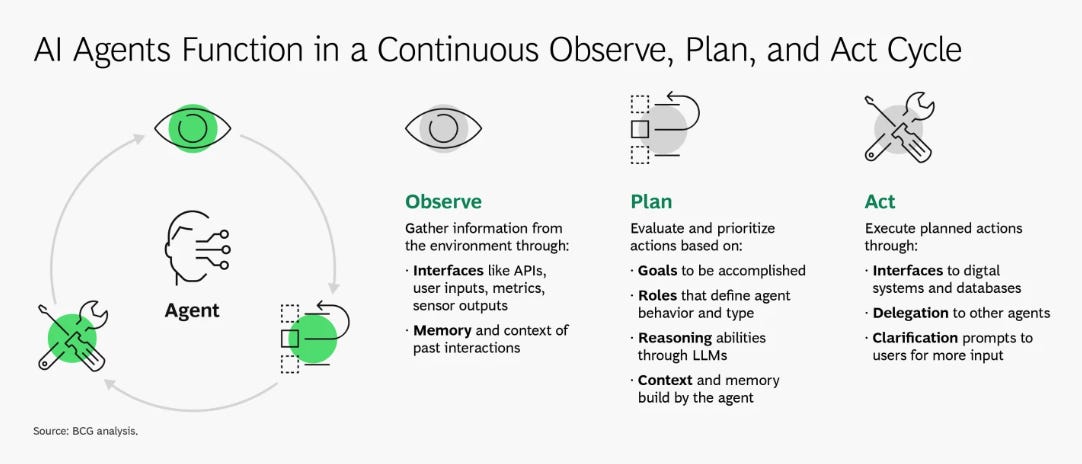
The operational framework of AI agents revolves around the Observe-Plan-Act cycle:
Observe:
Agents gather data from their environment, such as customer interactions, performance metrics, or sensor inputs. This context informs their decision-making.GTM Impact:
AI agents can analyze customer behavior across channels, providing insights that inform targeting, segmentation, and messaging strategies.Plan:
Using language models, AI agents evaluate priorities, assemble plans, and set goals. They incorporate memory and context to adjust strategies dynamically.GTM Impact:
Marketing teams can use agents to plan personalized campaigns, optimizing for audience preferences and engagement patterns.Act:
AI agents execute tasks via system integrations or delegate actions to other agents, learning and refining their processes through feedback loops.GTM Impact:
AI agents can automate CRM updates, schedule client meetings, and trigger follow-up tasks, reducing manual workloads for sales teams.
Components of AI Agents
BCG identifies five key components that enable AI agents to function:
Interfaces: APIs and protocols that connect agents to databases, sensors, and user systems.
Memory Modules: Short- and long-term memory systems that store context, past interactions, and task details.
Profile Module: Defines the agent’s role, goals, and behavioral patterns.
Planning Module: Uses language models to create action plans based on observations and goals.
Action Module: Executes tasks through system integrations and APIs, ensuring seamless workflows.
GTM Example:
For a product launch, an AI agent might use its memory module to analyze past campaign performance, create a plan in the planning module, and execute actions such as drafting emails and updating the campaign tracker in the action module.
What Can AI Agents Do?
1. Automate Standardized Processes
AI agents handle repetitive tasks with speed and accuracy, reducing human error and freeing employees to focus on strategic work.
Use Case:
A leading consumer goods company used AI agents to optimize global marketing campaigns. What previously required six analysts now takes one employee working alongside an agent, cutting execution time from weeks to hours.
2. Collaborate with Human Teams
AI agents act as intelligent collaborators, supporting decision-making, executing tasks, and enhancing human expertise.
Use Case:
A global bank deployed AI agents in customer service, reducing costs by 10x while maintaining high customer satisfaction.
3. Analyze and Synthesize Data
AI agents process vast datasets, uncovering patterns and delivering actionable insights at scales no human team could match.
Use Case:
A biopharma company used AI agents for lead generation, cutting cycle times by 25% and improving efficiency in drafting clinical study reports.
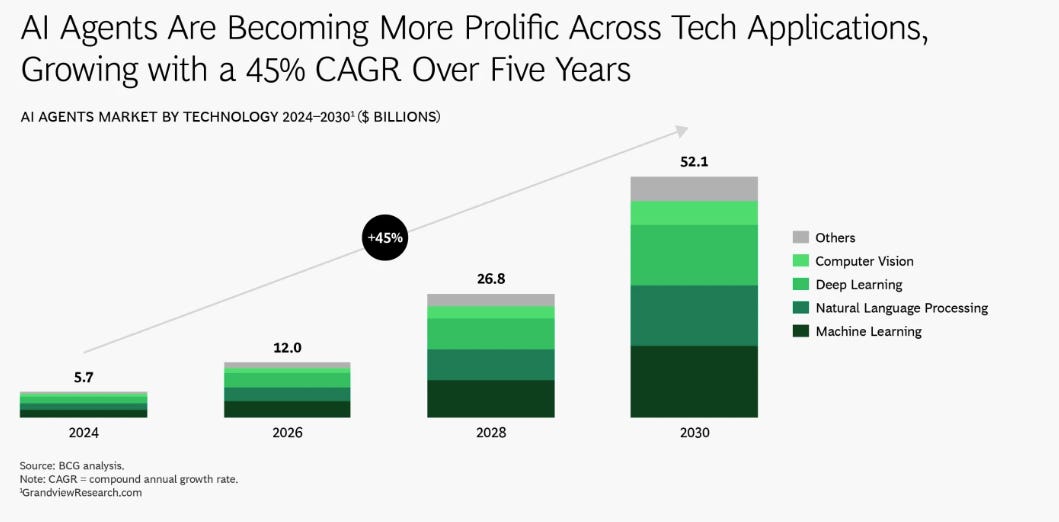
Applications Across GTM Functions
1. Marketing
AI agents streamline content creation, campaign execution, and performance analysis.
Example: A consumer goods company reduced blog creation costs by 95% and increased speed 50x, publishing in a single day rather than four weeks.
GTM Impact: AI agents can manage end-to-end marketing campaigns, from ideation to execution, delivering consistent, high-quality outputs.
2. Sales
Sales teams can leverage AI agents to optimize pipelines, improve lead management, and personalize customer interactions.
Example: AI agents can autonomously score leads, assign follow-ups, and suggest deal-closing strategies based on CRM data.
GTM Impact: Reduced manual effort allows sales reps to focus on high-value opportunities, increasing conversion rates.
3. Customer Success
AI agents enhance customer support by handling queries, resolving issues, and ensuring satisfaction.
Example: A global company deployed virtual agents to reduce support costs by automating routine customer interactions.
GTM Impact: Faster response times and personalized interactions improve retention and customer loyalty.
The Future of AI Agents in GTM
1. Scaling Operations
AI agents can replicate quickly, enabling businesses to scale without proportional increases in headcount.
GTM Impact: Organizations can expand into new markets or handle larger customer bases with minimal resource strain.
2. New Business Models
AI agents unlock opportunities for innovation by automating complex, time-intensive processes.
GTM Impact: GTM teams can experiment with dynamic pricing, personalized offers, or on-demand product customization, creating differentiated customer experiences.
3. Enhanced Teaming Skills
As AI agents become integral teammates, organizations will need to train employees to supervise and collaborate with them effectively.
GTM Impact: Teams skilled in managing AI agents will outperform competitors, leveraging AI’s strengths while ensuring ethical and strategic alignment.
Challenges and Ethical Considerations
Transparency and Trust: Ensure AI agents operate transparently and align with organizational values.
Balancing Autonomy and Oversight: Maintain human control over critical decisions while leveraging AI’s efficiency.
Data Privacy: Protect sensitive customer and company information handled by AI agents.
Final Thoughts
BCG’s vision for AI agents highlights their transformative potential across industries. For GTM professionals, these agents represent a shift from reactive tools to proactive collaborators, capable of optimizing workflows, enhancing customer experiences, and driving innovation.
As AI agents become more sophisticated, their ability to adapt, learn, and collaborate will redefine how teams operate. By embracing this technology, GTM teams can unlock new levels of productivity, creativity, and strategic impact—positioning themselves as leaders in an AI-driven business world. The future isn’t just about using AI; it’s about teaming with it to achieve unprecedented results.
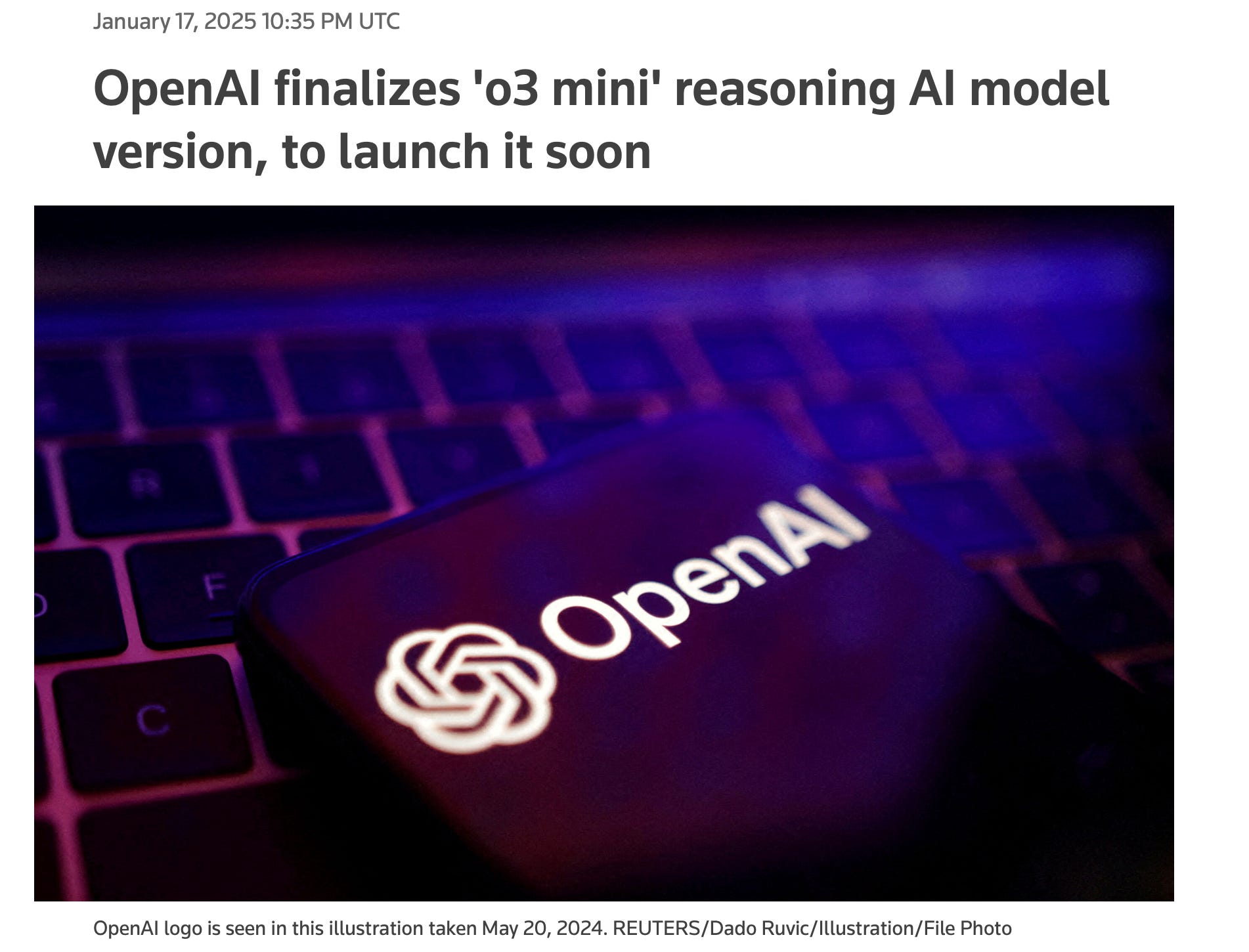
OpenAI Finalizes ‘o3 Mini’ Reasoning AI Model: What This Means for AI and GTM Teams
On January 17, 2025, OpenAI announced that it had finalized its new reasoning AI model, o3 mini, with plans to launch it alongside an API and ChatGPT integration in the coming weeks. This development marks another significant step in the evolution of AI capabilities, as OpenAI continues to push boundaries in the competition with major players like Google.
The o3 mini model, a scaled-down version of the upcoming o3, is positioned to outclass OpenAI’s o1 models, which set a new standard in reasoning-based AI upon their release in 2024. Here’s an in-depth breakdown of what makes o3 mini groundbreaking and how its release can impact Go-to-Market (GTM) strategies and teams.
What Is o3 Mini?
The o3 mini is part of OpenAI’s reasoning AI model lineup, designed to solve more complex problems than its predecessors. While smaller and more lightweight than the full o3 model, o3 mini maintains robust reasoning capabilities, enabling it to process complex queries across domains like science, coding, and math.
Key Features of o3 Mini
Enhanced Reasoning: Like its predecessor o1, o3 mini excels in tasks requiring step-by-step logical deduction, problem-solving, and contextual understanding.
Lightweight Design: The mini version is optimized for lower computational requirements, making it more accessible to a broader range of users and developers.
API Availability: OpenAI plans to release o3 mini with a simultaneous API launch, making it easier for developers to integrate its reasoning capabilities into applications.
GTM Implications:
The compact nature of o3 mini makes it an attractive option for businesses seeking AI solutions with strong reasoning capabilities but lower infrastructure requirements. GTM teams can leverage this for customer-facing applications like intelligent chatbots or decision-support tools.
How o3 Mini Builds on o1 and Expands Potential
1. Advancing Reasoning Capabilities
The o1 models released in 2024 were notable for their ability to spend more processing time on challenging queries. With o3 mini, OpenAI takes this further by introducing even greater computational efficiency and adaptability.
Example Use Case: A biotech company could use o3 mini to automate the design of complex experimental workflows, saving time and reducing human error.
GTM Application: AI agents powered by o3 mini could assist GTM teams in generating highly specific customer insights, identifying market gaps, or building detailed forecasts.
2. Lightweight and Versatile
The scaled-down design of o3 mini offers an entry point for businesses with limited computational resources.
Example Use Case: A mid-sized e-commerce company could deploy o3 mini to optimize product recommendations based on nuanced customer preferences.
GTM Application: Teams can integrate o3 mini into customer-facing applications like live chat support or sales tools to provide smarter, more context-aware interactions.
o3 Mini and OpenAI’s Push into Virtual Assistants
OpenAI’s beta feature, Tasks, introduces AI virtual assistant capabilities to ChatGPT, signaling a direct challenge to established players like Siri and Alexa. Paired with o3 mini’s reasoning power, this move positions OpenAI as a leader in conversational AI.
Potential Impacts on GTM
Enhanced Sales Productivity: Virtual assistants powered by o3 mini can autonomously schedule meetings, prioritize tasks, and generate follow-ups, freeing GTM teams to focus on strategy.
Smarter Customer Support: AI assistants could handle customer inquiries with more nuance, offering detailed solutions to complex problems without human intervention.
Integrated Ecosystems: With APIs available at launch, o3 mini can easily integrate into existing CRM and marketing automation systems, creating cohesive and efficient workflows.
Competitive Landscape and Industry Impacts
1. Growing Competition in Reasoning AI
With rivals like Google and its Gemini models advancing their own reasoning AI capabilities, OpenAI’s o3 mini serves as a key differentiator in the race to dominate the AI space. The compact model opens doors for businesses that require advanced AI capabilities without heavy computational demands.
GTM Perspective: The compact design allows businesses to adopt cutting-edge reasoning AI at a lower cost, making it a compelling solution for small and medium enterprises (SMEs).
2. Investment in AI Growth
The success of ChatGPT and OpenAI’s $6.6 billion funding round in 2024 highlights the increasing appetite for AI-driven solutions across industries.
GTM Opportunity: Companies integrating o3 mini into their offerings can position themselves as early adopters of transformative AI technologies, enhancing their brand reputation and competitive edge.
Real-World Applications for GTM Teams
1. Market Research and Analysis
AI models like o3 mini can analyze large datasets, identify trends, and generate actionable insights for GTM strategies.
Example: Automate competitive analysis to identify emerging market trends and develop targeted campaigns based on real-time data.
2. Enhanced Customer Engagement
By integrating o3 mini into customer-facing platforms, businesses can offer personalized, context-aware interactions.
Example: Use o3 mini to power chatbots that provide tailored product recommendations, increasing engagement and conversion rates.
3. Streamlined Sales Processes
Virtual assistants equipped with o3 mini can automate repetitive tasks, allowing sales teams to focus on high-value activities.
Example: Deploy an o3 mini-powered assistant to manage lead scoring, schedule calls, and draft personalized outreach emails.
Preparing for o3 Mini’s Launch: Key GTM Actions
Evaluate Integration Opportunities: Assess how o3 mini can enhance your existing tools, such as CRMs, customer support platforms, or analytics dashboards.
Experiment with APIs: With the API available at launch, developers can test o3 mini’s capabilities in live environments to understand its full potential.
Focus on Training: Equip teams with the skills to manage and leverage o3 mini effectively, ensuring smooth adoption and maximum ROI.
Develop Customer-Facing Use Cases: Identify opportunities where o3 mini can improve customer engagement, from smarter chatbots to real-time personalization.
Final Thoughts
OpenAI’s o3 mini is more than just a scaled-down reasoning model—it’s a gateway for businesses to harness advanced AI capabilities without the high infrastructure costs typically associated with cutting-edge technology. For GTM teams, its release represents an opportunity to streamline operations, enhance customer interactions, and uncover new market opportunities.
As the AI landscape evolves, tools like o3 mini will play a pivotal role in shaping the future of business. For organizations ready to embrace this innovation, the possibilities are endless—transforming AI from a tool into a strategic partner for growth and success.


Rumors of GPT-5: Redefining the AI Landscape and Its Implications for GTM Teams
In a thought-provoking article by Alberto Romero, the possibility of GPT-5 existing—but being withheld by OpenAI for internal use—raises profound questions about the future of artificial intelligence and its role in business and innovation. While speculative, Romero’s analysis draws on patterns observed with OpenAI, Anthropic, and the AI industry at large, painting a compelling picture of what might be happening behind closed doors.
For Go-to-Market (GTM) teams, the ideas presented in this article represent a significant shift in how advanced AI models are deployed, utilized, and monetized. Whether or not GPT-5 is ever publicly released, the underlying dynamics of distillation, cost control, and strategic secrecy signal new opportunities and challenges for organizations leveraging AI.
Rumored Development of GPT-5: What We Know
Romero’s hypothesis suggests that OpenAI may have already built GPT-5 but opted not to release it publicly, instead using it internally to distill more cost-effective models like o1 and o3. This strategy mirrors Anthropic’s use of Claude Opus 3.5 to enhance Claude Sonnet 3.6 through data distillation. The reasons for withholding GPT-5, according to Romero, include:
Cost-Performance Balance: Operating an advanced model like GPT-5 may be prohibitively expensive for public use without delivering proportional benefits.
Internal ROI: GPT-5 may generate more value internally by improving smaller, more efficient models.
Strategic Secrecy: Keeping cutting-edge models internal prevents competitors from reverse-engineering or replicating their advancements.
Key Takeaway for GTM:
If advanced models are withheld, businesses and GTM teams must pivot to optimize the use of accessible models while remaining agile to integrate future technologies.
Distillation: The Secret Weapon in AI Development
What Is Distillation?
Distillation is the process of using a powerful, resource-intensive AI model to train smaller, cheaper models that retain much of the larger model’s capabilities. This approach ensures high performance while minimizing operational costs.
Implications of Distillation
Economic Efficiency: Smaller models like o1 and o3 can serve millions of users at a fraction of the cost, making AI more scalable.
Performance Optimization: These distilled models often achieve state-of-the-art results, rivaling larger, more expensive counterparts.
GTM Impact:
Distilled models provide GTM teams with powerful tools for automation, customer engagement, and analytics without requiring massive infrastructure investments. For example:
Marketing teams can use smaller, optimized models for real-time campaign personalization.
Sales teams can integrate these models into CRMs to enhance lead scoring and pipeline insights.
The Role of Internal AI Models
Romero suggests that OpenAI’s focus may have shifted to developing base models like GPT-5 for internal use, empowering recursive self-improvement. These models act as “teachers,” enabling iterative advancements in their public-facing offerings.
Examples of Internal Model Utility:
Training Smaller Models: GPT-5 could enhance the capabilities of models like o1 and o3 through data generation and optimization.
Strategic Research: Advanced models can explore cutting-edge use cases that might not yet be commercially viable but drive long-term innovation.
GTM Perspective:
Organizations must rethink their AI strategies, focusing on incremental improvements to existing tools while preparing to adopt disruptive advancements when they emerge.
Broader Industry Dynamics: What GPT-5 Means for AI Development
1. Diminishing Returns and Cost Pressures
AI labs face increasing challenges as model size and complexity grow. Training massive models like GPT-5 is expensive, and deploying them for widespread use is even costlier.
GTM Insight:
Adopting smaller, more efficient models allows teams to balance performance with cost. For example:
Deploy lightweight AI tools that deliver high ROI without overburdening infrastructure.
Focus on use cases where efficiency outweighs raw computational power.
2. Shifting Metrics of Success
The industry has moved away from focusing on parameter count as the primary metric of AI sophistication. Instead, benchmarks like cost-performance ratio and practical applicability are taking center stage.
GTM Insight:
Evaluate AI tools based on their ability to deliver measurable business outcomes, such as increased conversion rates or reduced customer churn.
Avoid being distracted by model size or hype—focus on real-world impact.
Potential Applications for GTM Teams
1. Enhanced Customer Engagement
Distilled models like o3 offer advanced reasoning capabilities that can power hyper-personalized customer experiences.
Example:
AI-powered chatbots using o3 can anticipate customer needs, answer complex queries, and suggest products tailored to individual preferences.
2. Streamlined Operations
Smaller, cost-efficient models allow organizations to automate repetitive tasks and improve workflow efficiency.
Example:
Use AI agents built on o1 or o3 to automate lead qualification, schedule follow-ups, and analyze customer data in real time.
3. Proactive Market Insights
Advanced AI tools can process vast amounts of data to uncover emerging trends, helping GTM teams stay ahead of the curve.
Example:
Employ AI to monitor competitive landscapes and generate actionable insights for strategic decision-making.
Preparing for the Next Wave of AI
1. Focus on Flexibility
As AI models evolve, GTM teams must remain agile, adapting strategies to leverage new tools effectively.
Action Step:
Build scalable systems that can integrate with future AI advancements like GPT-5 or its distilled iterations.
2. Invest in AI Literacy
Equip teams with the skills to understand and implement AI solutions, ensuring they can maximize the potential of emerging technologies.
Action Step:
Provide training on how to use AI for customer segmentation, predictive analytics, and process automation.
3. Align with Ethical AI
As AI becomes more autonomous, ethical considerations will play a larger role in adoption decisions.
Action Step:
Establish guidelines to ensure AI tools align with organizational values and customer expectations.
Final Thoughts
The possibility of GPT-5 existing—but remaining hidden—highlights the evolving dynamics of AI development and deployment. For GTM teams, the implications are clear: success will depend on leveraging the tools available today while preparing for the transformative technologies of tomorrow.
Whether or not GPT-5 sees the light of day, its potential influence on AI strategies, tools, and workflows is undeniable. By staying informed, agile, and focused on real-world applications, GTM teams can harness the power of AI to drive growth and innovation in an increasingly competitive landscape. The future of AI is here—it’s just waiting to be unlocked.
GTM AI Tool of the Week: Numerous.ai
Numerous.ai is an AI-powered add-on designed to integrate ChatGPT's capabilities directly into Google Sheets and Excel, enhancing spreadsheet functionalities with advanced language processing features.
Key Features:
AI-Powered Text Generation: Utilize the
=WRITEfunction to generate text within your spreadsheet by specifying prompts and parameters.Automated Formula Generation: Simplify complex formula creation by describing your desired outcome in plain English, allowing Numerous.ai to generate the appropriate formula.
Data Cleaning and Normalization: Efficiently clean and standardize data entries, ensuring consistency and accuracy across your datasets.
Content Summarization and Categorization: Summarize large text bodies and categorize information to streamline data analysis and interpretation.
Team Collaboration: Facilitate collaborative efforts by allowing multiple users to work on AI-driven projects within the spreadsheet environment.
Pros:
User-Friendly Integration: Seamlessly incorporates into Google Sheets and Excel, enabling users to access AI functionalities without leaving their familiar spreadsheet platforms.
Cost-Effective Usage: Optimizes resource utilization by avoiding duplicate queries, making AI features more accessible and affordable.
Versatile Applications: Supports a wide range of tasks, from content creation and digital marketing to data analysis and research, catering to diverse professional needs.
Cons:
Spreadsheet Proficiency Required: Users need a basic understanding of spreadsheet operations to fully leverage Numerous.ai's capabilities.
Limited Offline Functionality: Requires an internet connection to access AI features, which may limit usability in offline scenarios.
Pricing:
Numerous.ai offers a 7-day trial for $1, allowing users to explore its features before committing to a subscription. The annual plan is priced at $10 per month, billed annually, providing cost savings for long-term users.
How GTM Teams Can Leverage Numerous.ai
Numerous.ai provides GTM professionals with a versatile toolkit to streamline operations, enhance data-driven decision-making, and optimize workflows. Here’s how GTM teams can make the most of this AI-powered tool:
1. Streamlined Data Analysis
Use Case:
Quickly standardize lead data for segmentation and targeting.
Normalize campaign performance metrics to identify trends and outliers.
Improve forecasting accuracy by cleaning and structuring pipeline data.
2. Faster Content Creation for Campaigns
Use Case:
Generate personalized email content tailored to different customer segments.
Create variations of ad copy for A/B testing.
Automate the drafting of follow-up messages based on sales stage or lead score.
3. Simplified Formula Generation
Use Case:
Automate calculations for ROI, customer acquisition costs, and churn rates.
Simplify complex attribution models to track marketing effectiveness.
Build dashboards with dynamic KPIs using advanced, auto-generated formulas.
4. Advanced Reporting and Summarization
Use Case:
Create concise summaries of quarterly sales performance or campaign outcomes.
Generate high-level insights for leadership presentations.
Quickly analyze survey responses or customer feedback for actionable insights.
5. Enhanced Team Collaboration
Use Case:
Allow sales, marketing, and operations teams to work on a unified data set.
Share live updates and insights across teams, ensuring alignment on goals.
Reduce miscommunication by automating repetitive tasks and ensuring consistency.
6. Efficient Lead Qualification and Scoring
Use Case:
Automatically assign scores to leads based on predefined criteria.
Segment high-value leads for targeted outreach.
Reduce manual errors in lead qualification, improving pipeline efficiency.
7. Automating Competitive Analysis
Use Case:
Quickly analyze pricing strategies and product offerings from competitors.
Summarize competitor campaign performance metrics for strategic insights.
Identify gaps or opportunities in competitive positioning.
Conclusion: Driving GTM Success with Numerous.ai
Numerous.ai empowers GTM teams to work smarter by automating repetitive tasks, generating actionable insights, and optimizing content creation. By integrating AI into everyday workflows, GTM professionals can shift their focus to strategy and relationship-building, ensuring they stay ahead in a fast-paced, data-driven environment. Whether it’s simplifying data analysis, automating reporting, or enhancing collaboration, Numerous.ai offers a competitive edge for modern GTM teams.
That is all, more next week!