

Welcome everyone again to the new year and another round of Newsletter and Podcasts!
News is coming, a few exciting changes, just thought I would tease ya a bit by letting you know changes are a comin!
As a note, The Linkedin newsletter here has the summarized version of the free newsletter, which you can access for free at www.gtmaipodcast.com
You can also join the Slack community where we share updates and news all the time
This week we have the following:
Season 2, Episode 2 GTM AI Podcast with Ryan Harris COO of Alysio
GTM AI Tool of the week: Stanford University STORM AI wikipedia research AI
To read the rest of these, join for free the www.gtmaipodcast.com newsletter:
What is next in AI in 2025
321 Real World Use cases for AI from Google
Google Search market share drops under 90%, first time since 2015
New Executive order from Pres. Biden on AI
With that being said, lets get into the podcast!
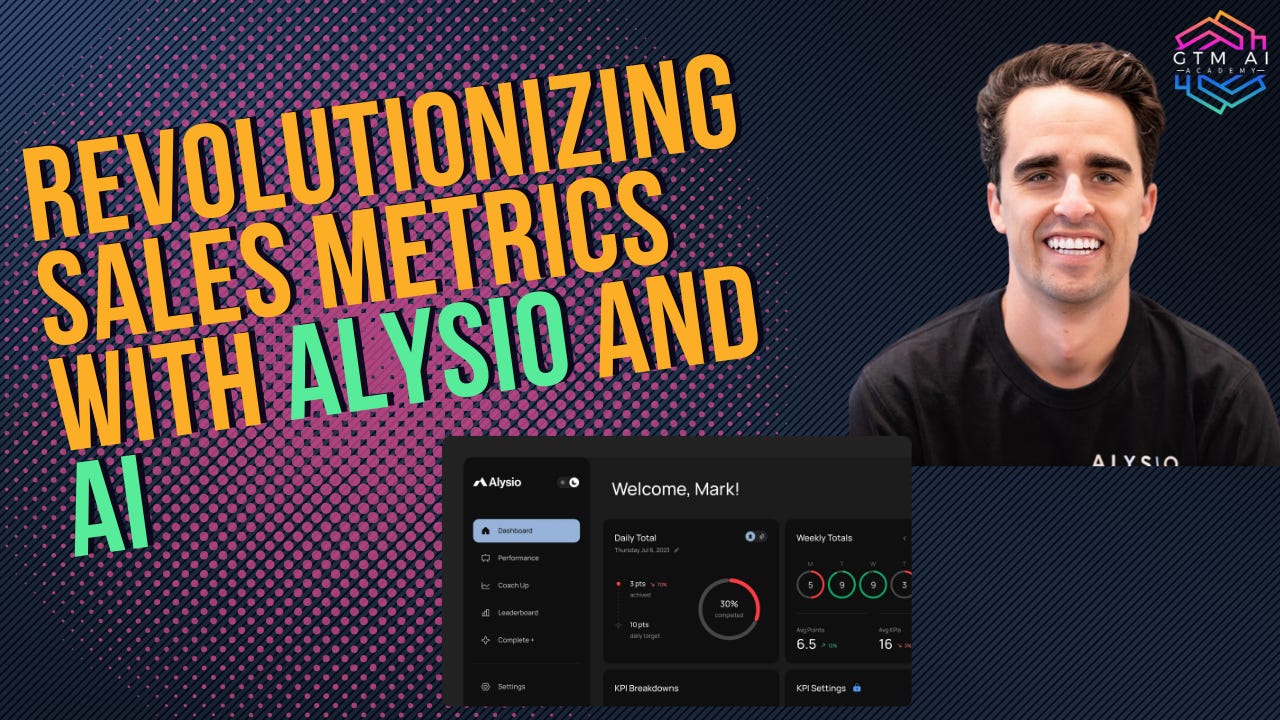
You can go to Youtube, Apple, Spotify as well as a whole other host of locations to hear the podcast or see the video interview
Revolutionizing Sales Metrics with Alysio and AI
In an era where AI and automation dominate sales technology headlines, this week's episode uncovers a refreshingly fundamental truth: sometimes the most powerful innovations start with the simplest questions. Ryan, COO and co-founder of Alysio, joins us to share how a basic spreadsheet at Qualtrics evolved into a revolutionary approach to sales performance tracking. This episode dives deep into the intersection of metrics, motivation, and meaningful results, revealing how a straightforward question - "How do I know I've had a great day in sales?" - led to a transformation in how we think about sales success. For sales leaders struggling with accountability and performance tracking, and teams looking to drive consistent results, this conversation offers both practical insights and a glimpse into the future of sales performance management.
The Qualtrics Origin Story
What began as a simple spreadsheet experiment at Qualtrics would eventually reshape how sales teams approach daily success metrics. The story unfolds with a common challenge: despite having a full stack of sales tools (Salesforce, Clari, Gong, Outreach), teams still couldn't definitively answer whether they'd had a productive day. The solution emerged in the form of a point-based system where:
- Sales activities were assigned specific point values
- 10 cold calls might equal one point
- One demo set could be worth two points
- Daily goal: achieve 10 points
The results were remarkable. Teams using this system consistently outperformed their peers and dominated President's Club nominations. The secret wasn't just in the tracking – it was in the clarity and motivation the system provided. Sellers knew exactly what constituted a successful day, and managers had concrete metrics to coach against.
Validation Across Companies
The success at Qualtrics was just the beginning. When Aaron, Ryan's co-founder, moved to Okta and later Lacework, he brought the spreadsheet system with him. At each company, the pattern repeated:
- Teams using the point system consistently hit quota
- The approach created positive accountability
- Results were replicable across different sales environments
- The system worked for both SDRs and AEs
This consistent success across multiple organizations revealed something crucial: the fundamental principles of the system transcended individual company cultures and sales processes. What started as a spreadsheet had uncovered a universal truth about sales performance: when you can measure and incentivize the right activities consistently, results follow.
From Spreadsheet to Software
The decision to transform this spreadsheet into a software platform came from recognizing several key factors:
- Manual tracking became unwieldy beyond 5 reps
- Real-time visibility was crucial for motivation
- Historical data analysis was nearly impossible
- Teams needed better ways to identify skill gaps
- The system needed to scale while maintaining simplicity
Key Takeaways
Modern Sales Trends
Future of Sales Technology
- AI's role varies based on sales cycle complexity
- More suitable for shorter sales cycles and PLG motions
- Human touch remains crucial for complex, longer sales cycles
- Emphasis on data-driven, but human-centric approaches
Connect With Our Guest
- LinkedIn: Ryan Harris
- Email: ryan@alysio.ai or info@alysio.ai
- Website: alysio.ai
ARTIFICIAL INTELLIGENCE
What’s Next for AI in 2025
You already know that agents and small language models are the next big things. Here are five other hot trends you should watch out for this year.
By James O'Donnell, Will Douglas Heaven, and Melissa Heikkilä
As we step into 2025, the AI industry is on the brink of unprecedented transformation. Beyond the buzz around agents and small language models, five emerging trends are set to shape the future. From generative virtual worlds to AI-powered scientific discovery, these innovations promise to redefine industries and offer GTM professionals new tools and strategies for success.
1. Generative Virtual Playgrounds
The Trend:
Building on the success of generative video, the next step is creating entire virtual worlds on demand. Google DeepMind’s Genie 2 can now spin a static image into an interactive 3D environment. Startups like World Labs and Decart are also pioneering real-time generative experiences, with applications ranging from gaming to robotics training.
Why It Matters for GTM:
Immersive Brand Experiences: Use generative worlds to create interactive virtual showrooms or gamified customer journeys.
Advanced Sales Simulations: Train sales teams in dynamic, AI-generated environments tailored to real-world scenarios.
Product Prototyping: Test product designs in virtual environments before committing to physical production.
2. Large Language Models with Reasoning
The Trend:
New models like OpenAI’s o3 and Google DeepMind’s Gemini 2.0 Flash Thinking are revolutionizing AI by “reasoning” through problems step by step. These models break down tasks into manageable actions, improving accuracy and adaptability.
Why It Matters for GTM:
Smarter Sales Assistants: Reasoning-enabled AI can analyze customer pain points and craft hyper-relevant proposals.
Enhanced Customer Support: Deploy bots that can troubleshoot complex queries by logically working through them.
Better Decision-Making: Use reasoning models for market analysis, risk assessments, and campaign strategy refinement.
3. AI-Driven Scientific Discovery
The Trend:
AI is accelerating breakthroughs in fields like protein design and materials science. Tools like Meta’s materials data sets and Hugging Face’s LeMaterial are democratizing access to resources for scientific research.
Why It Matters for GTM:
Innovative Product Development: Leverage AI-driven discoveries to introduce cutting-edge products faster.
Positioning as Thought Leaders: Highlight how your organization uses AI for innovation in marketing campaigns and industry events.
Sustainability Alignment: Promote AI-driven advancements that align with sustainability and ethical practices to attract eco-conscious customers.
4. AI and National Security
The Trend:
AI is being increasingly adopted for defense and national security applications. OpenAI and Anduril are partnering to develop tools like AI-powered drone defense systems, while other companies are vying for Pentagon contracts.
Why It Matters for GTM:
B2G Revenue Opportunities: AI’s role in defense presents lucrative government contracting possibilities for GTM teams targeting public sector clients.
Clear Ethical Messaging: Position your company’s stance on sensitive AI applications to align with customer and stakeholder values.
Partnership Potential: Collaborate with AI firms developing secure enterprise tools inspired by defense technologies.
5. Competition in the Chip Market
The Trend:
Nvidia’s dominance in AI chips is facing challenges from competitors like AMD, Amazon, and innovative startups such as Groq. Geopolitical factors, including the US CHIPS Act, are accelerating domestic chip production.
Why It Matters for GTM:
Cost Efficiency: Emerging chip alternatives could lower hardware costs for deploying AI tools, making advanced technologies accessible to more businesses.
Scalable Operations: Improved chip efficiency will allow GTM teams to handle larger data sets and run sophisticated AI models without escalating infrastructure costs.
Geopolitical Awareness: Align GTM strategies with shifts in supply chain stability and regional market opportunities.
What These Trends Mean for GTM Professionals
These five trends aren’t just reshaping AI—they’re creating new possibilities for GTM teams to innovate and grow. Here’s how to stay ahead:
Leverage Virtual Engagements: Use generative virtual worlds to deliver immersive customer experiences and innovative product training.
Deploy Smarter AI Tools: Incorporate reasoning-enabled AI to streamline decision-making and enhance customer support.
Embrace Innovation Leadership: Highlight your organization’s use of AI for scientific breakthroughs and sustainability efforts.
Explore New Markets: Seize opportunities in government contracting and defense-related applications of AI.
Optimize AI Investments: Monitor chip market developments to ensure cost-effective scalability of AI deployments.
Final Thoughts
2025 is set to be a pivotal year for AI-driven transformation. By aligning with these trends, GTM professionals can position their organizations as leaders in innovation, delivering smarter solutions and more engaging customer experiences. From immersive virtual worlds to reasoning-enabled AI, the tools are here—how you use them will define your success.
Last week in the paid newsletter, I deep dove into specifics of how you can take advantage of new AI search trends because I deep dove with an industry expert on how to strategize and make sure you can take advantage of how AI search, go check it out—>
#5 GTM AI Insider: Where SEO and AI collide.

I posted today on Linkedin about this topic, but I wanted to go deep into this in the AI Insider.
Newsletter: Google’s Search Market Share Drops Below 90% for the First Time Since 2015
Google has long been synonymous with search dominance, holding an unparalleled market share for nearly a decade. However, recent data from Statcounter reveals that Google’s global search market share dipped below 90% for the last three months of 2024—a significant milestone not seen since 2015. This trend raises important questions about the future of search and its implications for GTM professionals.
Key Takeaways from Google’s Decline
1. The Numbers Tell the Story
Global Market Share: Google’s search market share fell to 89.34% in October, 89.99% in November, and 89.73% in December 2024, marking a consistent downward trend.
Regional Impact: Asia played a significant role in this decline, while the U.S. market showed a drop from 90.37% in November to 87.39% in December.
Competitors: Bing, Yandex, and Yahoo each gained small portions of Google’s lost share. Microsoft Bing held steady at around 4% during this period.
Why This Matters for GTM Professionals
1. Shifting Search Behaviors
The cracks in Google’s dominance reflect evolving user expectations and dissatisfaction with traditional search engines. For GTM teams, this signals an opportunity to diversify search strategies.
Actionable Insight: Evaluate alternative search platforms like Bing, Yandex, and DuckDuckGo as potential channels for paid search and organic visibility. Tailor campaigns to align with their unique user bases and algorithms.
2. The Rise of AI-Driven Search
While Statcounter doesn’t yet measure AI search engines like ChatGPT Search and Perplexity, these tools are clearly gaining traction. Users are increasingly drawn to direct, conversational search experiences powered by AI.
Actionable Insight: Integrate AI-based platforms into your GTM strategy. Develop SEO and paid campaigns optimized for conversational queries, and explore partnerships with emerging AI-driven tools.
3. Regional Strategies Are Critical
Google’s decline in Asia highlights the importance of localized approaches to search. Regional search engines like Baidu and Yandex continue to play pivotal roles in their respective markets.
Actionable Insight: For GTM teams targeting Asia or other international regions, ensure campaigns are tailored to regional search engines and audience preferences.
4. Experiment with Multichannel Search
With multiple players gaining small portions of Google’s lost share, diversifying your search approach is more important than ever.
Actionable Insight: Balance your search marketing efforts across platforms to maximize visibility. Don’t rely solely on Google—invest in Bing Ads, consider niche engines, and experiment with AI-powered solutions.
What This Means for the Future of Search
A Battle for Relevance
Google’s dip below 90% could indicate a deeper trend of users questioning the effectiveness of traditional search results. Complaints about unhelpful results and over-reliance on ads have driven some users to explore alternatives. GTM teams must monitor this shift closely and adjust strategies accordingly.
The Role of AI
AI search engines like ChatGPT Search are poised to capture more market share in 2025. While they may not yet rival Google’s scale, their growing popularity suggests a changing landscape where conversational search could become a dominant user preference.
Competitors Gaining Ground
Bing, Yandex, and even Yahoo are quietly benefiting from Google’s decline. These platforms may not be direct threats to Google’s supremacy, but their incremental growth highlights opportunities for marketers willing to diversify.
How GTM Teams Should Respond
Expand Search Strategies: Allocate resources to alternative search engines and AI-driven platforms to capture diverse audiences.
Monitor Trends: Stay updated on emerging AI tools like ChatGPT Search and Perplexity, which could become significant traffic drivers in the near future.
Invest in Regional Marketing: Tailor campaigns to regional search engines and their unique ecosystems, especially in Asia.
Experiment with Conversational SEO: Optimize content for AI-driven searches that rely on natural language and context-based queries.
Final Thoughts
Google’s slip below 90% market share is more than just a number—it’s a sign of changing user expectations and the rise of alternatives in the search space. For GTM professionals, the lesson is clear: diversify, adapt, and stay ahead of the curve. Whether it’s investing in regional engines, embracing AI-driven platforms, or tailoring strategies to new user behaviors, now is the time to rethink your search marketing game plan.
321 Real-World Generative AI Use Cases Transforming Industries
Generative AI is no longer an emerging technology—it’s a game-changer across industries. From retail to healthcare, and from public sector organizations to tech giants, businesses are unlocking new levels of efficiency, creativity, and customer satisfaction using generative AI solutions. With Google Cloud leading the charge through Vertex AI, Gemini models, and Workspace integrations, organizations worldwide are realizing tangible returns on their AI investments.
Here’s a breakdown of how generative AI is driving transformation, including standout use cases and their implications for GTM professionals.
Key Trends in Generative AI Adoption
1. Customer-Centric AI Agents
Retail & E-Commerce: Companies like Best Buy and Mercado Libre are using AI-powered virtual assistants to streamline customer interactions. For example, Best Buy’s Gemini-enabled assistant troubleshoots product issues, reschedules deliveries, and manages subscriptions.
Hospitality: Six Flags deployed a generative AI assistant to help guests plan their park visits, improving customer satisfaction and operational efficiency.
GTM Impact:
Enhance customer engagement with AI agents that can personalize experiences at scale.
Reduce friction in sales and service journeys, leading to higher customer satisfaction and retention.
2. AI-Driven Creativity and Marketing
Content Creation: Companies like Procter & Gamble and Puma are using generative AI for campaign ideation and asset creation, from hyper-personalized promotions to localized product images.
Gaming & Entertainment: Formula E uses AI to summarize race commentary into 2-minute podcasts, enhancing fan engagement across languages and formats.
GTM Impact:
Speed up time-to-market for campaigns with AI-generated creative assets.
Tailor marketing efforts to diverse audiences with localized, dynamic content.
3. Data and Insights Automation
Healthcare: Bayer and Mayo Clinic use AI to accelerate clinical decision-making and streamline patient care through powerful data insights.
Financial Services: Scotiabank employs Gemini-powered chatbots to improve client experiences with predictive and personalized financial solutions.
GTM Impact:
Improve sales efficiency with AI-driven insights for lead scoring and customer segmentation.
Use predictive analytics to anticipate customer needs and proactively offer solutions.
4. Operational Efficiency Across Sectors
Manufacturing: Companies like Suzano have reduced query times by 95% with AI tools, enabling employees to access insights faster.
Telecommunications: Bell Canada uses AI-powered agents to cut customer service costs while improving response times.
GTM Impact:
Automate repetitive tasks and free up resources for strategic initiatives.
Streamline cross-departmental operations to reduce costs and improve collaboration.
5. AI for Public Good
Public Sector: The Minnesota Division of Driver and Vehicle Services uses real-time translation to serve non-English speakers, improving accessibility and inclusivity.
Nonprofits: CareerVillage developed an AI-powered career coach app to empower underrepresented youth with personalized guidance and skill-building activities.
GTM Impact:
Align your brand with socially impactful AI applications to build trust and community goodwill.
Leverage AI to make services more inclusive and accessible.
Emerging Use Cases and What’s Next
1. Generative Virtual Playgrounds
Google DeepMind’s Genie 2 and startups like World Labs are creating immersive, generative virtual environments. These tools are being used for everything from video game design to robotics training.
Why It Matters for GTM:
Create virtual showrooms or gamified brand experiences to engage customers in new ways.
Leverage simulations to train sales teams or prototype new products.
2. AI in Scientific Discovery
Tools like Hugging Face’s LeMaterial and Google’s AI-powered healthcare solutions are accelerating breakthroughs in materials science and diagnostics.
Why It Matters for GTM:
Showcase innovation in your marketing campaigns by highlighting how AI contributes to product R&D.
Position your brand as a leader in sustainability and scientific advancement.
How GTM Professionals Can Leverage Generative AI
Integrate AI into Sales Enablement: Use AI tools to generate tailored proposals, refine messaging, and provide real-time insights for deal-closing strategies.
Personalize Marketing Campaigns: Deploy generative AI to craft hyper-relevant content that resonates with specific audience segments, driving engagement and conversions.
Streamline Customer Support: Implement AI agents that can handle complex customer interactions, reducing resolution times and improving satisfaction.
Enhance Product Training and Prototyping: Use AI-generated virtual environments to train teams or test product concepts.
Monitor ROI on AI Investments: Track the impact of AI implementations across metrics like customer retention, sales growth, and operational efficiency.
Final Thoughts
The 321 use cases highlighted by Google Cloud showcase generative AI’s ability to transform businesses and industries. For GTM professionals, the message is clear: adopting AI isn’t just a competitive advantage—it’s essential for staying ahead. Whether it’s improving customer engagement, automating workflows, or driving innovation, generative AI is the catalyst for growth in 2025 and beyond.
President Biden's Executive Order on Advancing U.S. Leadership in AI Infrastructure: A Deep Dive
President Joe Biden’s recently issued Executive Order marks a monumental step in securing U.S. leadership in artificial intelligence (AI) infrastructure. The directive underscores AI’s transformative potential across industries, its critical role in national security, and the imperative to develop clean, responsible, and cutting-edge infrastructure on U.S. soil.
Let’s explore the key elements of this Executive Order and their implications for industries, innovation, and Go-to-Market (GTM) strategies.
What the Executive Order Covers
1. Establishing AI Infrastructure on Federal Sites
The Department of Defense (DOD) and the Department of Energy (DOE) will make federal sites available for the development of gigawatt-scale AI data centers and clean power facilities.
How it works: Federal lands will be leased to private developers, who will build, own, and operate AI infrastructure. These developers will shoulder all costs, ensuring no financial burden on taxpayers.
Key Safeguards: Developers must adhere to environmental standards, prevent adverse community impacts, and ensure projects align with national security goals.
Implications:
For businesses, this creates a fast-tracked pathway to access infrastructure while benefiting from the resources and oversight of federal agencies.
2. Promoting Clean Energy in AI Development
To address the significant energy demands of AI, the Executive Order mandates clean energy integration for all AI data centers built on federal sites.
Clean Energy Requirements: Developers are required to procure sufficient renewable energy resources to match the electricity needs of their data centers.
Innovations in Energy: Initiatives include geothermal energy projects, small modular nuclear reactors, and upgrades to existing grid infrastructure.
Implications:
Companies investing in AI can align their operations with clean energy standards, showcasing sustainability and environmental responsibility to consumers and stakeholders.
3. Ensuring National Security
The directive prioritizes domestic development of AI infrastructure to prevent dependency on foreign systems and bolster national security.
Security Measures: Lab security requirements and national security evaluations will apply to all AI models developed on federal sites.
Global Collaboration: The Department of State will work with allies to expand trusted AI infrastructure and enhance global clean energy technologies.
Implications:
National security partnerships and strict compliance measures create opportunities for businesses focused on secure AI development and defense-related technologies.
4. Supporting Economic Growth and Workforce Development
The Executive Order seeks to strengthen the U.S. economy by fostering innovation and job creation in the AI and clean energy sectors.
Labor Standards: Developers must adhere to high labor standards, pay prevailing wages, and promote positive labor-management relations.
Domestic Manufacturing: A focus on procuring domestically manufactured semiconductors will bolster the U.S. semiconductor supply chain.
Implications:
This directive incentivizes industries to invest in American talent, manufacturing, and technology, creating a robust ecosystem for economic growth.
Impacts on GTM Professionals
1. Opportunities in AI Infrastructure
The Executive Order’s emphasis on private-sector partnerships opens new avenues for companies to participate in AI infrastructure development. GTM teams in tech, clean energy, and national security can position themselves as critical collaborators in these initiatives.
How to Leverage: Develop solutions that integrate seamlessly with federal requirements, such as clean energy compliance, robust security measures, and scalable AI infrastructure.
2. Aligning with Sustainability Goals
The focus on clean energy provides a competitive edge for organizations that prioritize sustainability.
How to Leverage: Showcase alignment with federal clean energy goals in marketing and messaging. Highlight AI’s potential to drive sustainability in industries like healthcare, manufacturing, and logistics.
3. Expanding AI Capabilities for Small Businesses
The Executive Order allocates AI infrastructure capacity for small businesses and startups, democratizing access to advanced technologies.
How to Leverage: GTM teams at smaller organizations can emphasize their use of cutting-edge AI tools to compete with larger enterprises. Larger enterprises can position themselves as enablers of small business innovation through partnerships.
4. Strengthening Supply Chains
The directive’s focus on domestic semiconductor manufacturing ensures a more secure and robust supply chain for AI operations.
How to Leverage: Companies involved in hardware, semiconductor production, or related industries can seize opportunities in a growing domestic market.
Key Takeaways for Businesses
Invest in Clean Energy-Driven AI Projects: Align projects with federal clean energy standards to gain access to critical infrastructure.
Adopt Secure AI Practices: Ensure compliance with national security standards to become a preferred federal partner.
Embrace Sustainability as a Market Differentiator: Use AI infrastructure investments to bolster environmental, social, and governance (ESG) goals.
Expand Access to AI for SMBs: Leverage federal programs supporting small businesses to democratize AI adoption.
Position as an Industry Leader: Highlight participation in federally supported AI initiatives to enhance brand credibility and thought leadership.
Final Thoughts
President Biden’s Executive Order signals a bold commitment to ensuring the United States remains a global leader in AI. By accelerating infrastructure development, integrating clean energy, and strengthening national security, this initiative lays the groundwork for transformative advancements in AI technology.
For GTM professionals, this is a unique moment to align strategies with federal priorities, harness new opportunities in AI infrastructure, and position organizations at the forefront of innovation. As AI continues to reshape industries, the question is no longer if your organization will engage with AI, but how you will lead the way.
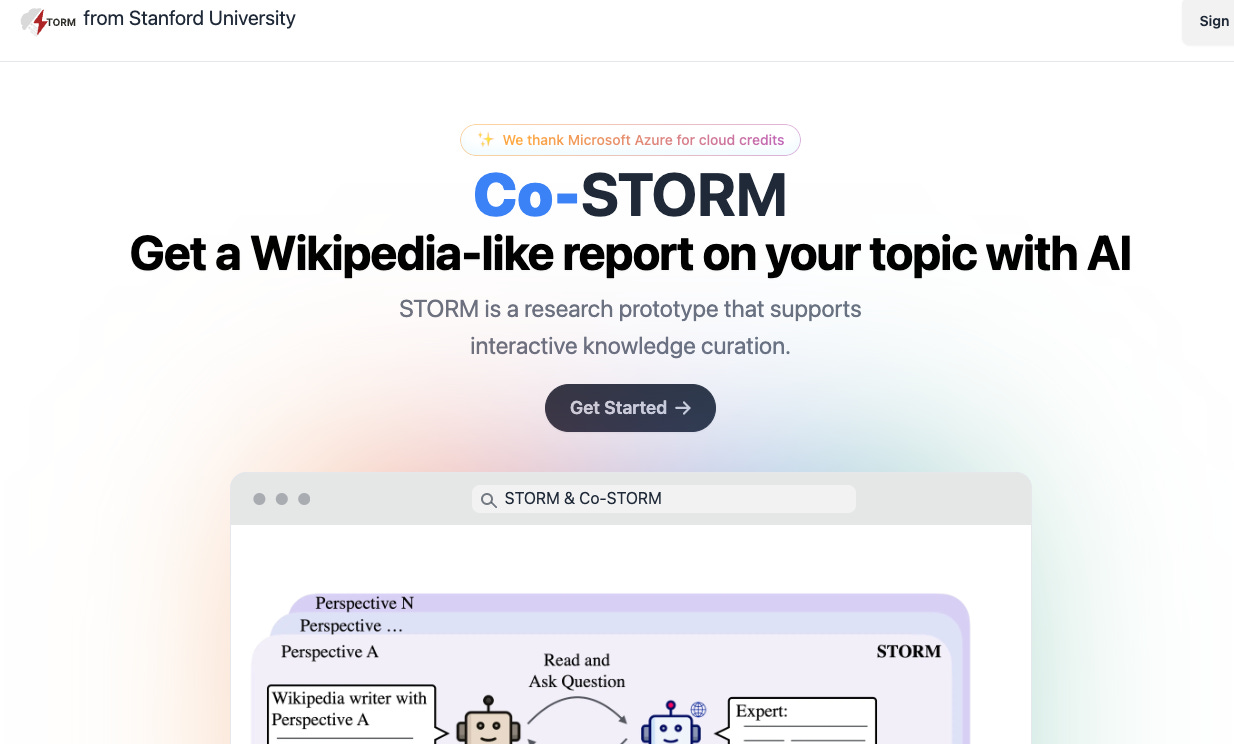
STORM: Revolutionizing Content Creation Through AI-Assisted Research and Outlining
The process of drafting well-structured, comprehensive content often begins with extensive research and meticulous outlining. Enter STORM (Synthesis of Topic Outlines through Retrieval and Multi-perspective Question Asking), a groundbreaking tool developed by Stanford's Open Virtual Assistant Lab (OVAL). Designed to enhance the pre-writing phase of content creation, STORM leverages AI to automate research, generate detailed outlines, and facilitate the synthesis of diverse perspectives. Here’s a closer look at how STORM is reshaping the way we approach long-form writing.
What is STORM?
https://storm.genie.stanford.edu/
At its core, STORM is an AI-powered system that simplifies and enriches the early stages of content creation. By combining advanced language models with structured methodologies, STORM enables users to produce comprehensive topic outlines, ensuring a strong foundation for any written piece.
STORM stands out by introducing a multi-perspective approach to research. Instead of simply summarizing available information, it actively broadens the scope of inquiry through guided questions and simulated expert dialogues.
Key Features of STORM
1. Perspective-Guided Question Asking
STORM introduces unique perspectives into its prompts, enabling the AI to generate in-depth, multifaceted questions. This feature ensures the research process explores the topic from various angles, leading to a more comprehensive understanding.
Example in Action: For a topic like “The Impact of Renewable Energy on Urban Development,” STORM might generate questions addressing economic, environmental, and social implications. This guided inquiry provides depth that might be overlooked in traditional research methods.
2. Simulated Conversations
By simulating dialogues between virtual writers and topic experts, STORM facilitates dynamic information gathering. These “conversations” mimic real-world brainstorming sessions, producing detailed insights that enrich the writing process.
Example in Action: A simulated dialogue on the topic “AI in Healthcare” could include questions like “What are the current ethical challenges?” or “How is AI improving patient outcomes in rural areas?” This conversational approach captures diverse viewpoints.
3. Automated Outline Generation
After gathering and analyzing information, STORM produces a structured outline tailored to the topic. These outlines act as blueprints for drafting articles, ensuring logical flow and comprehensive coverage.
Example in Action: For a research paper on “Climate Change Policy in the EU,” STORM might generate an outline with sections for historical policy development, current initiatives, and future projections, complete with subtopics and key points.
Applications Across Industries
STORM’s versatility makes it a valuable tool for a wide range of users:
Academic Writing: Researchers and students can rely on STORM to streamline the process of organizing their findings and crafting thesis outlines.
Content Creation: Journalists, bloggers, and marketing professionals can reduce the time spent on preliminary research, enabling faster turnaround for high-quality articles.
Education: Educators can use STORM to create balanced and insightful teaching materials that incorporate diverse perspectives on complex topics.
Why STORM Matters for Content Creation
Efficiency Gains
By automating tedious aspects of research and structuring, STORM allows writers to focus on crafting impactful narratives. This is particularly beneficial for professionals managing tight deadlines or high-volume content demands.
Diverse Perspectives
The tool’s ability to integrate multiple viewpoints ensures content is not only comprehensive but also well-rounded. This feature is critical for tackling complex subjects that require nuanced exploration.
Enhanced Creativity
With detailed outlines provided by STORM, writers can channel their creativity into storytelling and analysis, rather than getting bogged down by organizational challenges.
Limitations and Considerations
Like any AI-powered tool, STORM has its limitations:
Accuracy of Information: Users should verify all generated content against reliable sources to ensure credibility.
Ethical Use: As a research preview, STORM comes with limited safeguards. Users must exercise caution to avoid misuse.
Final Thoughts
STORM is not just a tool—it’s a paradigm shift in how we approach content creation. By automating research and fostering multi-perspective exploration, it empowers writers to produce richer, more informed content in less time. Whether you’re a student drafting a term paper, a journalist tackling a complex story, or a marketer generating thought leadership pieces, STORM is poised to become an indispensable part of your workflow.
As AI continues to shape the future of writing, tools like STORM remind us that technology’s true power lies in its ability to enhance human creativity and insight. For content creators, the storm has arrived—and it’s one worth embracing.
More Next time!